
Disclosure: this article contains affiliate links. If you buy through them, we may earn a commission at no extra cost to you. How this works.
Short answer
Dog whining is communication, not misbehavior. Dogs whine to ask for something — to go out, to eat, for attention — and they whine when they are anxious, excited or in pain.
The fix depends on which one it is. Meet the real needs before the dog has to ask, stop paying for the attention-seeking version, and have new or sudden whining checked by a vet.
A step-by-step program for everyday problem behaviors
- Created by Adrienne Farricelli, a CPDT-KA certified trainer
- 21+ force-free games in graded modules, with video demonstrations
- An archive of solutions for barking, chewing, jumping, digging and more
- Instant access and a 60-day money-back guarantee
Six reasons dogs whine
Most dogs whine for more than one reason, at different times of day. The pattern tells you which fix to use when.
| Reason | Clues | What helps |
|---|---|---|
| A need: potty, water, food | At the door or the bowl, at predictable times | A schedule that meets the need before the dog asks |
| Attention | Whining aimed at you that stops when you respond | Pay for quiet, not for noise |
| Excitement | At greetings, before walks and meals | Calm routines and a job to do |
| Anxiety or stress | Pacing, yawning and lip licking with the whine | Find and lower the trigger |
| Pain or discomfort | New or sudden, or when moving or being touched | A vet visit first |
| Being left alone | Starts as you leave and carries on after | A plan for time alone |
Rule out pain first
Whining that is new, sudden, or tied to movement — getting up, climbing stairs, being picked up or touched in one spot — is a reason to see the vet before anything else. No training plan fixes pain.
Older dogs deserve a lower threshold. Stiff joints and dental pain often show up as restlessness and whining long before they show up as limping or refusing food.
Meet the need before the dog asks
A dog that learns its needs get met on schedule stops needing to announce them. Take puppies out on the clock rather than waiting for a signal — the intervals are in the puppy potty schedule — keep fresh water down, and feed at the same times each day.
If the dog whines at the door at the same hour every evening, go out ten minutes earlier for a week. Most of that whining simply disappears.
Stop paying for the noise
Attention whining survives because it works. You look, you talk, you open the door, and the dog learns the fastest way to get you.
Change what pays. Wait for two seconds of quiet, then give the attention. Everyone in the house has to follow the same rule, or the dog learns to keep trying until someone gives in.
Expect it to get worse before it gets better. When a behavior that used to work stops working, most dogs try harder for a few days. Hold steady through that burst and it fades.
Then teach a way to ask that you like. A settle on a mat gives the dog something to do instead of complaining, and it is built step by step in teaching a dog to settle on a mat.
Excited whining
Whining at greetings and before walks is arousal leaking out. Keep arrivals boring for the first minute, clip the leash on only when the dog is still, and let calm be the thing that makes the good stuff happen.
A short sniffing game before a predictable exciting moment, like your partner coming home, takes the edge off the whole routine.
Whining in the crate or when you leave
Crate whining usually means the crate was introduced too fast. Rebuild it in small steps, and open the door during a pause, never during the noise — the method in the seven-day crate plan.
Whining that starts as you leave and carries on after is different. That is distress about being alone, and it needs the graduated plan in separation anxiety, built on seconds, not a firmer rule.
Give the brain a job
A dog with nothing to do whines more. Short training sessions, food puzzles and nose work fill the quiet hours with something more interesting than complaining.
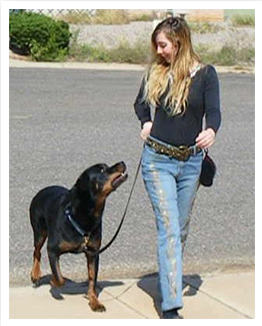
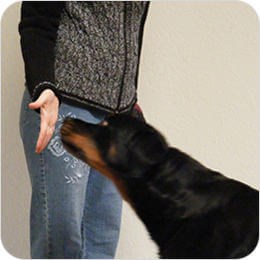
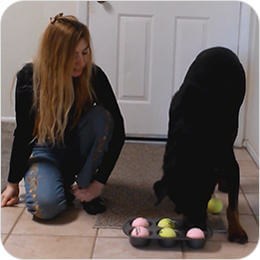
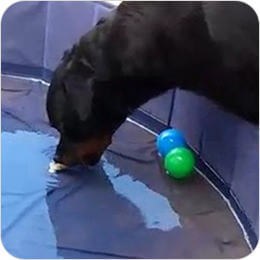
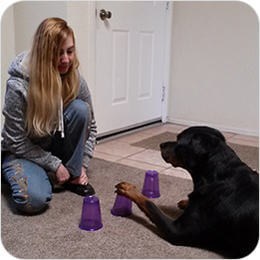
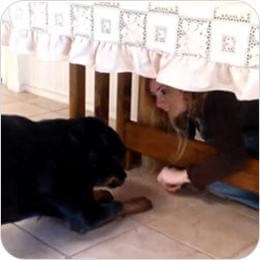
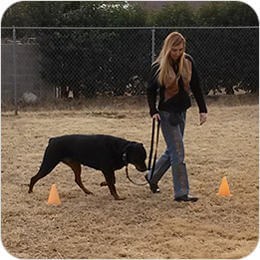
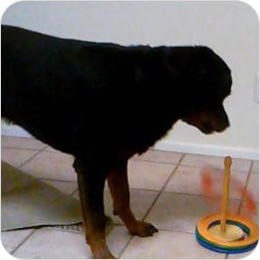
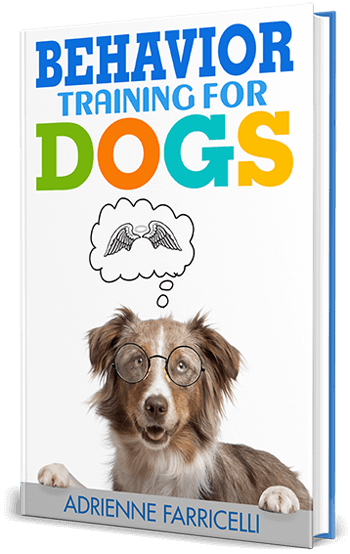
Brain Training for Dogs turns that into a program: more than 21 games with step-by-step guides and video demonstrations, from CPDT-KA certified trainer Adrienne Farricelli, and whining constantly is on the list of problems it covers.
A look inside Brain Training for Dogs














FAQ
Should I ignore a whining dog?
Only after you have ruled out real needs and pain. Then ignore the noise and reward the first seconds of quiet, every time.
Why does my dog whine at night?
In puppies it is usually a potty need or loneliness in a new home; in older dogs it can be discomfort. Take puppies out calmly, keep the crate near your bed at first, and see a vet if an adult dog starts suddenly.
Why does my dog whine when I come home?
Excitement, and sometimes appeasement. Keep the first minute of every arrival quiet, then greet the dog once it has settled.
How long does it take to stop attention whining?
Often a couple of weeks of consistent rules, after a short burst where the whining gets louder. Consistency across the whole household is what decides it.
Next step
For the next three days, write down every time your dog whines: when, where, and what happened just before. The pattern tells you which fix you need.
Based on standard force-free training practice for attention-seeking and anxiety-related whining, and on common veterinary guidance to rule out pain when a behavior changes. Product details for Brain Training for Dogs are from the vendor’s published page as of September 29, 2026.