
Disclosure: this article contains affiliate links. If you buy through them, we may earn a commission at no extra cost to you. How this works.
Short answer
A dog barks at the doorbell because the bell predicts something exciting — a stranger, a delivery, the door opening — and the barking seems to work: the visitor always goes away or comes in. Change what the doorbell means, and teach the dog a job to do instead: run to its mat and wait for a reward.
Practice with pretend rings when nobody is visiting, and the real doorbell stops being an alarm.
Impulse control, taught through games
- Created by Adrienne Farricelli, a CPDT-KA certified trainer
- 21+ force-free games in graded modules, with video demonstrations
- An archive of solutions for barking, chewing, jumping, digging and more
- Instant access and a 60-day money-back guarantee
Why the doorbell sets dogs off
- Prediction: the bell always comes before something big happens, so it becomes exciting all by itself.
- Payoff: barking seems to make visitors leave (the delivery driver always goes) or brings attention.
- Human noise: people rushing to the door and shouting over the dog sound like joining in.
- Guarding: some dogs are alerting to a newcomer at their territory.
Step 1: change what the bell means
Record your doorbell on your phone, or ask someone to ring it. Play the sound quietly, then immediately toss a great treat on the floor. Repeat until the dog hears the sound and looks at you expectantly instead of running to the door.
Raise the volume little by little over several sessions. If the dog barks, the sound was too loud or too close to the door; go back a step.
Step 2: teach go to your mat
Put a mat a few steps from the door, where the dog can see the entrance but not reach it. Toss treats onto the mat, reward the dog for stepping on it, then for lying down there, and add a cue such as mat. The full method is in how to teach a dog to settle on a mat.
Step 3: link the bell to the mat
| Stage | What you do |
|---|---|
| 1 | Play the recorded bell softly, cue mat, reward the dog on the mat |
| 2 | Play it louder, and wait for the dog to head to the mat on its own |
| 3 | A helper rings the real bell; reward on the mat, nobody comes in |
| 4 | The helper comes in while the dog stays on the mat for rewards |
| 5 | Real visitors, with a leash or gate in place as backup |
Manage while you train
- Put a note by the bell asking visitors to text or knock softly during the training weeks.
- Use a gate so the dog cannot rush the door.
- Answer the door calmly and quietly; your energy sets the tone.
- Skip the yelling. To the dog, it just sounds like you are barking too.
Barking at other triggers
The same idea — change what the trigger means, then give the dog a job — works for barking at passers-by and at night noises. See how to stop a dog barking at the window and dog barking at night for those versions.
A program that covers barking
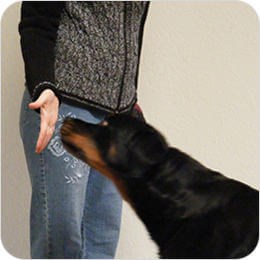
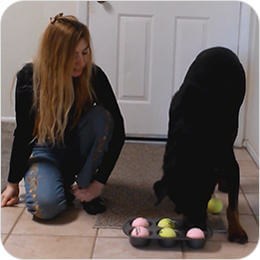
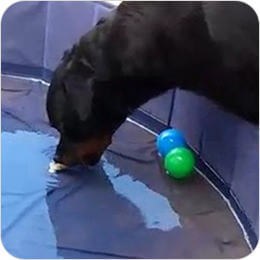
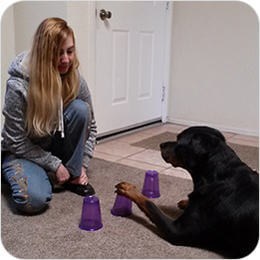
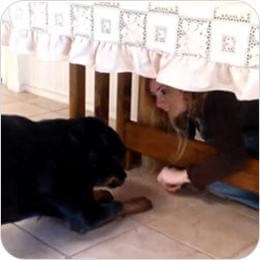
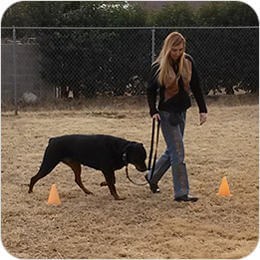
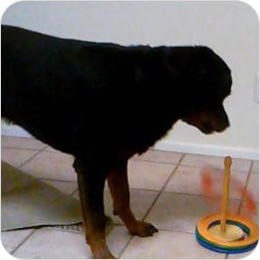
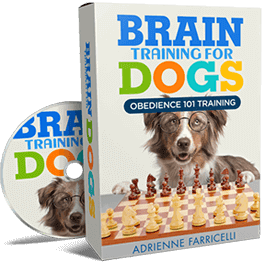
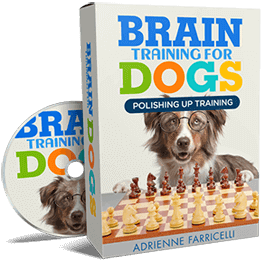
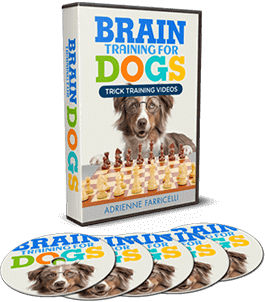
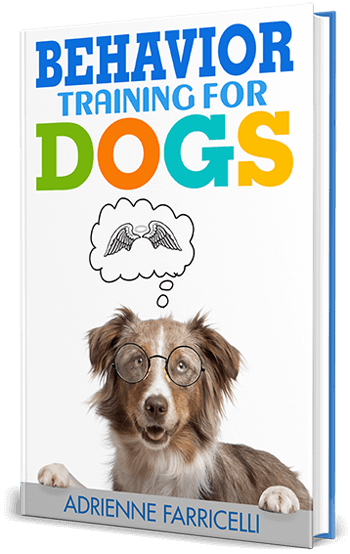
Brain Training for Dogs includes simple tactics for barking, including when a dog barks at doorbells, at nothing or at other triggers, inside a behavior-problem archive that also covers whining, digging, chewing and jumping. It pairs these with more than 21 brain games, created by CPDT-KA certified trainer Adrienne Farricelli.
A look inside Brain Training for Dogs








FAQ
Why does my dog go crazy when the doorbell rings?
The bell predicts visitors and excitement, and barking often seems to work. Pairing the bell with treats and a job changes that.
How do I stop my dog barking at the doorbell?
Pair the sound with treats at low volume, teach a go-to-mat cue, then link the two in stages with pretend rings before real visitors.
Should I punish my dog for barking at the door?
No. Punishment adds stress to an already excited dog. Teaching an alternative job works better and lasts.
How long does doorbell training take?
Many dogs improve within a couple of weeks of short daily sessions; real visitors take longer.
Next step
Record your doorbell today and play it softly five times, each followed by a treat on the floor.
Based on standard force-free training for alert barking: counterconditioning to the doorbell sound and a go-to-mat routine. Product details for Brain Training for Dogs are from the vendor’s published page as of September 29, 2026.