Disclosure: this article contains affiliate links. If you buy through them, we may earn a commission at no extra cost to you. How this works.
Short answer
A dog begging at the table is doing what has worked before: at some point, staring, whining or pawing earned a bite of food. To stop it, everyone in the house stops feeding from the table — completely — and the dog gets a job during meals instead: lying on its mat with its own chew.
Expect the begging to get worse for a few days before it fades. That is a sign the plan is working.
Impulse control, taught through games
- Created by Adrienne Farricelli, a CPDT-KA certified trainer
- 21+ force-free games in graded modules, with video demonstrations
- An archive of solutions for barking, chewing, jumping, digging and more
- Instant access and a 60-day money-back guarantee
Why begging is so stubborn
Occasional rewards make a behavior more persistent than rewards every time. If a dog gets a scrap one meal in ten, it learns that begging might pay at any moment, so it keeps trying. That is why a rule followed most of the time does not work: the exceptions keep the begging alive.
Smell is part of it too. A table full of food is the most interesting thing in the house.
The plan
- One family rule: no food from the table or the plate, from anyone, ever.
- Manage at first: during meals, keep the dog behind a gate or in its crate with a long-lasting chew.
- Teach a mat routine: reward the dog for lying on a mat a few steps from the table, using its own treats — not table food.
- Build duration: reward often at first, then less often as the meal goes on.
- Ignore begging: no eye contact, no talking, no pushing away. Attention is a reward too.
Expect an extinction burst
When a behavior that used to work stops working, most dogs try harder for a while: louder whining, more pawing. This burst is normal and short. If someone gives in now, the dog learns that begging harder pays — so this is the moment to hold the line.
The mat routine gives the dog a better option; the full method is in how to teach a dog to settle on a mat.
Table food can be risky
Beyond manners, many human foods are unsafe for dogs — chocolate, grapes and raisins, onions and garlic, and anything sweetened with xylitol among them. A no-scraps rule protects the dog from the most common kitchen accidents.
Give the dog its own mealtime
Feed the dog its meal in a food puzzle or a stuffed toy while the family eats. A dog busy with its own dinner has much less reason to watch yours, and the routine turns mealtime into a calm, predictable part of the day.
If your schedule allows, feed the dog before your own meal, so it comes to the table already satisfied.
Getting kids on board
- Explain the rule and why it matters, in simple words.
- Give children a job: they can drop the dog’s own treats on the mat during meals.
- Clear plates away from table edges where the dog can reach.
- Praise the whole family, not just the dog, when a meal goes by without begging.
Related kitchen habits
Begging often travels with counter surfing and grabbing dropped food. The plans in how to stop dog counter surfing and how to teach leave it close the other doors to the kitchen.
Build impulse control
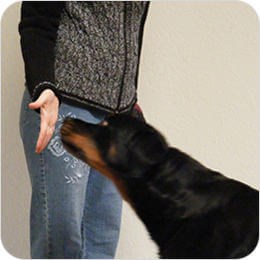
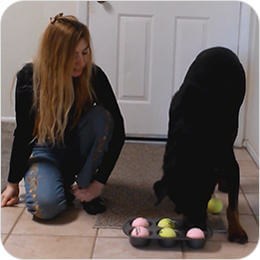
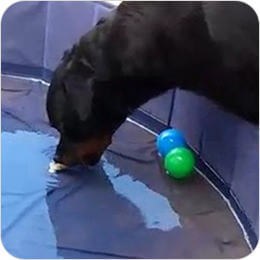
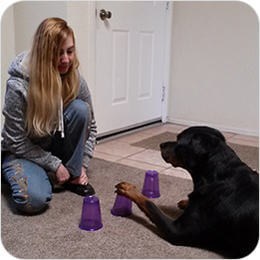
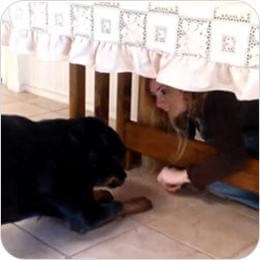
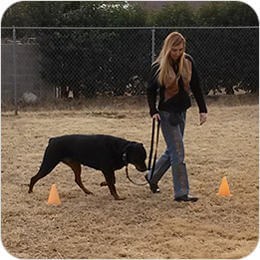
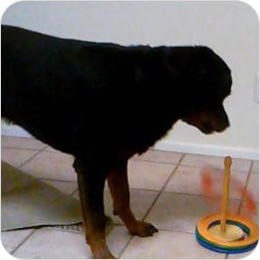
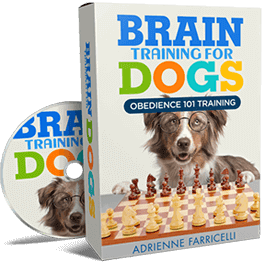
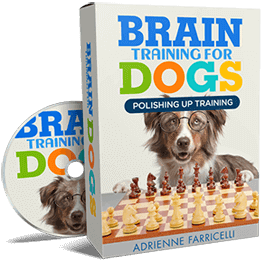
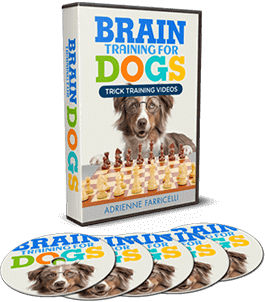
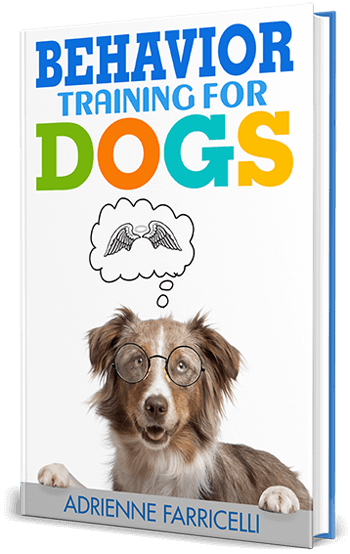
Brain Training for Dogs includes a module on patience and impulse control, obedience lessons on taking or leaving items, and a behavior-problem archive, with more than 21 brain games in all, created by CPDT-KA certified trainer Adrienne Farricelli.
A look inside Brain Training for Dogs



FAQ
How do I stop my dog begging at the table?
Stop all feeding from the table, give the dog a mat and a chew during meals, and ignore begging until it fades.
Why does my dog beg even though I rarely feed it scraps?
Rare rewards make begging stronger, not weaker. Only a complete stop works.
Should I feed my dog before we eat?
It can help. A dog that has just eaten is often calmer during your meal.
How long does it take to stop begging?
Often one to three weeks, with a short spike in begging at the start.
Next step
At the next meal, put the dog on its mat with a long-lasting chew and agree as a family: no scraps, starting now.
Based on standard force-free training for begging, including intermittent reinforcement, extinction bursts and mat training, and common guidance on foods that are unsafe for dogs. Product details for Brain Training for Dogs are from the vendor’s published page as of September 29, 2026.