Disclosure: this article contains affiliate links. If you buy through them, we may earn a commission at no extra cost to you. How this works.
Short answer
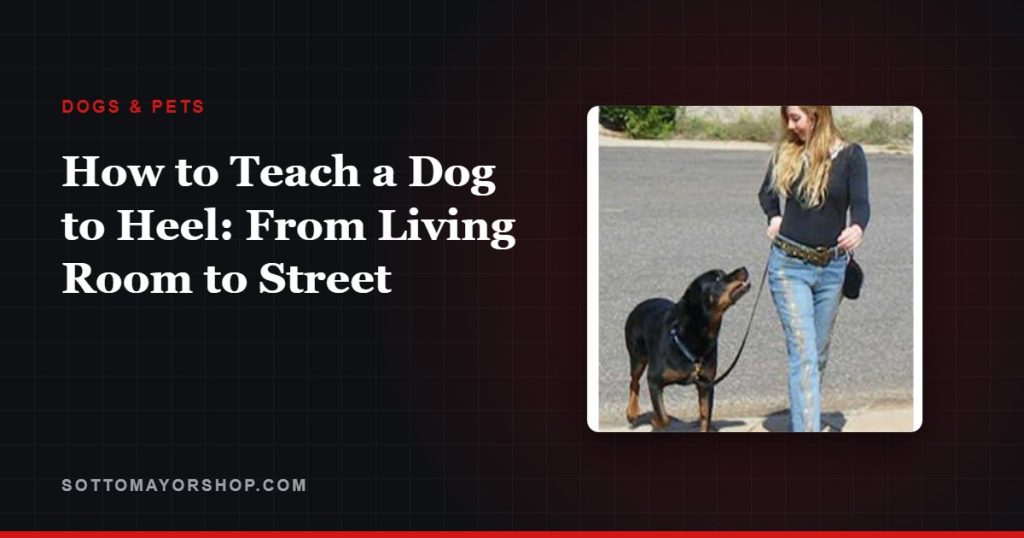
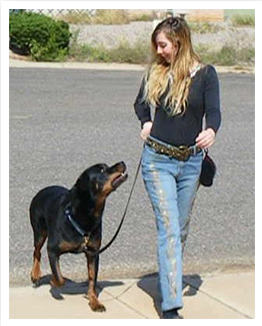
To teach a dog to heel, reward it for standing right beside your leg, then for taking one step with you, then a few, adding turns and changes of pace as it improves. Rewards are delivered at your leg, so that spot becomes the best place in the world to be.
Heel is a precise, short-term position for busy moments — crossing a street, passing another dog — while a loose leash is for the rest of the walk.
Games that teach your dog to focus on you
- Created by Adrienne Farricelli, a CPDT-KA certified trainer
- 21+ force-free games in graded modules, with video demonstrations
- An archive of solutions for barking, chewing, jumping, digging and more
- Instant access and a 60-day money-back guarantee
Heel versus loose-leash walking
| Heel | Loose leash | |
|---|---|---|
| Position | Right beside your leg, shoulder at your knee | Anywhere, as long as the leash stays slack |
| Attention | On you | Free to sniff and look around |
| When to use it | Crossings, crowds, passing distractions | Most of the walk |
Choose a side and stick to it
Traditionally dogs heel on the left, but either side works. What matters is consistency, so the dog always knows where the reward will appear. Hold treats in the hand on that side.
Step by step
- Find the spot: lure the dog into position beside your leg and reward it there, several times in a row.
- One step: take a single step forward; reward the moment the dog moves with you and stays in position.
- A few steps: build to three, five, then ten steps, rewarding often at your leg.
- Add the cue: say heel just before you step off, once the dog follows reliably.
- Turns and pace: add right turns, left turns, about-turns, slow and fast steps.
- Fade the lure: walk with an empty hand and reward from a pouch.
- Release: end each heel with a release word, then let the dog sniff.
A two-week plan
| Days | Where | Goal |
|---|---|---|
| 1 to 3 | Living room | The position, then single steps |
| 4 to 7 | Hallway and yard | Ten steps with turns |
| 8 to 10 | Quiet street | Short heels between loose-leash stretches |
| 11 to 14 | Busier places | Heel past mild distractions |
Tips that speed it up
- Deliver every reward right at your leg, not in front of you; placement teaches position.
- Reward a lot early — a treat every step or two — and space rewards out slowly.
- Walk briskly. A slow, hesitant handler invites the dog to wander.
- If the dog forges ahead, turn and walk the other way, then reward when it catches up beside you.
Common mistakes
- Keeping the treat in front of the dog’s nose for weeks, so it never learns to walk without a lure.
- Repeating heel over and over. Say it once, then help the dog with your body position and rewards.
- Asking for long heels before short ones are easy.
- Practicing only on walks, when the dog is most excited. Start indoors, before the walk begins.
Heel as part of a calm walk
Heel works best alongside good loose-leash manners, which let the dog relax between heels — see how to stop leash pulling. And if your dog tunes you out outdoors, start with the attention games in when your dog ignores you outside.
Obedience with a brain-training twist
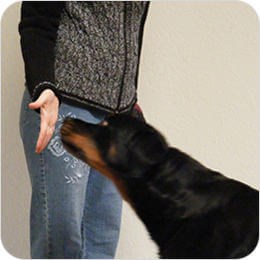
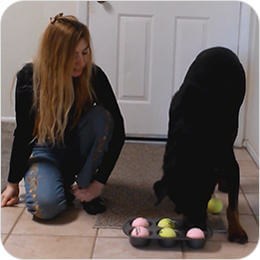
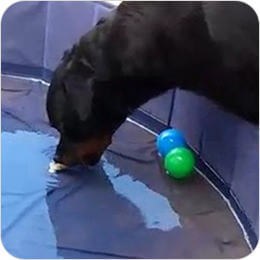
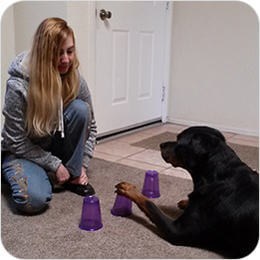
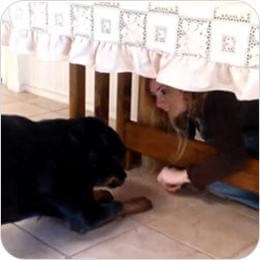
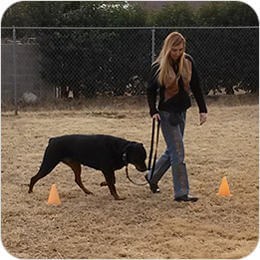
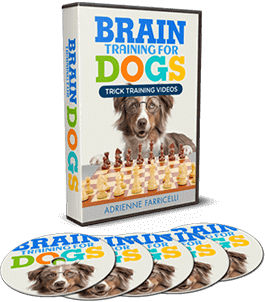
Brain Training for Dogs covers heel in its Obedience 101 section — sit, lie down, stay, heel, drop and walking by your side — and includes a game that teaches the dog to stick by your side and follow your movements, no matter how erratic. It has more than 21 brain games, created by CPDT-KA certified trainer Adrienne Farricelli.
A look inside Brain Training for Dogs








FAQ
What does heel mean in dog training?
The dog walks right beside your leg, usually on the left, paying attention to you, until released.
How long does it take to teach a dog to heel?
Many dogs learn the basic position in a few days; heeling past distractions takes a few weeks of short sessions.
Should my dog heel the whole walk?
No. Use heel for short, busy stretches and let the dog walk on a loose leash and sniff the rest of the time.
Why does my dog heel at home but not outside?
Outdoors is far more distracting. Go back to shorter heels and more frequent rewards in each new place.
Next step
Today, in the living room, reward your dog ten times for standing right beside your leg, then try one step.
Based on standard force-free heel training: position, reward placement, gradual steps, turns and distractions. Product details for Brain Training for Dogs are from the vendor’s published page as of September 29, 2026.