
Disclosure: this article contains affiliate links. If you buy through them, we may earn a commission at no extra cost to you. How this works.
Short answer
To teach a dog to settle you reward the off switch, not the sit. Put down a mat, pay every second of calm on it, and build the duration before you build anything else.
Five stages, ten minutes a day: capture the lie-down, add seconds, add distance, add distractions, then use it for real — dinner, the doorbell, a work call.
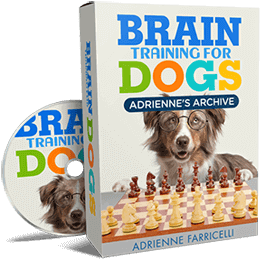
Impulse control and settling, taught through games
- Created by Adrienne Farricelli, a CPDT-KA certified trainer
- 21+ force-free games in graded modules, with video demonstrations
- An archive of solutions for barking, chewing, jumping, digging and more
- Instant access and a 60-day money-back guarantee
Why a mat and not a spot on the floor
A mat is portable and unambiguous. It travels to the kitchen, the office, the café and the vet waiting room, and the dog knows the rule the moment it hits the floor.
Use something distinct — a folded towel, a bath mat, a proper settle mat — and keep it for this. If it doubles as his bed, the cue gets blurry.
Stage 1 — Capture the lie-down
Put the mat down, stand next to it and wait. The dog will sniff it, look at you, and eventually offer something. Mark and feed anything toward the mat: a paw, two paws, standing on it, then lying down.
Drop the treat between his front paws rather than handing it over. Feeding low keeps the dog down, feeding high pops him up.
Five minutes of this is enough. Most dogs are lying down on the mat by the second or third session.
Stage 2 — Add seconds, not minutes
Once he lies down, start counting. Feed at one second, then two, then five, then three again — mixing the intervals is what builds real duration, because the dog cannot predict when the payment comes.
Feed while he is still lying down, never as he gets up. The moment of the treat is the moment you are training.
Add a release word — “okay”, “free” — and use it to end every rep. A stay without a release is a stay the dog has to break on his own.
| Stage | Goal | Session length | What breaks it |
|---|---|---|---|
| 1. Capture | Dog lies on the mat | 5 min | Luring instead of waiting |
| 2. Duration | 30–60 seconds of calm | 5 min | Always increasing the time |
| 3. Distance | You step away and back | 5 min | Leaving too far too fast |
| 4. Distraction | Doorbell, food prep, visitors | 5 min | Skipping the easy versions |
| 5. Real life | Settle while you eat or work | As long as it lasts | Forgetting to release |
Stage 3 — Add distance
Take one step away, step back, pay. Then two steps. Then around the sofa. Then out of the room for three seconds.
Come back before he gets up, every time. If he breaks, you went too far too fast — not a discipline problem, a criteria problem.
Stage 4 — Add the real distractions
One distraction at a time, at the level where he can still hold. A dog that breaks three times in a row is telling you the step is too big.
- You standing up and sitting down.
- A knock on the wall, then the doorbell — the same rebuild used in the greeting routine.
- Food being prepared on the counter.
- A family member walking past with shoes on.
- The TV going on, the kettle boiling, a bag rustling.
Stage 5 — Use it where it matters
Dinner time is the best first application: mat down two metres from the table, a chew on it, and you eat. Ten minutes of peace the first night, twenty the second.
Then the doorbell, the work call, the coffee on the patio. The mat becomes the answer to “what do I do with myself?”, which is the question behind most pacing and barking.
A dog who settles easily is usually a dog whose brain got used earlier in the day — ten minutes of nose work before the session makes the first weeks much faster.
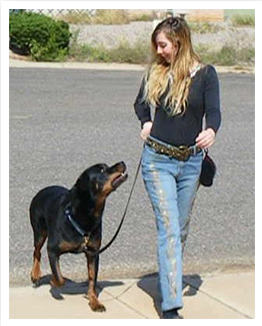
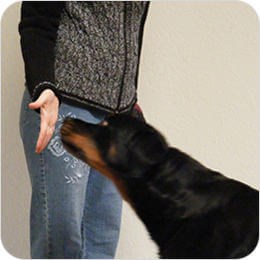
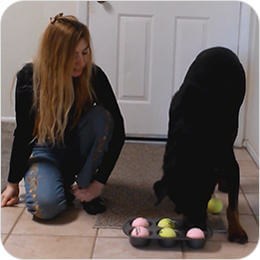
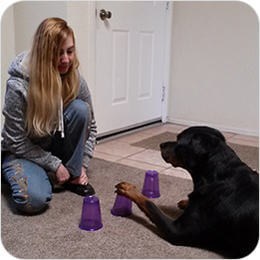
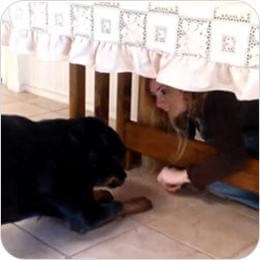
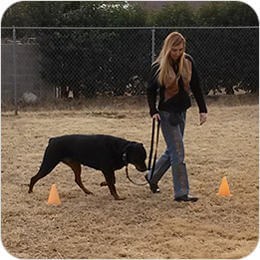
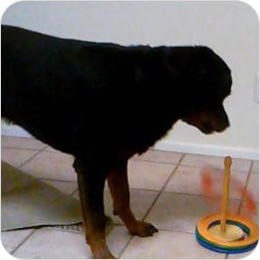
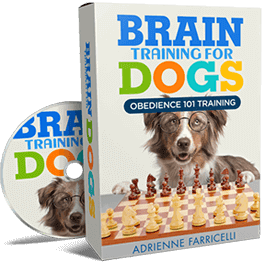
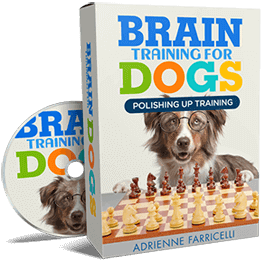
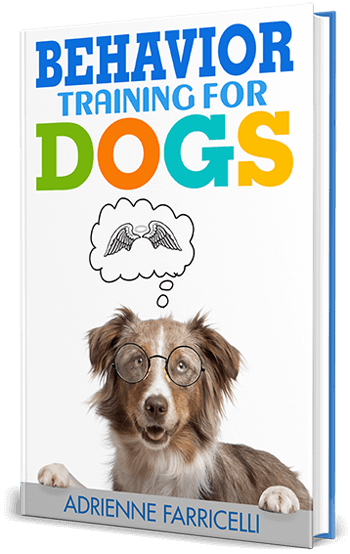
A dog that gets over-excited and is hard to settle down is on the list of problems Brain Training for Dogs covers, with more than 21 games, step-by-step guides and video demonstrations from CPDT-KA certified trainer Adrienne Farricelli.
A look inside Brain Training for Dogs










FAQ
How long until my dog settles for an hour?
Two to four weeks of daily five-minute sessions for most dogs, and it goes faster when the mat is used at predictable times like dinner.
Can I use a bed instead of a mat?
Yes, but keep one bed for sleeping and one mat for training if you can. Clear rules are learned faster than blurry ones.
My dog gets up as soon as I sit down.
Pay him more often at the start — every two or three seconds — and build back up. The rate of reinforcement is almost always the problem.
Should I tell him off for breaking the stay?
No. Simply reset and make the next rep easier. Corrections make the mat feel risky, which is the opposite of settling.
Next step
Put the mat down tonight during dinner prep and pay every few seconds of calm. Ten minutes, and end with your release word.
Based on standard force-free, positive-reinforcement training practice as taught by certified trainers. Product details for Brain Training for Dogs are from the vendor’s published page as of September 28, 2026.