Disclosure: this article contains affiliate links. If you buy through them, we may earn a commission at no extra cost to you. How this works.
Short answer
A dog afraid of strangers needs distance and choice, not forced introductions. Let the dog watch new people from a comfortable distance while good things happen, ask visitors to ignore it, and let the dog decide whether to approach. Confidence grows from many small, safe experiences.
Pushing a fearful dog to greet people usually makes the fear worse — and a frightened dog that cannot escape may bite.
Force-free training that goes at your dog’s pace
- Created by Adrienne Farricelli, a CPDT-KA certified trainer
- 21+ force-free games in graded modules, with video demonstrations
- An archive of solutions for barking, chewing, jumping, digging and more
- Instant access and a 60-day money-back guarantee
Recognize the signs of fear
- Tail tucked, ears back, body lowered.
- Lip licking, yawning or turning the head away.
- The whites of the eyes showing.
- Backing away, hiding behind you, or barking from a distance.
- Freezing, growling or raising the lip — clear requests for space.
Why some dogs fear strangers
Some dogs are simply born more cautious. Others missed meeting a variety of people as puppies, or had a frightening experience. Whatever the cause, the approach is the same: make strangers predict good things, at a distance the dog can handle.
Reading your dog’s signals is the first skill to build — the basics are in dog body language basics.
The treat-and-retreat method
- The visitor sits calmly, avoiding eye contact, and tosses a treat past the dog, so the dog moves away from the person to get it.
- The next treat lands a little closer to the visitor, then far away again.
- Moving away is part of the reward: the dog learns it can always leave.
- Keep sessions short and stop while the dog is still relaxed.
- Let the dog choose to sniff the visitor; the visitor keeps hands still.
Rules for visitors
| Do | Do not |
|---|---|
| Ignore the dog and let it approach | Reach over the dog’s head to pet it |
| Sit down and stay calm | Stare, crouch toward it or corner it |
| Toss treats away from you | Hold treats out to lure the dog close |
| Keep visits short at first | Insist that the dog say hello |
Practice on walks
Outdoors, find a spot where people pass at a distance the dog can watch without barking or freezing. Each time a person appears, feed a treat; when they are gone, the treats stop. Over weeks, the distance you need will shrink.
A hand-target cue gives a worried dog an easy, familiar job in these moments — see how to teach a dog to touch your hand.
Progress takes time
Fear changes slowly. Measure progress in weeks, not days: the distance your dog needs from strangers, how fast it recovers after a scare, how soon it takes treats near new people. Write it down, and you will see improvement that is easy to miss day to day.
When to get help
If your dog growls, snaps or has bitten, talk to your vet and a certified behavior professional before working around strangers. Keep everyone safe in the meantime with a leash, a gate and clear rules for guests. Fear can also have medical causes, which is one more reason to involve your vet.
Confidence through brain games
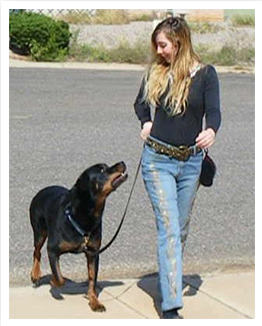
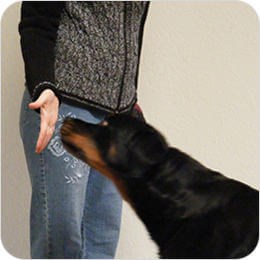
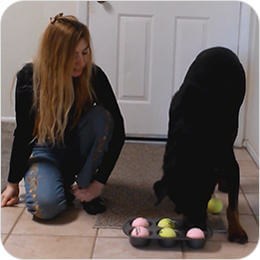
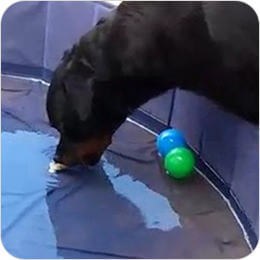
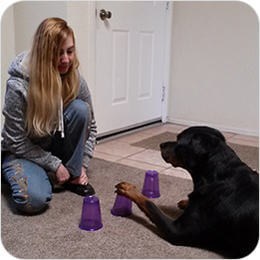
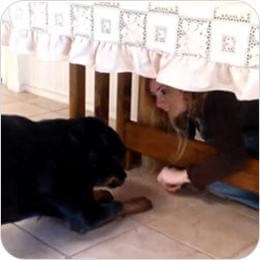
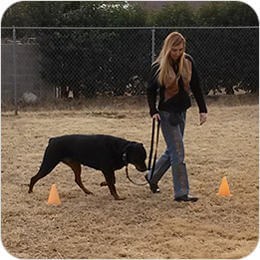
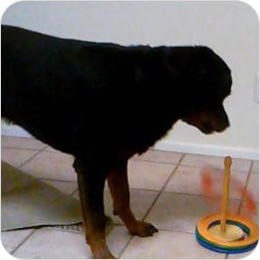
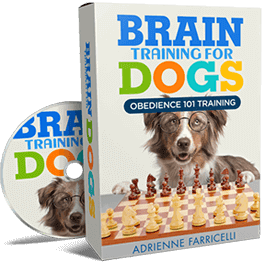
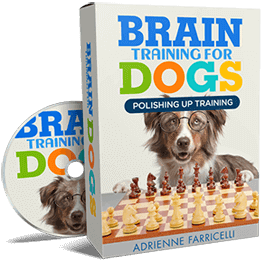
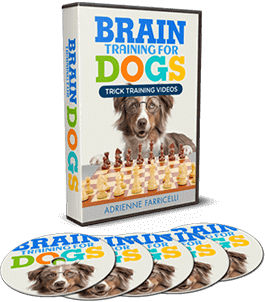
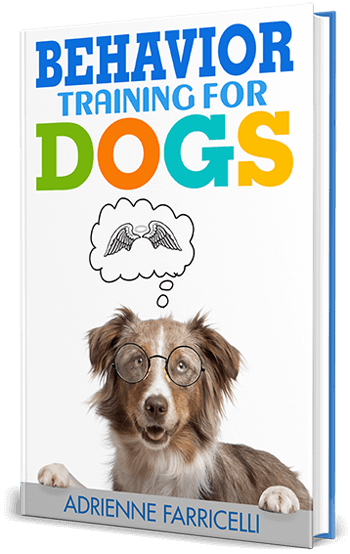
Brain Training for Dogs lists dogs with fears of certain sounds or stimuli, and dogs with anxiety, among those it is designed to help. It builds confidence and focus through more than 21 brain games, created by CPDT-KA certified trainer Adrienne Farricelli.
A look inside Brain Training for Dogs



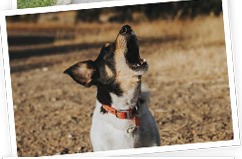
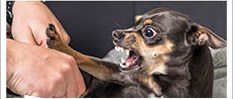

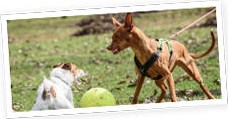



FAQ
How do I help my dog who is scared of strangers?
Give it distance and choice, pair strangers with treats, ask visitors to ignore it, and let it approach on its own terms.
Should I make my dog meet new people?
No. Forcing greetings usually increases fear. Let the dog watch and approach when ready.
Can a fearful dog learn to like strangers?
Many improve a lot with patient, positive exposure, though some stay reserved. The goal is a calm dog, not necessarily a social one.
What is treat and retreat?
A method where a visitor tosses treats away from themselves, so the dog can approach and retreat freely while learning that the person predicts good things.
Next step
Before your next visitor arrives, set up a gate, a bowl of treats by the door, and the rule: nobody greets the dog.
Based on standard force-free methods for fear of people: desensitization, counterconditioning and the treat-and-retreat technique. Product details for Brain Training for Dogs are from the vendor’s published page as of September 29, 2026.