Disclosure: this article contains affiliate links. If you buy through them, we may earn a commission at no extra cost to you. How this works.
Short answer
The basic dog commands every dog should know are sit, down, stay, come, leave it, drop it and walking on a loose leash. Together they cover daily manners and the moments that keep a dog safe.
Teach them one at a time with food rewards, in short sessions, starting somewhere quiet — then practice each one in new places until it works anywhere.
Take the basic commands further with brain games
- Created by Adrienne Farricelli, a CPDT-KA certified trainer
- 21+ force-free games in graded modules, with video demonstrations
- An archive of solutions for barking, chewing, jumping, digging and more
- Instant access and a 60-day money-back guarantee
The seven commands and what each one is for
| Command | What it means | Why it matters |
|---|---|---|
| Sit | Bottom on the floor until released | The base for polite greetings and waiting at doors |
| Down | Lying down until released | Calm at home, at a café or at the vet |
| Stay | Hold the position until released | Safety at open doors, at the car and near roads |
| Come | Come straight to you, every time | The one that can keep a dog out of danger |
| Leave it | Ignore that thing | Stops the dog grabbing food or something dangerous |
| Drop it | Let go of what is in the mouth | Gets things back without a chase |
| Loose-leash walking | Walk near you without pulling | Makes daily walks pleasant for both of you |
Teach sit and down with a lure
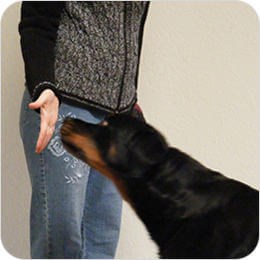
For sit, hold a treat at the dog’s nose and move it slowly up and back over the head. As the head goes up, the bottom goes down. Say yes the instant it touches the floor, then give the treat. After a few repetitions, make the same hand movement without a treat in it, and add the word sit just before the signal.
For down, start from a sit and move the treat from the nose straight down to the floor between the front paws, then slowly out along the ground. Mark and reward the moment the elbows touch. If the dog stands up, lure more slowly and reward halfway steps at first.
Stay, come, leave it and drop it
- Stay is built from three parts — duration, distance and distraction — trained one at a time. The full method is in how to teach a dog to stay.
- Come has to be the best-paid command your dog knows. Start indoors, move to a long line outside, and never call the dog for something it dislikes. See dog recall training.
- Leave it starts with a treat in a closed hand: the dog gets a reward from your other hand the moment it backs off. The steps are in how to teach leave it.
- Drop it is a trade. Offer a treat at the dog’s nose, say drop it as the toy falls, reward, then give the toy back so letting go never means losing the game.
Walking on a loose leash
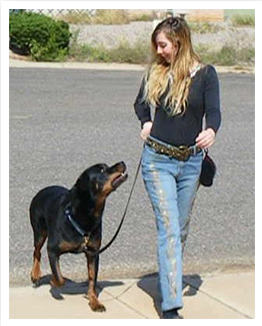
Pulling works for the dog because it gets it where it wants to go. Turn that around: stop the moment the leash goes tight, and move forward again only when it slackens. Reward the dog often for being at your side, especially in the first minutes of a walk.
Leash manners take longer than the other basics, so plan for weeks rather than days. A step-by-step plan is in how to stop leash pulling.
Rules that make every command stick
- One word, one meaning: if down means lie down, use off for getting off the sofa.
- Say the cue once. If the dog does not respond, help it with the lure instead of repeating the word.
- Pick a release word, like free or okay, so the dog knows exactly when a sit or stay ends.
- Keep sessions to five minutes or so, a few times a day, and end on a success.
- Practice in new places — the kitchen, the yard, the sidewalk — because dogs do not generalize easily.
A simple first week
| Days | Focus |
|---|---|
| 1 and 2 | Sit and down with a lure, then with the hand signal alone |
| 3 and 4 | Short stays, a first leave it, and come inside the house |
| 5 and 6 | Drop it with toy trades, and loose-leash practice in the yard |
| 7 | Review everything in a new place with mild distractions |
Reward what you want, all day
Training does not only happen in sessions. Catch the dog sitting at the door, lying calmly under the table or walking beside you, and reward it on the spot. Every reward outside a session tells the dog that good manners pay everywhere, not just when the treat pouch comes out.
Most dogs learn fastest from small, soft treats they can eat in a second. For harder cues outdoors, carry something better than kibble.
Beyond the basics
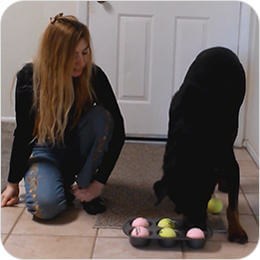
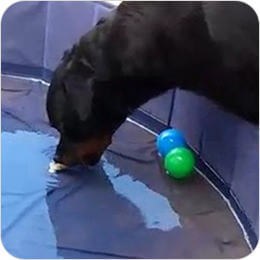
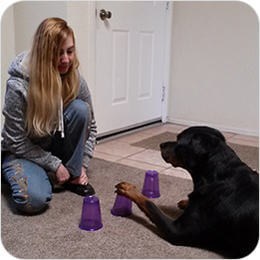
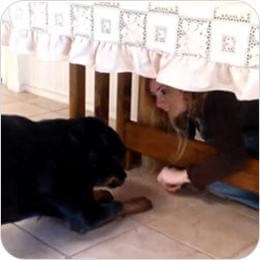
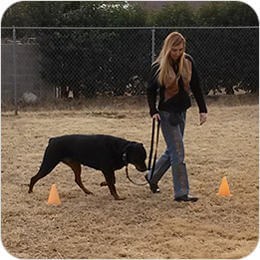
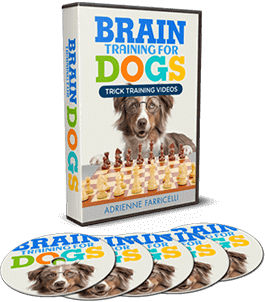
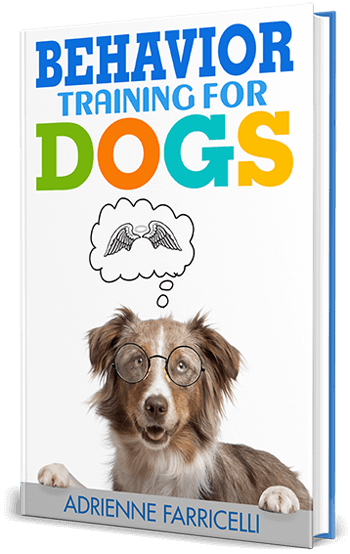
Once the basics are in place, a dog that also gets mental work is easier to live with. Brain Training for Dogs has an Obedience 101 section covering sit, lie down, stay, heel, drop and walking by your side, alongside more than 21 brain games and a behavior-problem archive, created by CPDT-KA certified trainer Adrienne Farricelli.
A look inside Brain Training for Dogs





FAQ
What are the basic dog commands?
Sit, down, stay, come, leave it, drop it and loose-leash walking are the usual core set.
What command should I teach my dog first?
Sit is usually first, because it is easy to lure and it gives the dog a polite default behavior.
How long does it take to teach basic commands?
Sit and down often take a few days. A reliable recall and loose-leash walking take weeks of steady practice.
At what age can a puppy learn commands?
Puppies can start learning sit, down and their name as soon as they come home, in very short sessions.
Next step
Today, pick your release word and teach sit in three two-minute sessions, using a treat as the lure.
Based on standard force-free training methods: luring, marking, rewarding and practicing cues in new places. Product details for Brain Training for Dogs are from the vendor’s published page as of September 29, 2026.