Disclosure: this article contains affiliate links. If you buy through them, we may earn a commission at no extra cost to you. How this works.
Short answer
To stop leash pulling you change one rule and keep it: the leash going tight never moves the dog forward. Pulling stops being useful, and walking beside you starts paying.
Four steps, ten minutes a day: reset the arousal at the door, reward the position you want, stop the moment the leash tightens, and practice where it is easy before you practice where it is hard.
Games that teach your dog to focus on you
- Created by Adrienne Farricelli, a CPDT-KA certified trainer
- 21+ force-free games in graded modules, with video demonstrations
- An archive of solutions for barking, chewing, jumping, digging and more
- Instant access and a 60-day money-back guarantee
Why the pulling keeps working
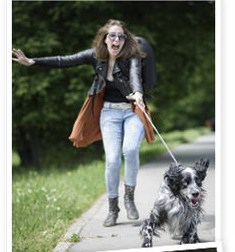
A dog pulls because it works. Tight leash, and the world still arrives: the tree, the other dog, the smell at the corner. Every walk where pulling gets the dog forward is a training session, just not yours.
That is the whole mechanism, and it is also the fix. When the tight leash stops producing forward motion — every single time — the behavior has nothing left to feed it.
Step 1 — Start before the door opens
Most walks are lost in the hallway. Clip the leash on only when the dog is still, open the door only when the leash is loose, and close it again if he launches. Three or four repetitions and the door becomes part of the training instead of the starting gun.
If your dog spins and barks at the sight of the leash, work the routine without going out at all: pick it up, put it down, repeat until it is boring.
Step 2 — Pay the position you want
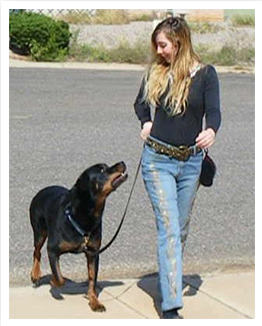
Decide where the dog should be — beside your leg, on one side, leash hanging in a U — and mark and reward that position frequently at first. A treat every few steps is not bribery; it is telling the dog which of the hundred things he is doing right now is the paid one.
Timing is what makes it work. The marker word or click happens while the dog is in position, and the treat comes after. Reward late and you pay for whatever came next.
- Hold the leash hand still at your waist; movement in the arm becomes a cue you did not mean to give.
- Reward at the seam of your trousers, so the dog’s default drifts toward your leg.
- Use the first minute of the walk for the highest rate of reward — that is when arousal is highest.
Step 3 — Stop on tension, move on slack
The moment the leash tightens, stop walking. Do not yank, do not tell him off, just become a tree. When the leash goes slack — a step back, a look at you, any release of pressure — walk again.
The first three walks with this rule are slow and slightly ridiculous. By the fourth, most dogs have worked out the pattern, because the rule never varies.
An alternative for strong pullers is the turn: the leash tightens, you change direction calmly and the dog follows. Both work; what matters is that neither ever rewards tension.
Step 4 — Practice where it is easy first
Your hallway, then the garden, then a quiet street at a quiet hour, then the park. Each step up in distraction is a new context for the dog, and skipping the ladder is why training “stops working outside”.
Ten minutes of deliberate practice beats an hour of walking on autopilot. The rest of the walk can be a long line and a sniffing session — dogs need that too.
Equipment that helps, and what it does not do
Retractable leashes teach the opposite lesson: pulling extends the world. Leave them out of this plan.
| Gear | What it helps with | What it does not do |
|---|---|---|
| Front-clip harness | Turns the dog toward you when he pulls, lowering the force | Teach the behavior on its own |
| Fixed-length leash, 4–6 ft | Makes slack and tension clear to the dog | Work if you change length mid-walk |
| Treat pouch | Keeps the reward fast — timing is everything | Replace the marker word |
| Long line, 15–30 ft | Sniffing and decompression away from traffic | Belong on a busy sidewalk |
When the dog is pulling because he is bored
A dog with no mental outlet arrives at the door already overflowing. Ten minutes of indoor games before the walk often does more for the leash than anything you do on the sidewalk — start with these seven indoor games.
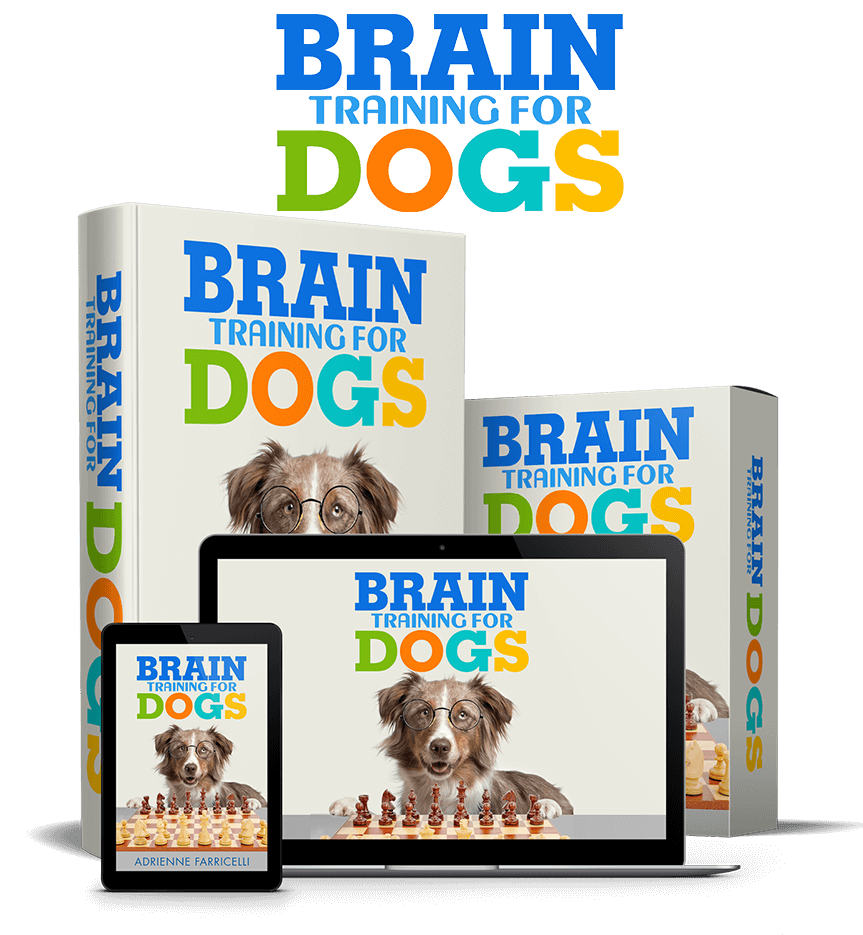
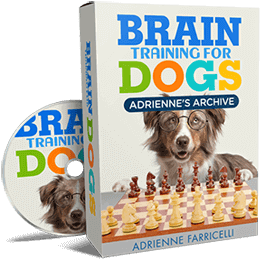
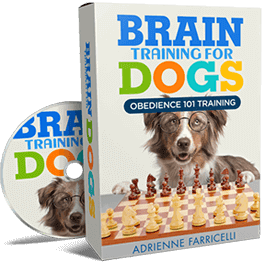
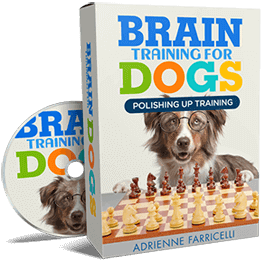
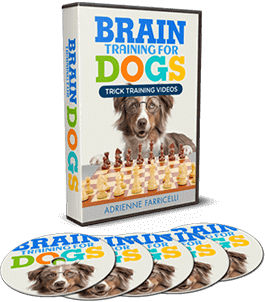
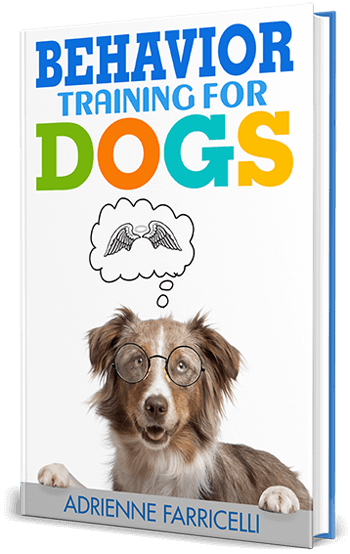
If you want the structured version of that, with the games graded from beginner to advanced, it is what the Brain Training for Dogs program is built around.
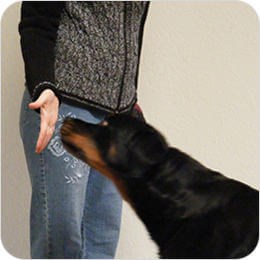
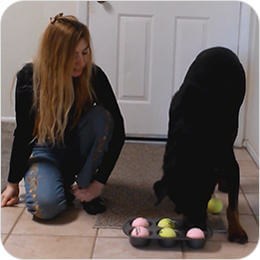
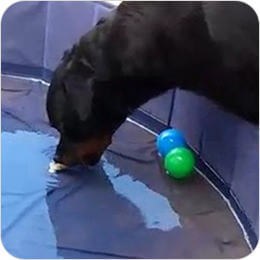
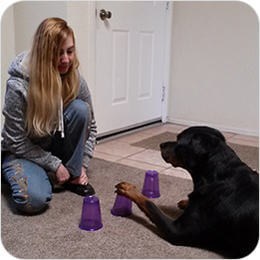
Pulling on the leash is one of the problems it covers, with more than 21 games, step-by-step guides and video demonstrations from CPDT-KA certified trainer Adrienne Farricelli. See Brain Training for Dogs here.
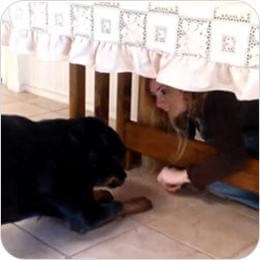
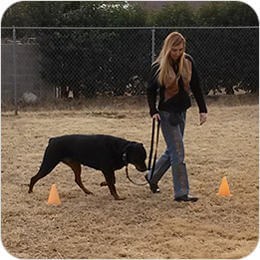
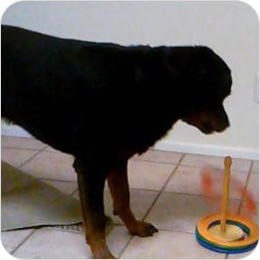
A look inside Brain Training for Dogs
FAQ
How long before it improves?
Most owners see the first change within a week of consistent sessions, because the rule is simple and the dog only needs to notice the pattern.
Should I use a no-pull head halter?
It can reduce force with a strong dog, but it needs its own gentle introduction. The training rule stays the same with any equipment.
What if the dog pulls toward other dogs?
Increase distance until your dog can still take a treat, reward attention on you at that distance, and shorten the gap over sessions rather than within one.
Can I train this on every walk?
Train on part of every walk. Ten minutes of rules, then a long sniffing stretch, keeps both of you willing to do it again tomorrow.
Next step
Tonight, do only step 1 and step 3 for ten minutes. Two rules, one walk, and keep the treats where your hand can reach them without looking. Then add the indoor games before tomorrow’s walk.
Based on standard force-free, positive-reinforcement training practice as taught by certified trainers. Product details for Brain Training for Dogs are from the vendor’s published page as of September 28, 2026.