Disclosure: this article contains affiliate links. If you buy through them, we may earn a commission at no extra cost to you. How this works.
Short answer
To teach a dog to drop it, trade: hold a treat your dog wants more than the toy right at its nose, and the moment the toy falls, say “yes”, give the treat, then hand the toy back. Repeat until the dog lets go as soon as the treat appears, then add the word “drop” just before you show it.
Your dog learns that letting go is a good deal, not a loss. That is the whole trick, and it is why the cue holds up when it matters.
Impulse control, taught through games
- Created by Adrienne Farricelli, a CPDT-KA certified trainer
- 21+ force-free games in graded modules, with video demonstrations
- An archive of solutions for barking, chewing, jumping, digging and more
- Instant access and a 60-day money-back guarantee
Drop it is not leave it
The two cues sound alike but do different jobs. “Leave it” means do not touch something: the sock on the floor, the chicken bone on the sidewalk. “Drop it” means let go of what is already in your mouth. You need both, and they are trained differently. The first is covered in how to teach a dog leave it; this guide is about the second.
Step 1: trade with a boring toy
Start with something your dog likes a little, not a favorite. Let it pick up the toy, then hold a tasty treat right in front of its nose. Most dogs open their mouth to sniff or take the treat, and the toy falls.
- The moment the toy drops, say “yes” and give the treat.
- Pick up the toy and give it right back.
- Repeat five to ten times in a session, and stop while your dog is still keen.
Step 2: add the word
When your dog lets go the instant the treat appears, start saying “drop” just before you bring the treat forward. Over a few sessions, the word starts to predict the trade. Then say the word, wait a second, and watch: many dogs begin to release before they see the treat. Mark that and pay well.
Once that works with low-value toys, move up one level at a time: a favorite toy, a chew, then something you would really want back quickly.
Step 3: teach it through tug
Tug is the best place to practice, because the game itself is the reward. Play for a few seconds, then stop moving: hold the toy still against your leg so it goes dead. Say “drop” and wait. When your dog lets go, mark it and restart the game right away.
Your dog learns that releasing the toy is how the fun continues, which is exactly the attitude you want.
Three habits that undo the training
- Chasing: running after a dog with your sock teaches the best game in the world, keep-away.
- Prying the jaws open: it teaches the dog to swallow fast or hold on harder, and it can get you bitten.
- Only asking for valuable things: if “drop” always means losing something great, the dog stops listening. Practice with things you give back.
If your dog stiffens or growls
A dog that freezes, stiffens, eats faster or growls when you come near its things is guarding them. Do not push through that with drop-it drills. Start with the distance-and-trade approach in resource guarding in dogs, and bring in a qualified trainer or behavior professional if the guarding is intense. If your dog swallows something dangerous, call your veterinarian.
Make trading part of daily life
Dogs that grab shoes and remote controls usually do it because it starts a game. Pair drop-it practice with plenty of legal things to chew, as in how to stop a dog chewing everything, and the grabbing gets less exciting.
Build the impulse control behind it
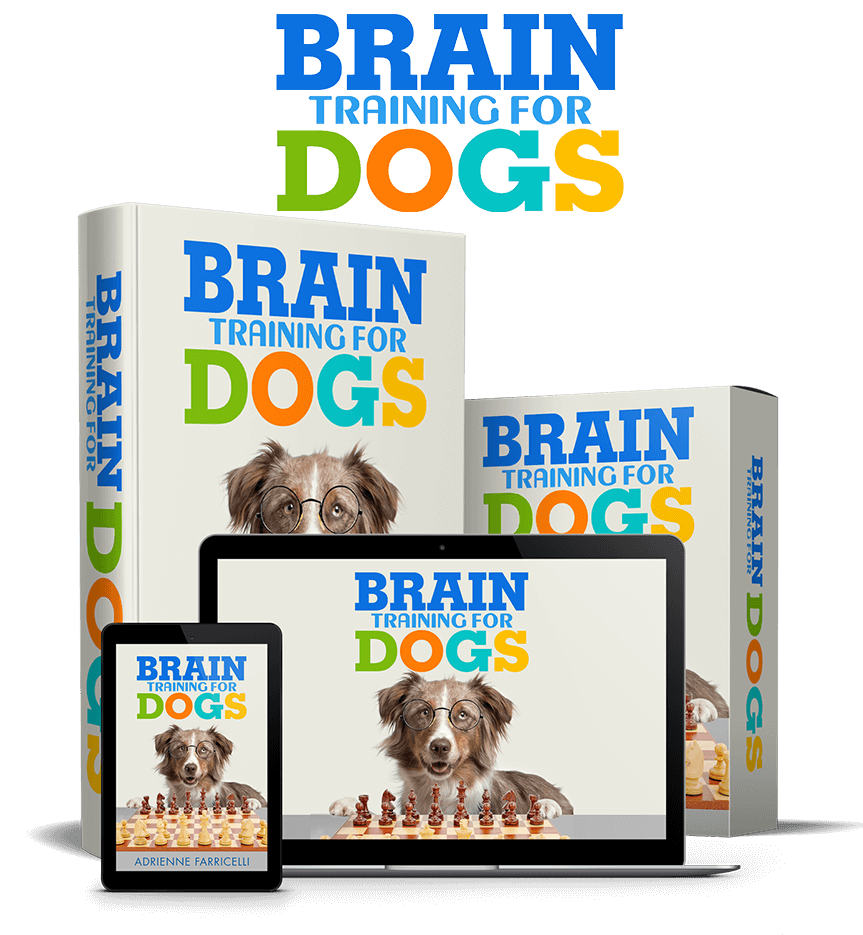
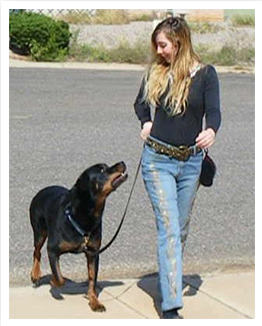
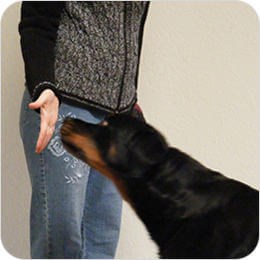
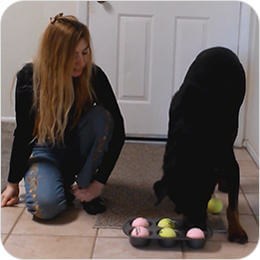
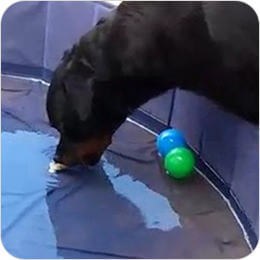
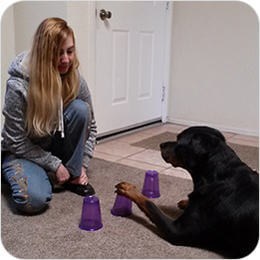
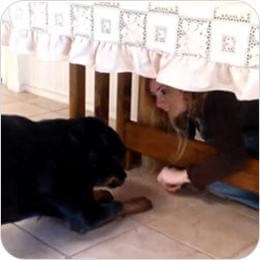
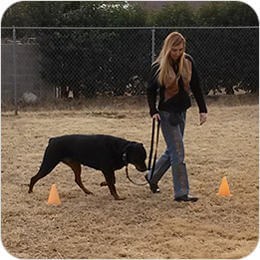
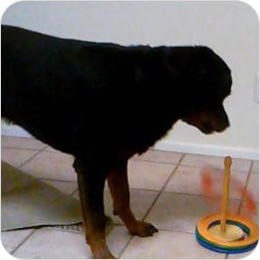
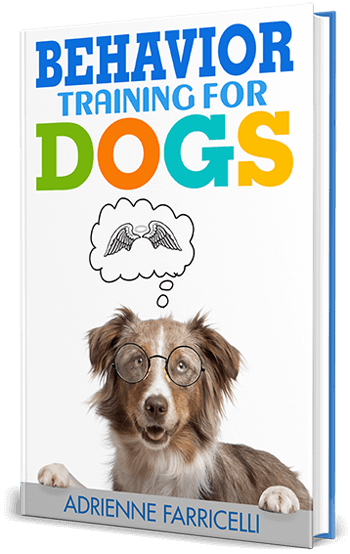
Letting go of something good is an impulse-control skill, and Brain Training for Dogs is built around teaching that through play. Created by CPDT-KA certified trainer Adrienne Farricelli, it has 21+ force-free games in graded modules, with video demonstrations, and an archive of solutions for problems like chewing.
A look inside Brain Training for Dogs
FAQ
How long does it take to teach drop it?
Most dogs learn the trade in a few short sessions. Making it reliable with high-value items takes a few weeks of regular practice.
Should I give the toy back after my dog drops it?
Yes, as often as you safely can. Getting the toy back is what teaches your dog that letting go is not a loss.
What treat should I use?
Something your dog wants more than the item in its mouth: small pieces of cheese, chicken or a favorite soft treat.
My dog runs away with things. What do I do?
Stop chasing, which turns it into a game. Practice trades at home, and make coming back to you worth more than the stolen item.
Next step
Tonight, do five trades with a toy your dog only half cares about, and give it back every time.
Based on standard force-free, reward-based dog training practice for teaching a release cue. Product details for Brain Training for Dogs are from the vendor’s published sales page as of September 30, 2026.