Disclosure: this article contains affiliate links. If you buy through them, we may earn a commission at no extra cost to you. How this works.
Short answer
A dog jumping on guests is a greeting that has always worked: jump, get touched, get talked to. Change what pays and the jumping fades in about two weeks.
The routine: manage the first thirty seconds at the door, reward four feet on the floor before the dog thinks of jumping, and rehearse fake arrivals until the real one is boring.
Impulse control, taught through games
- Created by Adrienne Farricelli, a CPDT-KA certified trainer
- 21+ force-free games in graded modules, with video demonstrations
- An archive of solutions for barking, chewing, jumping, digging and more
- Instant access and a 60-day money-back guarantee
Why the knee-in-the-chest advice fails
Kneeing, pushing and shouting are all contact and attention, which is exactly the currency the dog is jumping for. Some dogs also read the shove as the game starting.
Worse, it only happens when you are fast enough, which means the dog is on a random reward schedule — the hardest pattern to extinguish.
The fix is boring on purpose: the jump produces nothing at all, and the alternative produces everything.
Step 1 — Own the first thirty seconds
Management is not cheating. It stops the dog rehearsing the old routine while you teach the new one.
- Leash the dog before you open the door, or put a gate across the hallway.
- Tell the guest the rule before they arrive: no eye contact, no talking, no hands until the dog has four feet down.
- Toss a handful of food on the floor as the guest steps in — a dog with his nose down is not a dog in the air.
- Let the greeting happen after the first minute, when the arousal has come down a notch.
Step 2 — Pay four feet on the floor
Mark and feed the position you want, early and often: the instant all four feet are down near a person, “yes” and a treat delivered at floor level. Feeding low keeps the dog low.
Do not wait for the dog to jump and then ask for a sit. That teaches a chain — jump, sit, get paid. Pay before the jump happens.
A sit is optional. Four feet on the floor is the real criterion, and it is easier for an excited dog to offer.
Step 3 — Rehearse arrivals
The doorbell is a cue that has never meant anything calm. Rebuild it cold: knock on the wall, walk to the door, open it to nobody, feed the dog for keeping his feet down. Twenty repetitions over a few days.
Then upgrade: a family member steps out and comes back in. Then a friend who is willing to be an ignoring statue for the first minute.
By the time a real guest arrives, the sequence is a routine the dog has done fifty times.
This is the same impulse-control muscle built by the door work in the leash plan.
| Situation | What you do | What the guest does |
|---|---|---|
| Doorbell rings | Scatter food away from the door | Waits ten seconds before entering |
| Guest steps in | Leash on, dog behind the line | No eye contact, no hands, no voice |
| Four feet down | Mark and feed at floor level | Can say hello calmly, crouching |
| Dog jumps | Turn away, leash keeps distance | Stands up, turns away, waits |
When the dog is simply over the top
For dogs who cannot think at the door at all, the fastest route is to lower the baseline arousal first: a sniffing walk before guests arrive, or ten minutes of nose work an hour before.
And if the jumping is part of a broader lack of structure — pulling, barking, ignoring the recall — run the whole progression in the 30-day plan instead of patching one behavior at a time.
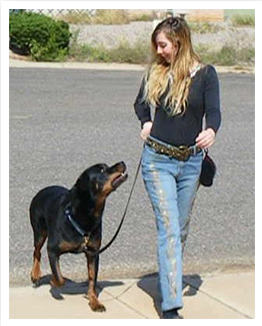
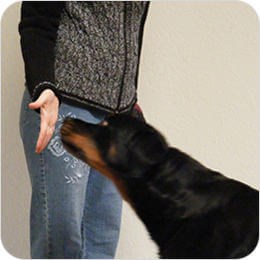
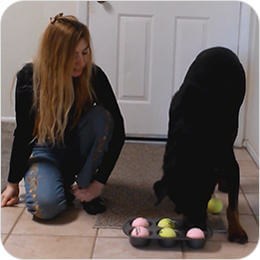
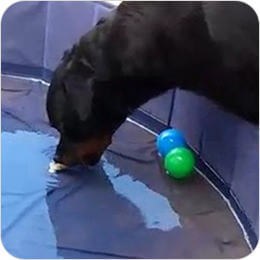
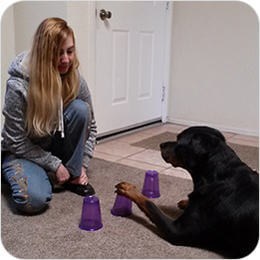
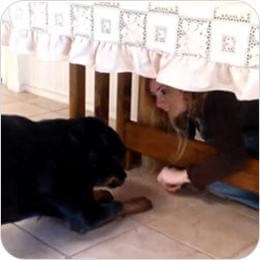
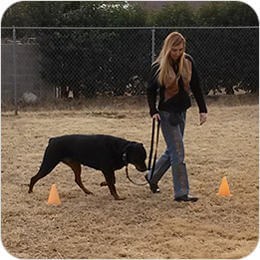
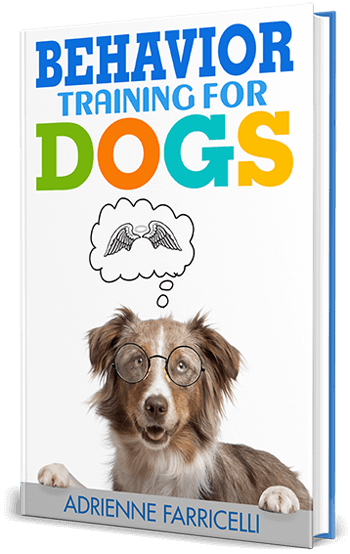
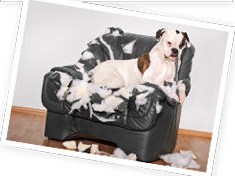
If you want those calming games laid out for you, Brain Training for Dogs has more than 21 of them, with step-by-step guides and video demonstrations, and jumping up is one of the problems it covers.
A look inside Brain Training for Dogs




FAQ
How long does it take?
Two to three weeks of consistent arrivals for most dogs, longer if some visitors keep rewarding the jump.
What about guests who say they do not mind?
They are training your dog on the days you are not. Ask them to follow the rule for two weeks, then let them be as enthusiastic as they like.
Should I use a mat instead?
A mat works well if the dog already knows it. Send him there as the door opens and pay him for staying; release when the greeting is calm.
My dog jumps on me, not on guests.
Same rule, applied by you: no attention while feet are off the floor, generous attention the moment they land.
Next step
Do ten fake arrivals tonight with no guest at all. The routine has to be boring before it has to work.
Based on standard force-free, positive-reinforcement training practice as taught by certified trainers. Product details for Brain Training for Dogs are from the vendor’s published page as of September 28, 2026.