
Disclosure: this article contains affiliate links. If you buy through them, we may earn a commission at no extra cost to you. How this works.
Short answer
To stop a dog digging you have to answer a question first: what is the digging for? Boredom, hunting, cooling off, getting out, or simply because digging feels good — five causes, five different fixes.
Filling the holes changes nothing. Giving the dog a legal place to dig, and removing the reason for the illegal one, changes it within a couple of weeks.
A step-by-step program for digging and other habits
- Created by Adrienne Farricelli, a CPDT-KA certified trainer
- 21+ force-free games in graded modules, with video demonstrations
- An archive of solutions for barking, chewing, jumping, digging and more
- Instant access and a 60-day money-back guarantee
Read the holes before you fix anything
This step is the whole article. Every fix below works only against the cause it belongs to.
| Where the holes are | Probably | What actually fixes it |
|---|---|---|
| Along the fence line | Escaping, or something on the other side | Block the view, secure the base, reduce the trigger |
| Under a shady bush or the deck | Cooling down | Shade and water where the dog wants to lie |
| Around roots, molehills, one exact spot | Prey — something lives there | Deal with the animal, then restore the ground |
| Random, all over, while you watch | Boredom or attention | Exercise, enrichment, a dig pit |
| Terrier, everywhere, always | The dog is doing its job | A dig pit, and accept the hobby |
The dig pit, for dogs who dig because digging is good
Some breeds were built for it. Terriers, dachshunds, huskies and most of the northern breeds dig the way retrievers carry things, and training that out is a long fight against the dog’s own wiring.
So build a legal spot: a sandbox or a bordered corner, a metre or so square, filled with loose sand or soft soil. Bury two or three toys and a chew just under the surface while the dog watches, then encourage the digging when it happens there.
Refresh the buried treasure for a week or two. Most dogs switch to the pit quickly, because it is easier digging than compacted lawn and something good is always in it.
When it is boredom
If this is the cause, the holes stop appearing within days of the routine changing. Our indoor games are the fastest version of this to set up.
- A dog alone in a yard is not exercised; the yard is just where the dog is. Walks, sniffing and training are what tire a dog.
- Feed a meal from a snuffle mat or a scattered handful in the grass instead of a bowl. Twenty minutes of nose work beats an hour of pacing.
- Bring the dog in when you go in. Digging almost always happens in the unsupervised hour.
- Add a short training session before the yard time, not after — a tired brain settles faster than a tired body.
When it is heat
A dog digging a shallow pit under a bush and then lying in it is cooling down. The earth a few inches below the surface is genuinely colder, and the dog has solved a problem you did not know existed.
Give a better option: deep shade that lasts all afternoon, a raised cot that lets air move underneath, fresh water in more than one place, and on hot days a shallow paddling pool.
Then the pit loses its point. Punishing this one is particularly unfair, because the dog was right.
When it is the fence line
Fence-line digging is either escape or a reaction to something passing. Look at what is on the other side at the time of day the holes appear — a dog, a delivery route, a cat that walks the wall.
Block the view with solid panels or windbreak mesh, and secure the base: buried wire mesh turned inward at the bottom, or a line of pavers along the fence, stops the digging being productive.
Then work on the reaction itself rather than only the fence. The same pattern as barking at the window applies here: block the view, pay the quiet, give the dog a job when the trigger appears.
If the dog is escaping because nothing outside is interesting and everything inside the yard is, that is a boredom problem wearing a fence-line disguise.
What not to do
Filling holes with the dog’s own faeces, chilli powder or mothballs is old advice that ranges from useless to harmful. Mothballs are toxic to dogs and to the soil.
Punishing a dog after the fact teaches nothing about the hole and something unpleasant about you. Dogs do not connect a telling-off to an act from an hour ago; they connect it to your arrival.
Interrupt only if you catch it happening — a cheerful noise, then redirect to the pit or to something better. The interruption should end the digging, not start a confrontation.
And supervise for a couple of weeks. A dog left alone to rehearse the habit will keep it, whatever you set up.
Repairing the lawn so it stays repaired
Fill the hole, tamp it firmly, then lay a piece of chicken wire flat just under the surface before the topsoil and seed. Dogs dislike the feel of wire under the paws and move on without ever learning to fear the spot.
Re-seeded patches need to be off limits until they root, which for most grasses is three to four weeks. Temporary fencing there is worth the ugliness.
A dog that already has a settle routine indoors makes all of this easier — see teaching a dog to settle on a mat for the version of calm you want available on demand.
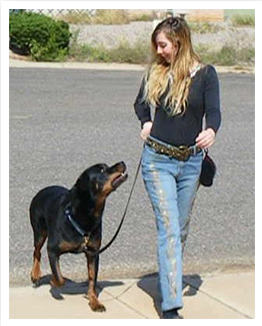
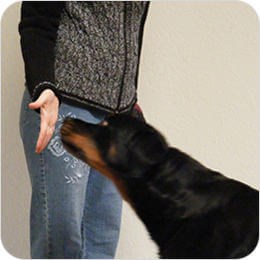
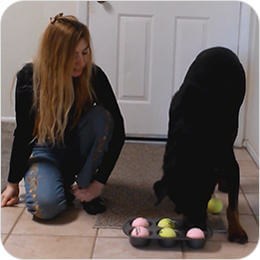
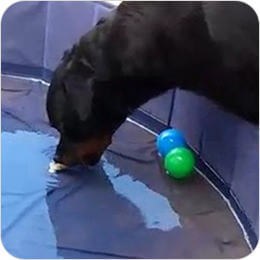
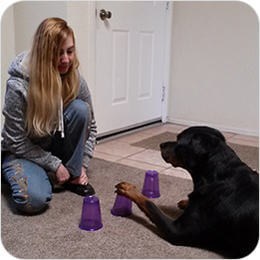
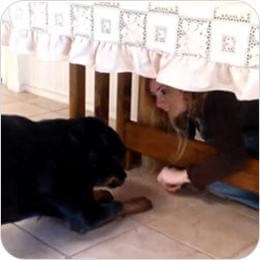
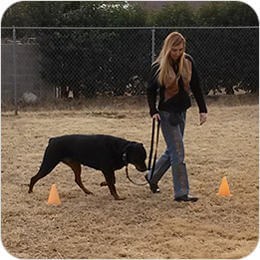
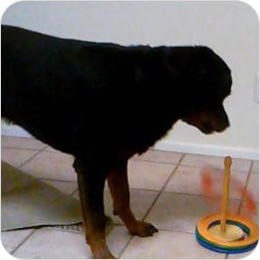
Digging all the time is also on the list of problems Brain Training for Dogs covers, with more than 21 games, step-by-step guides and video demonstrations that give the dog’s brain the job the yard never did.
A look inside Brain Training for Dogs













FAQ
Will neutering stop digging?
Only if the digging is driven by roaming to find a mate. For boredom, heat or prey, it changes nothing.
My dog only digs when I leave. Is that separation anxiety?
It can be, especially with digging at doors and thresholds rather than open lawn. Distress signs — drooling, panting, damage at exit points — are worth a professional’s eyes.
Are there breeds that will never stop?
Terriers and northern breeds dig as a built-in behaviour. The realistic goal is a legal place to do it, not an end to it.
Does a dig pit teach my dog that digging is allowed?
It teaches that digging is allowed there. Dogs discriminate places very well, which is the same reason a mat works as a settle cue.
Next step
Photograph the yard from above and find the pattern in the holes. Build the dig pit this weekend if the pattern says the dog just likes digging.
Based on standard force-free, positive-reinforcement training practice as taught by certified trainers, and on common veterinary guidance about heat-related and escape-related digging. Product details for Brain Training for Dogs are from the vendor’s published page as of September 28, 2026.