
Disclosure: this article contains affiliate links. If you buy through them, we may earn a commission at no extra cost to you. How this works.
Short answer
To stop dog barking at the window you have to break the rehearsal loop first: the dog barks, the delivery driver leaves, and the dog is convinced the barking worked.
Three moves, in this order: block or reduce the view, reward the quiet before the barking starts, and teach one alternative behavior for the moment the trigger appears.
A step-by-step program for barking and other habits
- Created by Adrienne Farricelli, a CPDT-KA certified trainer
- 21+ force-free games in graded modules, with video demonstrations
- An archive of solutions for barking, chewing, jumping, digging and more
- Instant access and a 60-day money-back guarantee
Why window barking gets worse over time
Every bark is followed by the thing going away. From the dog’s point of view the strategy has a 100% success rate, and behavior that works gets stronger.
Add the adrenaline of the chase-and-drive-off routine and you get a dog who patrols the window all day waiting for the next win.
That is why “quiet!” rarely helps. It arrives after the barking has already paid, and to an aroused dog it often sounds like you joined in.
Move 1 — Take away the stage
This is management, not training, and it is the part people skip. Training on top of twenty rehearsals a day is like bailing a boat without patching it.
- Frosted window film on the lower half of the glass keeps the light and removes the parade.
- Move the sofa or dog bed away from the window, so the lookout post stops existing.
- Close the front room during delivery hours, or use a baby gate to keep the dog out of it.
- White noise or a radio near the door lowers the number of triggers that reach the dog.
Move 2 — Pay the quiet before it breaks
Sit with the dog where he can see the street at the distance where he notices people but does not erupt. Every time he looks at the trigger and then back at you, mark and feed.
You are building a new reflex: something appears outside, the dog checks in with you. Do this in five-minute sessions, several times a week.
If he cannot take a treat, the trigger is too close or too intense. Increase distance, or work with the film already on the glass, and try again.
Move 3 — Give him a job for the moment it happens
Pick one alternative behavior and always ask for the same one. A mat in another room works best: the doorbell or the driver becomes the cue to run to the mat, where a scattered handful of food is waiting.
Practice it cold, twenty times, with no trigger at all — you knock on the wall, the dog runs to the mat, food appears. Only then use it live.
Two weeks of this turns the trigger into a prediction of dinner in the kitchen rather than a call to arms at the glass.
| Trigger | Management | Alternative behavior |
|---|---|---|
| Delivery driver | Film on the glass, gate the front room | Run to the mat, scatter feed |
| Dogs walking past | Move the bed away from the window | Look at the dog, then at you |
| Doorbell | Disable the bell during training, use a knock | Go to the mat, wait for release |
| Noises in the hall | White noise near the door | Settle on the mat with a chew |
The part nobody wants to hear
A dog with nothing to do barks more. Ten minutes of nose work in the morning takes the edge off the whole day, and it is the cheapest intervention on this page — the games are in the indoor games guide.
If the barking is part of a general lack of structure, run the whole progression in the 30-day plan rather than treating the window in isolation.
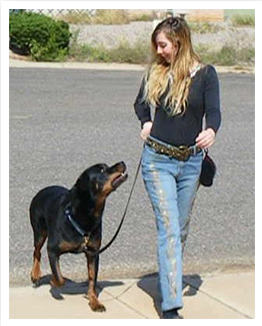
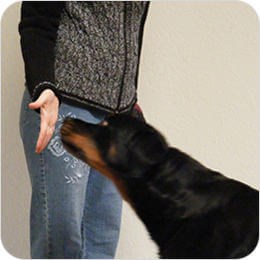
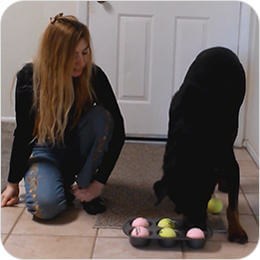
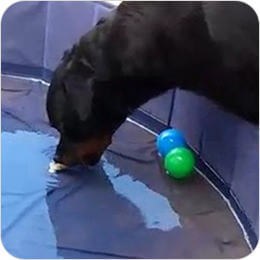
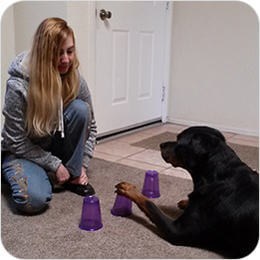
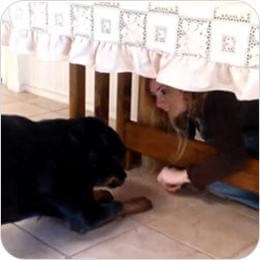
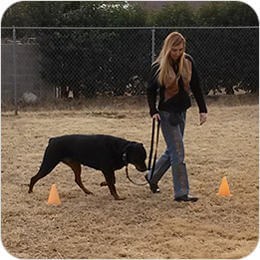
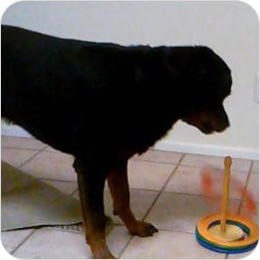
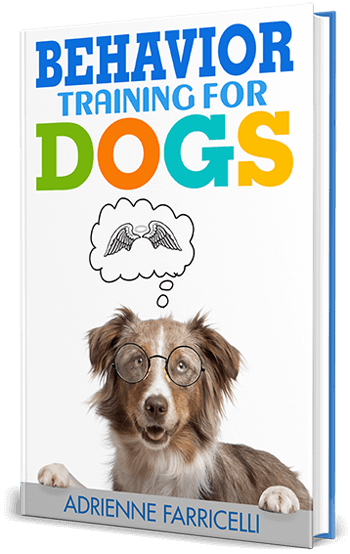
For a ready-made version of that daily mental work, Brain Training for Dogs has more than 21 games with step-by-step guides and video demonstrations, and uncontrolled barking is on the list of problems it covers.
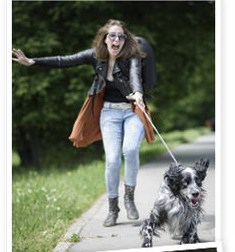
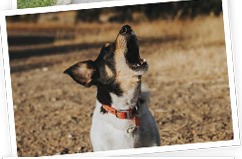
A look inside Brain Training for Dogs












FAQ
How long until it improves?
With management in place from day one, most owners see a real drop within two to three weeks. Without management, it can take months or never stick.
Should I use an anti-bark collar?
Suppressing the sound does not change how the dog feels about the trigger, and it can make an anxious dog worse. Force-free protocols address the underlying arousal.
My dog barks at every noise in the hall.
Same three moves, different trigger: white noise for management, pay the check-in, and one alternative behavior away from the door.
Is barking at strangers protective?
Usually it is arousal plus rehearsal, not guarding. Either way, the training is the same: lower the rehearsal, raise the alternative.
Next step
Order the window film today and set up the mat tonight. The film is what stops the barking from being practiced twenty more times while you train. Then start the daily brain games.
Based on standard force-free, positive-reinforcement training practice as taught by certified trainers. Product details for Brain Training for Dogs are from the vendor’s published page as of September 28, 2026.