Disclosure: this article contains affiliate links. If you buy through them, we may earn a commission at no extra cost to you. How this works.
Short answer
Piano pedals, explained in one line each: the right pedal (sustain) keeps notes ringing after you lift your fingers, the left pedal (soft) makes the sound quieter and gentler, and the middle pedal does different things on different pianos.
The sustain pedal is the one you will use in almost every piece, and the skill that matters is changing it cleanly with each new chord.
A step-by-step course, from first chords to real songs
- Interactive ebooks with step-by-step video lessons and 1,000+ audio lessons
- Rhythm style first, then ballads, blues, jazz, ragtime and improvising
- Learn to read music as you learn to play by ear
- Lifetime access on any device and a 60-day money-back guarantee
The three pedals at a glance
| Pedal | Where | What it does |
|---|---|---|
| Sustain (damper) | Right | Lifts every damper off the strings, so notes keep sounding after you release the keys |
| Soft (una corda) | Left | On a grand, shifts the keys and hammers so each hammer strikes fewer strings; on an upright, moves the hammers closer to the strings for a gentler stroke |
| Sostenuto or practice | Middle | On most grands, sustains only the notes held down when you press it; on many uprights, lowers a felt strip that mutes the sound for quiet practice |
The sustain pedal: the one you will use most
Each string on a piano has a felt damper resting on it. When you release a key, its damper drops and the note stops. Press the sustain pedal and every damper lifts at once: the notes you play keep ringing, and the other strings vibrate in sympathy, which gives the piano its warm, full sound.
That is also the catch. Hold the pedal through a chord change and the old chord keeps sounding under the new one, and the music turns to mud. Good pedaling is mostly about when you lift.
How to pedal without blurring
The technique most teachers start with is called legato or syncopated pedaling. The foot moves just after the hands, not with them.
- Play the first chord, then press the pedal just after the keys go down.
- As you play the next chord, lift the pedal at the same moment your fingers press the new keys.
- Press the pedal again right after, while you hold the new chord.
- Repeat on every chord change: hands down, foot up; then foot down.
- Keep your heel on the floor and press with the ball of your foot, like a gentle touch on a car’s accelerator.
The soft and middle pedals
The soft pedal changes the color of the sound as much as the volume. Composers mark it una corda — one string — and mark its release tre corde, three strings. Use it for quiet, intimate passages, not as a volume knob for a whole piece.
The sostenuto on a grand lets you hold a bass note while your hands play cleanly above it: play the note, press the middle pedal, and only that note keeps ringing. You will rarely need it in the first years. On an upright, the practice pedal is a gift for late-night playing.
Reading pedal markings
Older scores write Ped. where the sustain pedal goes down and an asterisk where it comes up. Modern editions draw a line under the staff: it starts when you press, and a small peak shows where you lift and press again. Where the score says nothing, the choice is yours — let your ear decide.
If notation is still new to you, the basics are in how to read piano sheet music.
Pedals on digital pianos and keyboards
Most digital pianos and keyboards have a sustain pedal jack, and many come with a small square footswitch. A piano-style pedal feels closer to the real thing and stays put on the floor. Some digital pianos also support half-pedaling, where pressing partway gives a partial sustain, as on an acoustic piano.
If the sustain works backwards — notes ring when the pedal is up — the pedal’s polarity does not match the keyboard. Many keyboards detect the polarity when they power up, so plug the pedal in before switching on, or use the polarity switch some pedals have. More on choosing the instrument is in keyboard vs piano for beginners.
When to start using the pedal
Learn a new piece without pedal first, so your fingers do the connecting and you hear exactly what you play. Add the pedal once the notes are secure, and listen for blur at every chord change.
Adult beginners often want to pedal from day one because it sounds so good. A week of pedal-free practice on each new piece pays off quickly; the approach is part of learning piano as an adult.
Put the pedal to work in real music
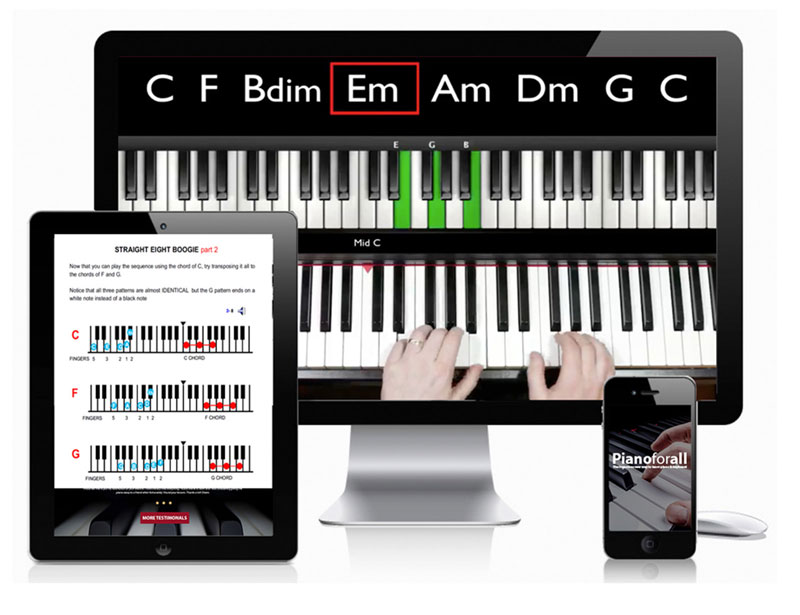
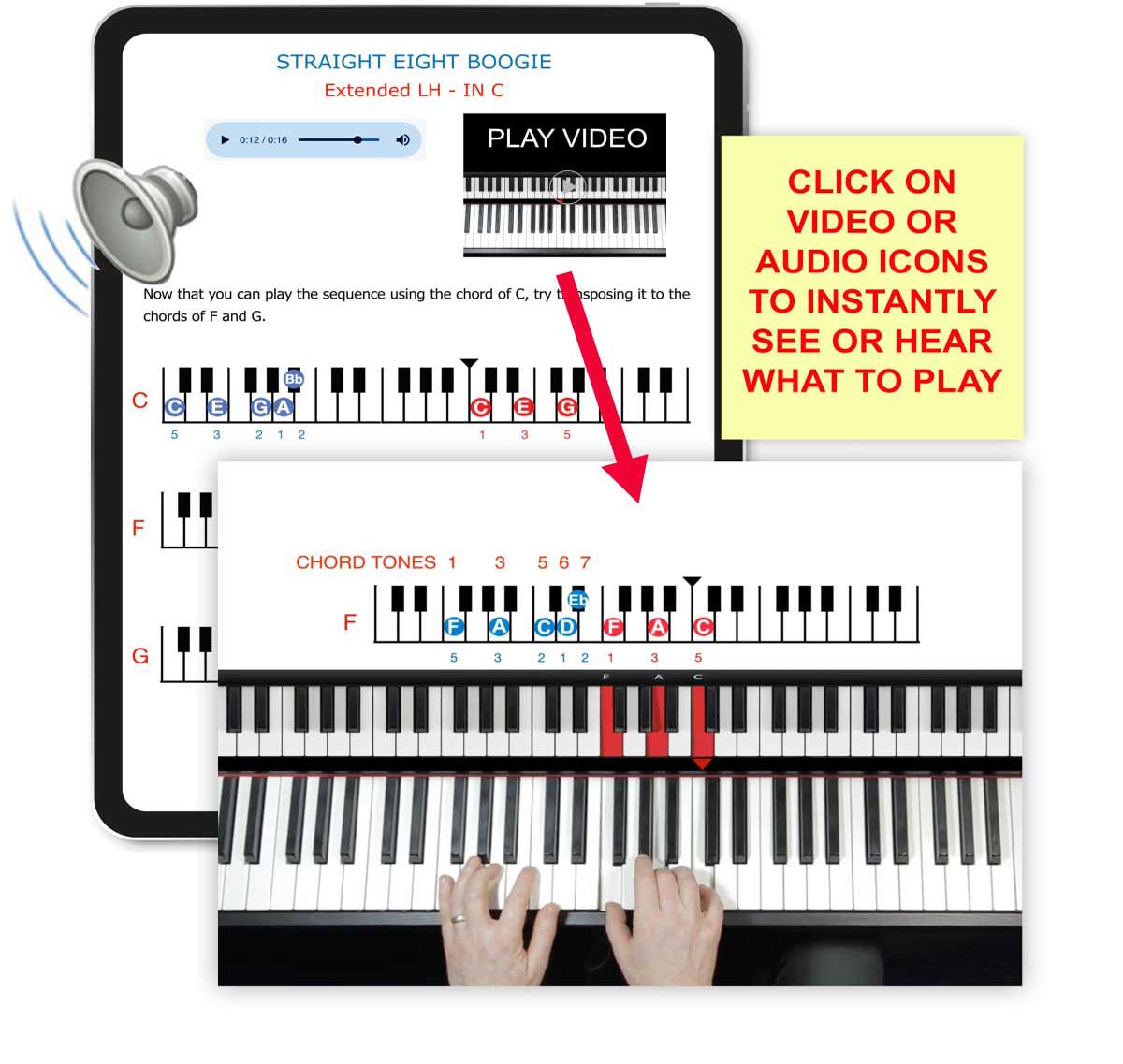
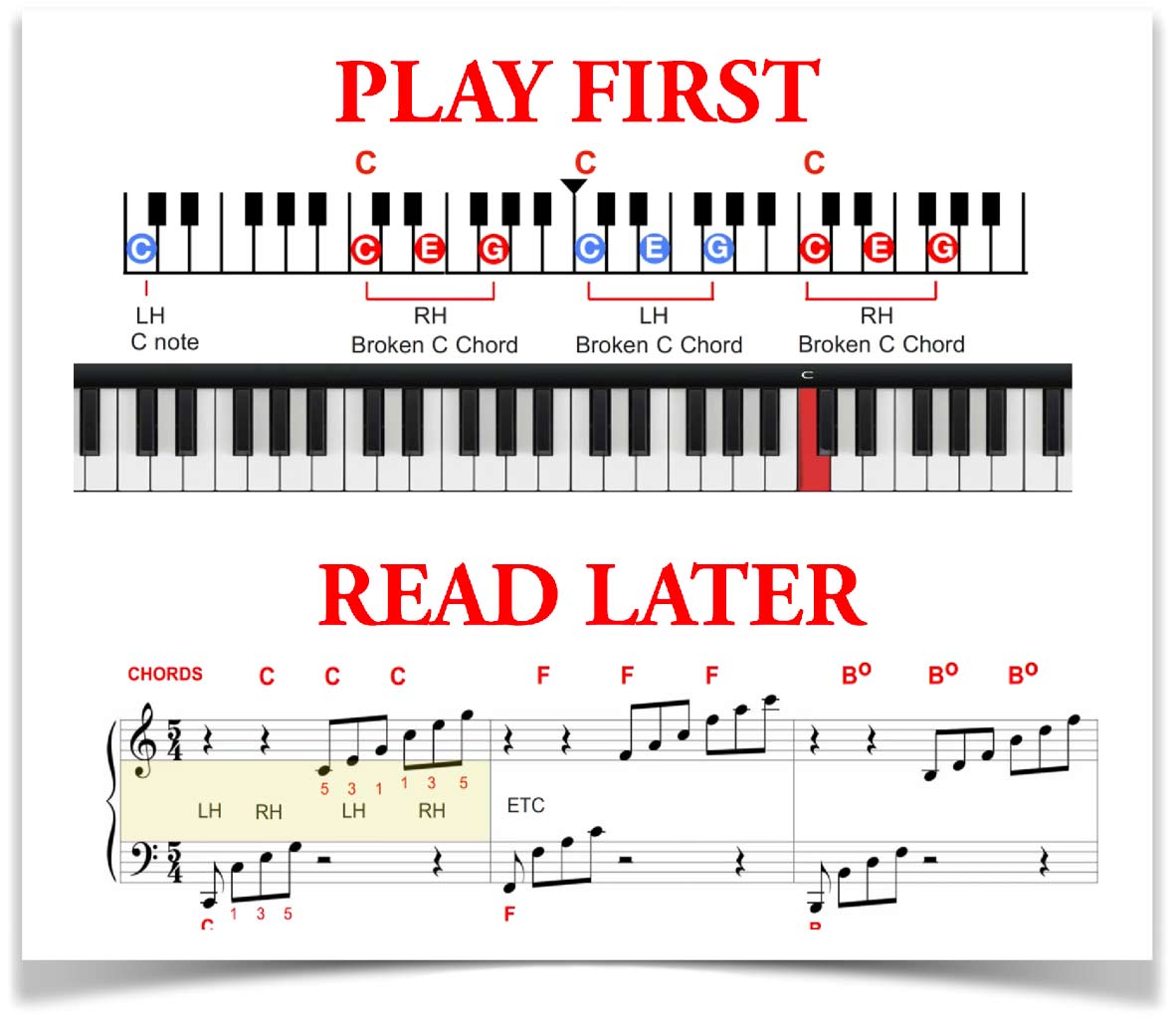
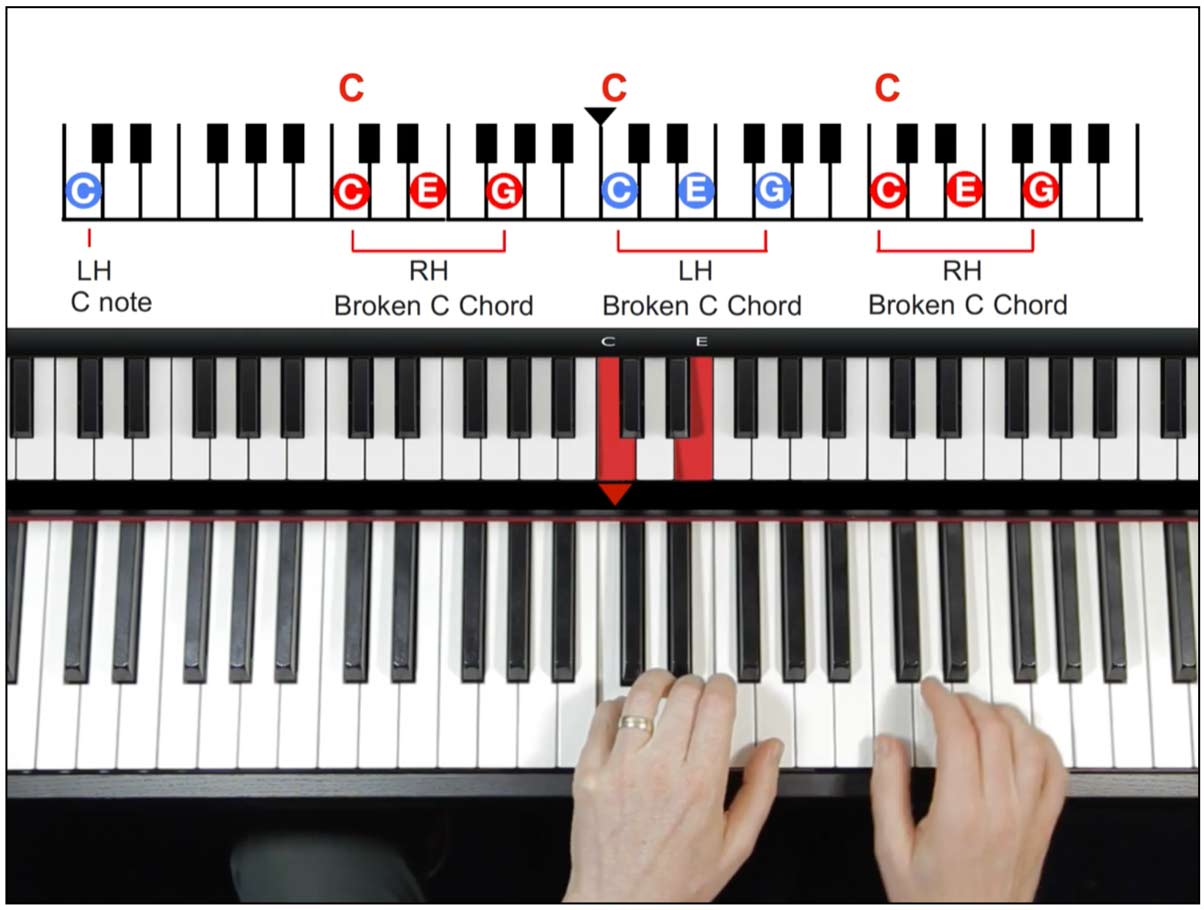
Pedaling makes the most sense inside real music, especially ballads, where every chord is meant to ring into the next. Pianoforall starts with popular rhythm-style piano and expands step by step into ballad style, blues, jazz, ragtime and improvisation. Its lessons combine written instruction, keyboard diagrams, notation, video and audio, and they work on computers, tablets and phones without needing to be online.
A look inside Pianoforall










FAQ
Which piano pedal is used most?
The right pedal, the sustain or damper pedal. It appears in most piano music, from ballads to classical pieces.
What does the middle pedal on a piano do?
On most grands it is a sostenuto pedal that sustains only the notes held down when you press it. On many uprights it is a practice pedal that mutes the sound.
Should beginners use the sustain pedal?
Yes, once a piece is learned without it. Practice changing the pedal on simple chords before using it in pieces.
Do I need a pedal for my keyboard?
A sustain pedal is worth having from the start. A piano-style pedal feels more natural than a small footswitch.
Next step
Today, play C, F, G and C as slow chords and change the pedal on each one: foot up as the hands go down, foot down right after.
Based on standard piano construction and pedaling technique for grand, upright and digital pianos. Product details for Pianoforall are from the vendor’s published sales page as of September 29, 2026.