Disclosure: this article contains affiliate links. If you buy through them, we may earn a commission at no extra cost to you. How this works.
Short answer
Ragtime piano for beginners comes down to two skills: a steady oom-pah left hand that alternates a low bass note with a chord, and a right hand that plays syncopated melodies, landing between the beats. Learn the left hand until it runs by itself, then add the right hand slowly.
Ragtime is the music of Scott Joplin — The Entertainer, the Maple Leaf Rag — and it sounds best played steady, not fast.
Ragtime, blues and jazz, step by step
- Interactive ebooks with step-by-step video lessons and 1,000+ audio lessons
- Rhythm style first, then ballads, blues, jazz, ragtime and improvising
- Learn to read music as you learn to play by ear
- Lifetime access on any device and a 60-day money-back guarantee
What ragtime is
Ragtime grew up in the United States around the end of the 1890s and was hugely popular in the early 1900s. Scott Joplin’s Maple Leaf Rag (1899) and The Entertainer (1902) are its best-known pieces. The name comes from its ragged time: a melody full of syncopation over a left hand that keeps a steady march.
The left hand: oom-pah
The left hand jumps between a low bass note and a chord in the middle of the keyboard: bass, chord, bass, chord, in a steady beat. Over a C chord, play a low C, then C-E-G higher up, then a low G, then C-E-G again.
Practice the jump slowly and watch the landing. The bass note is the root or the fifth of the chord, and the chord is usually a small triad close to middle C.
| Chord | Bass notes | Chord on the off-beats |
|---|---|---|
| C | C, then G | C-E-G |
| F | F, then C | F-A-C or C-F-A |
| G7 | G, then D | G-B-F or B-D-F |
The right hand: syncopation
Syncopation means accenting notes that fall between the beats. The most common ragtime figure is short-long-short: a quick note, a longer note, a quick note, so the long note lands off the beat. Tap it on the table first, over a steady count, until it feels natural.
Then play simple melodies from the chord notes with that rhythm, while the left hand keeps its march.
Practice steps
- Left hand alone, slowly, with a metronome, until you can play it without looking.
- Right-hand rhythm tapped on the table, then played on one note.
- Hands together at half speed, one bar at a time.
- Speed up only a few clicks at a time.
- Play simplified arrangements of The Entertainer before tackling the full score.
Do not play it fast
Joplin printed a warning on some of his rags: “It is never right to play Ragtime fast.” A steady, relaxed tempo lets the syncopation swing and makes the music far easier to play well.
Getting the two hands to work separately is the core skill here, and the method in piano hand independence applies directly. If you have played a boogie bass in blues piano for beginners, you already know the feeling of a left hand on autopilot.
Listen first
Before you play a rag, listen to it. Joplin recorded some of his rags on piano rolls, and many modern pianists have recorded his music. Hearing how the left hand bounces and the melody pushes against it makes the notation far easier to understand.
Where ragtime leads
Ragtime sits between classical piano and jazz. Its left hand grew into stride piano, and its syncopation runs through jazz and pop. Learning it gives your hands a workout that pays off in every other style.
Learn ragtime step by step
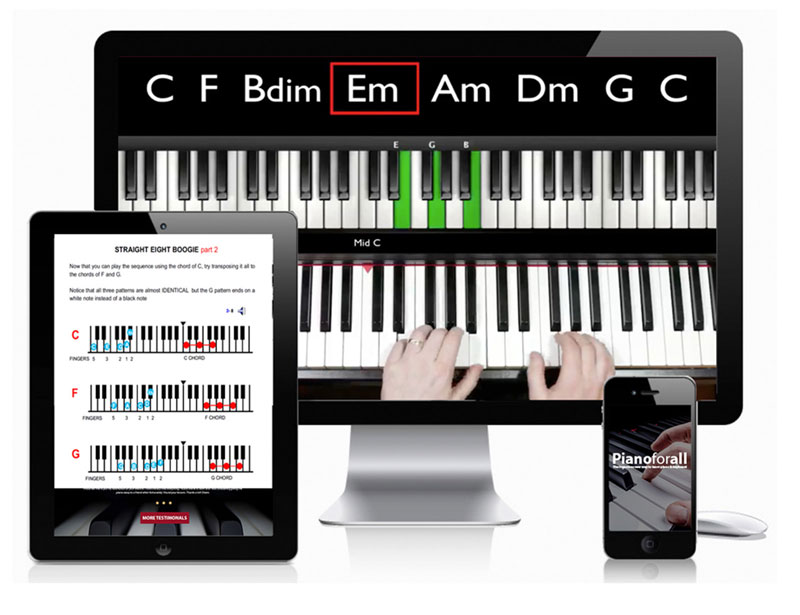
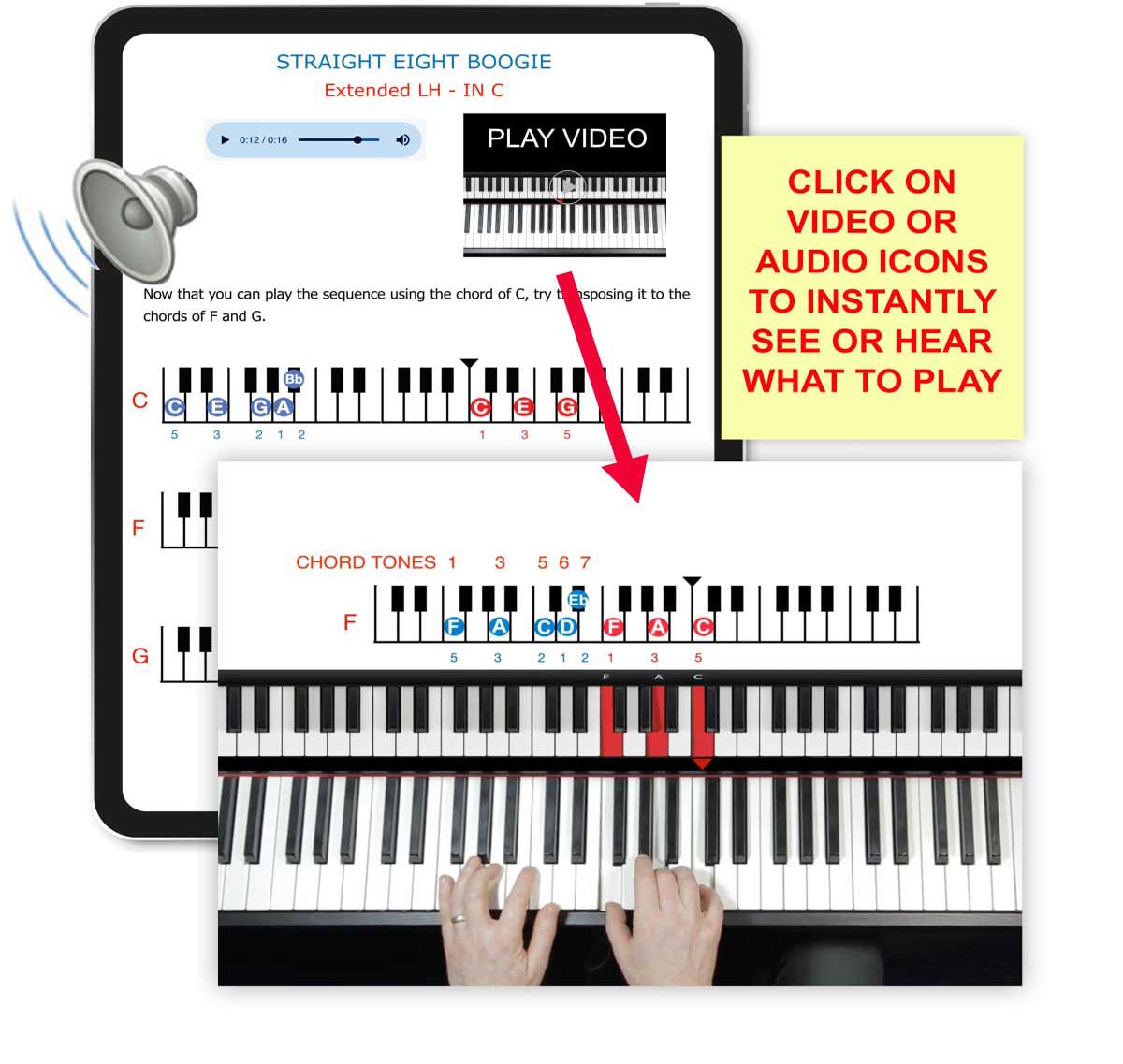
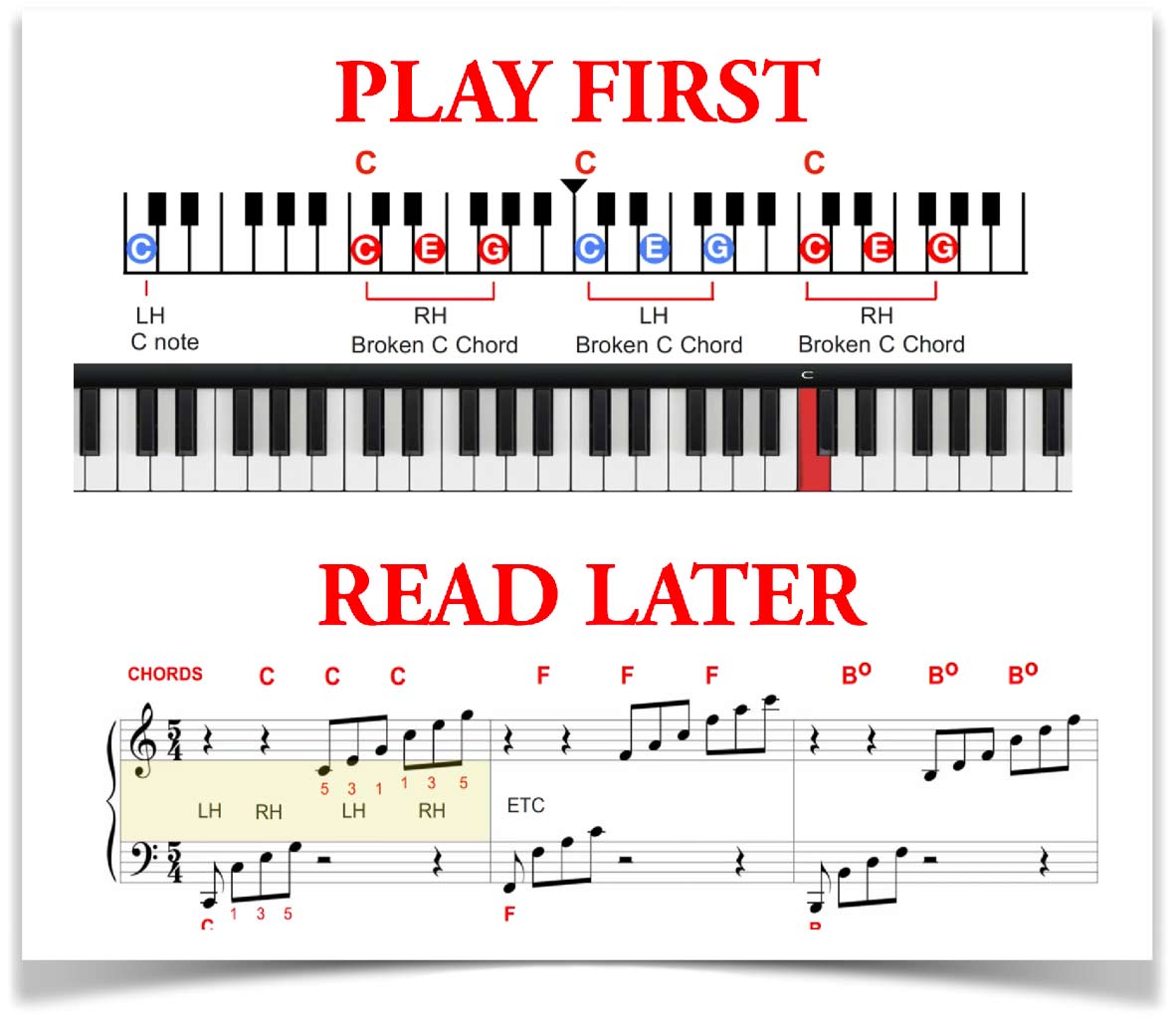
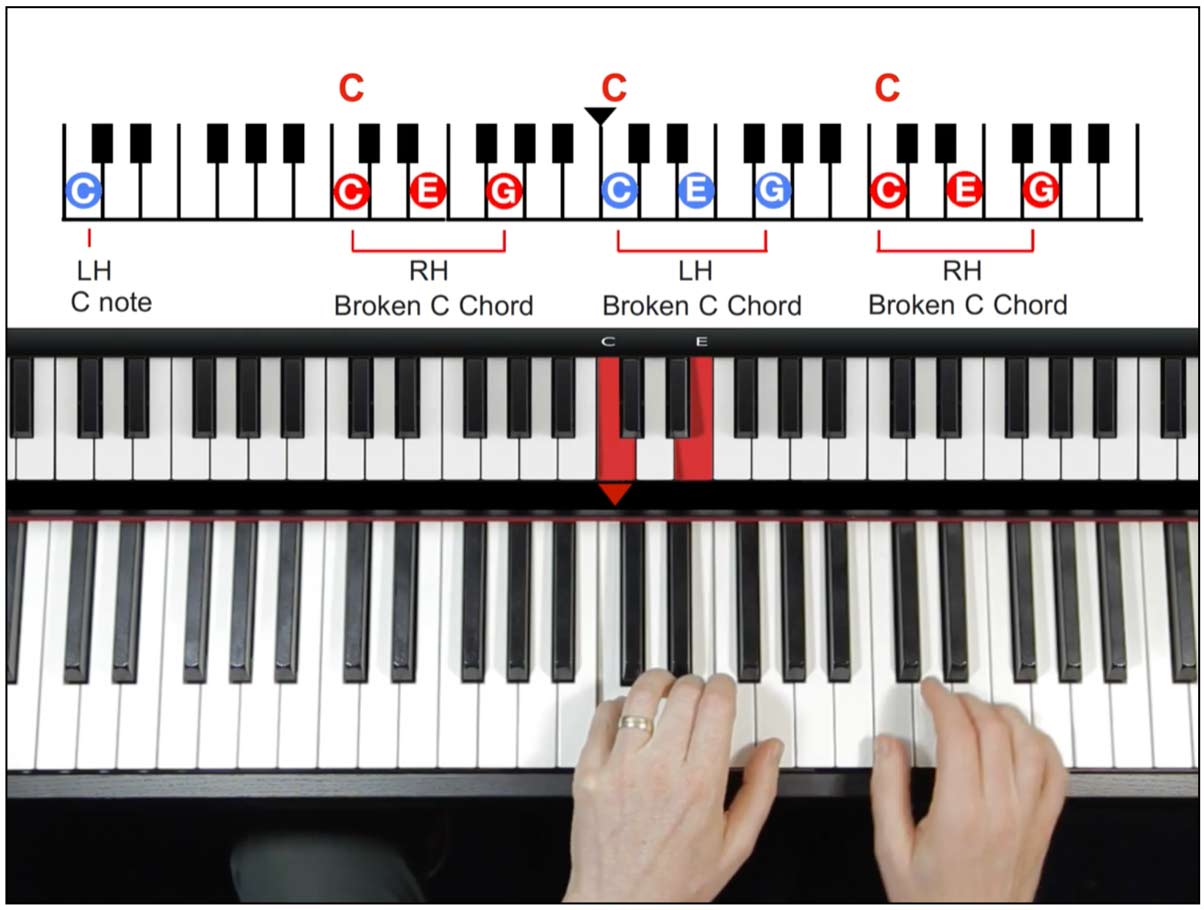
Pianoforall starts with rhythm-style piano and expands step by step into ballad style, blues, jazz, ragtime and improvisation, with lessons that combine written instruction, keyboard diagrams, notation, video and audio.
A look inside Pianoforall











FAQ
Is ragtime hard to play on piano?
The left-hand jumps take practice, but a simple rag with three chords is within reach for a beginner who knows basic chords.
What is the easiest ragtime piece?
A simplified arrangement of The Entertainer is the usual first step before the full Joplin scores.
What is the ragtime left hand called?
Often oom-pah or a stride-style bass: a low bass note alternating with a chord higher up.
How fast should ragtime be played?
Steady and moderate. Joplin himself warned that ragtime should never be played fast.
Next step
Today, play the oom-pah left hand over C, F and G7 for five minutes with a slow metronome, without looking at your hand.
Based on standard ragtime piano technique and the published history of Scott Joplin’s rags, including his printed tempo warning. Product details for Pianoforall are from the vendor’s published sales page as of September 29, 2026.