
Disclosure: this article contains affiliate links. If you buy through them, we may earn a commission at no extra cost to you. How this works.
Short answer
Piano hand independence comes from making one hand automatic before adding the other. Learn the left-hand part until you could play it while talking, then add the right hand slowly, beat by beat, lining up the notes that fall together.
Every pianist goes through this stage. It feels impossible for a week and then, suddenly, it clicks.
A step-by-step course, from first chords to real songs
- Interactive ebooks with step-by-step video lessons and 1,000+ audio lessons
- Rhythm style first, then ballads, blues, jazz, ragtime and improvising
- Learn to read music as you learn to play by ear
- Lifetime access on any device and a 60-day money-back guarantee
Why hands-together feels so hard
Your brain likes the two hands to do the same thing. Ask them to play different notes in different rhythms, and they try to copy each other. Independence is not a talent some people have; it is a skill built by making one part so familiar that it needs no attention.
Step by step
- Learn each hand alone until it is secure, starting with the left, which usually gets less practice.
- Find where the notes line up. Mark the beats where both hands play at the same moment.
- Go very slowly together, beat by beat, stopping on each point where the hands meet.
- Add one note at a time: left hand whole, right hand only on beat one, then more.
- Use a metronome at a slow tempo and speed up only when it feels easy.
Left-hand patterns to put on autopilot
| Pattern | Example in C | Difficulty |
|---|---|---|
| Block chord on beat 1 | C-E-G held for the bar | Easiest |
| Root and fifth | C then G, alternating | Easy |
| Broken chord | C-E-G-E in steady notes | Medium |
| Alberti bass | C-G-E-G, low-high-middle-high | Medium |
| Boogie pattern | C-G-A-G with a swing | Harder |
Drills that build independence
- Tap a steady beat with the left hand on a table while the right hand taps a simple rhythm, then swap.
- Play a scale with one hand smooth (legato) and the other short (staccato).
- Play the left hand softly and the right hand louder, so the melody stands out.
- Play contrary-motion scales, hands moving away from each other from the same note.
A first hands-together piece
Ode to Joy is ideal. In C, hold a C in the left hand under the first bar of the melody, G under the second, C under the third and G under the fourth. Once single notes feel easy, play the full C and G chords instead, then try a root-and-fifth pattern.
Each version uses the same melody, so the right hand stays familiar while the left hand does a little more each time.
Put it inside your practice
Give hands-together work a regular slot in each session, right after the warm-up, when your focus is fresh. The routine in how to practice piano shows where it fits, and the exercises in piano finger exercises make a good warm-up for it.
Chords make the best left-hand material, because the shapes repeat. The shapes themselves are in piano chords for beginners.
Signs you are getting there
- The left hand keeps going when the right hand makes a mistake.
- You can listen to the melody instead of thinking about the bass.
- A new song takes days to put together instead of weeks.
- You start to hear the left-hand pattern in songs on the radio.
Learn with rhythm first
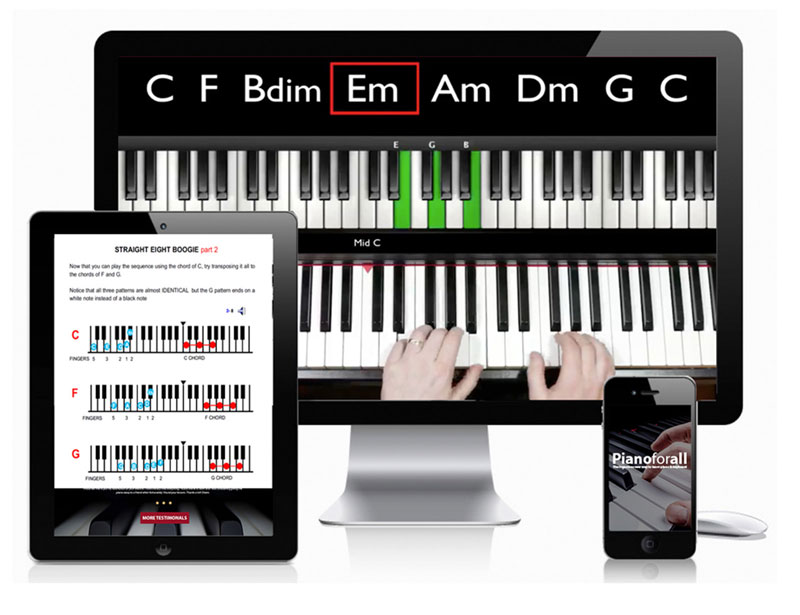
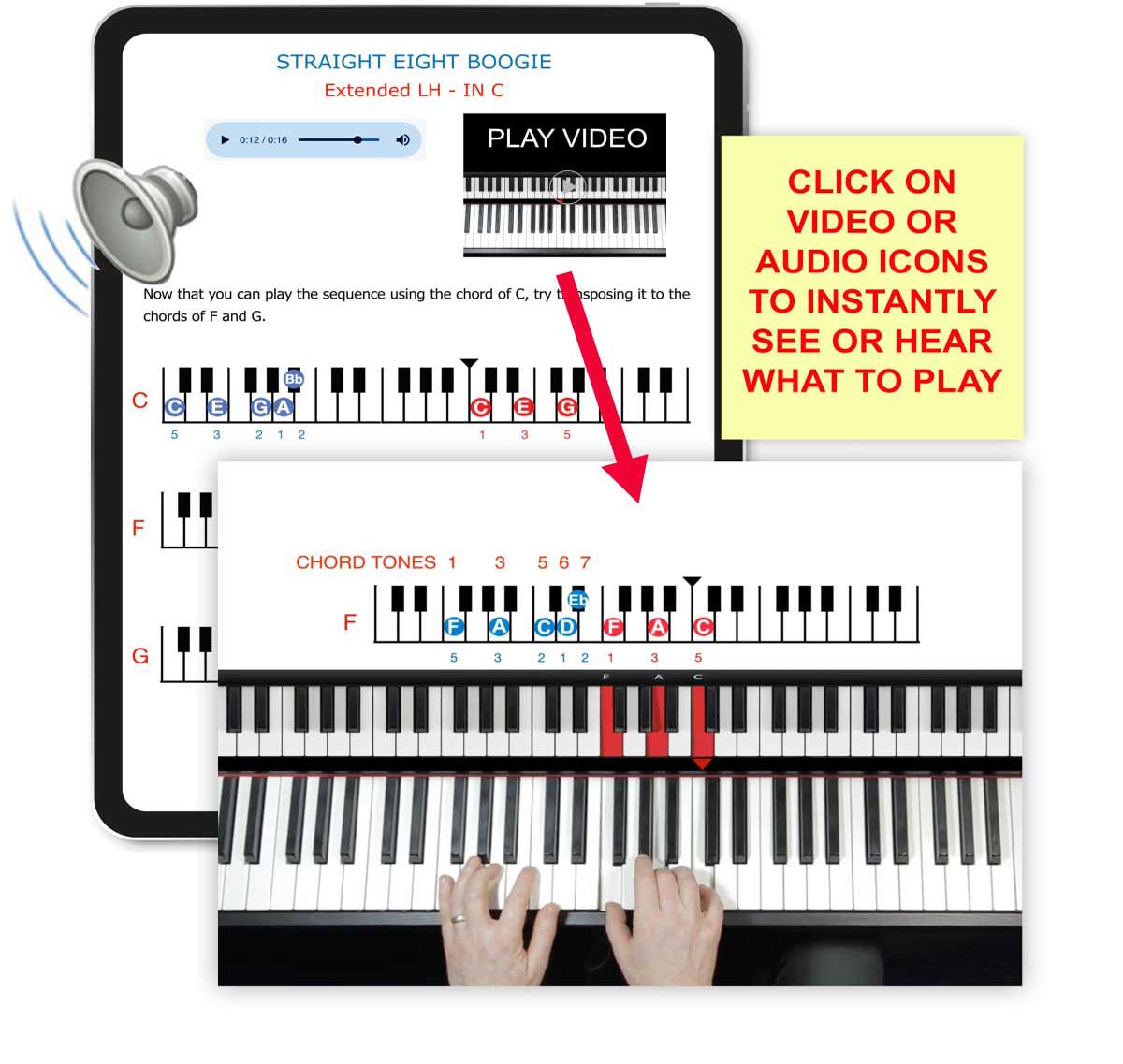
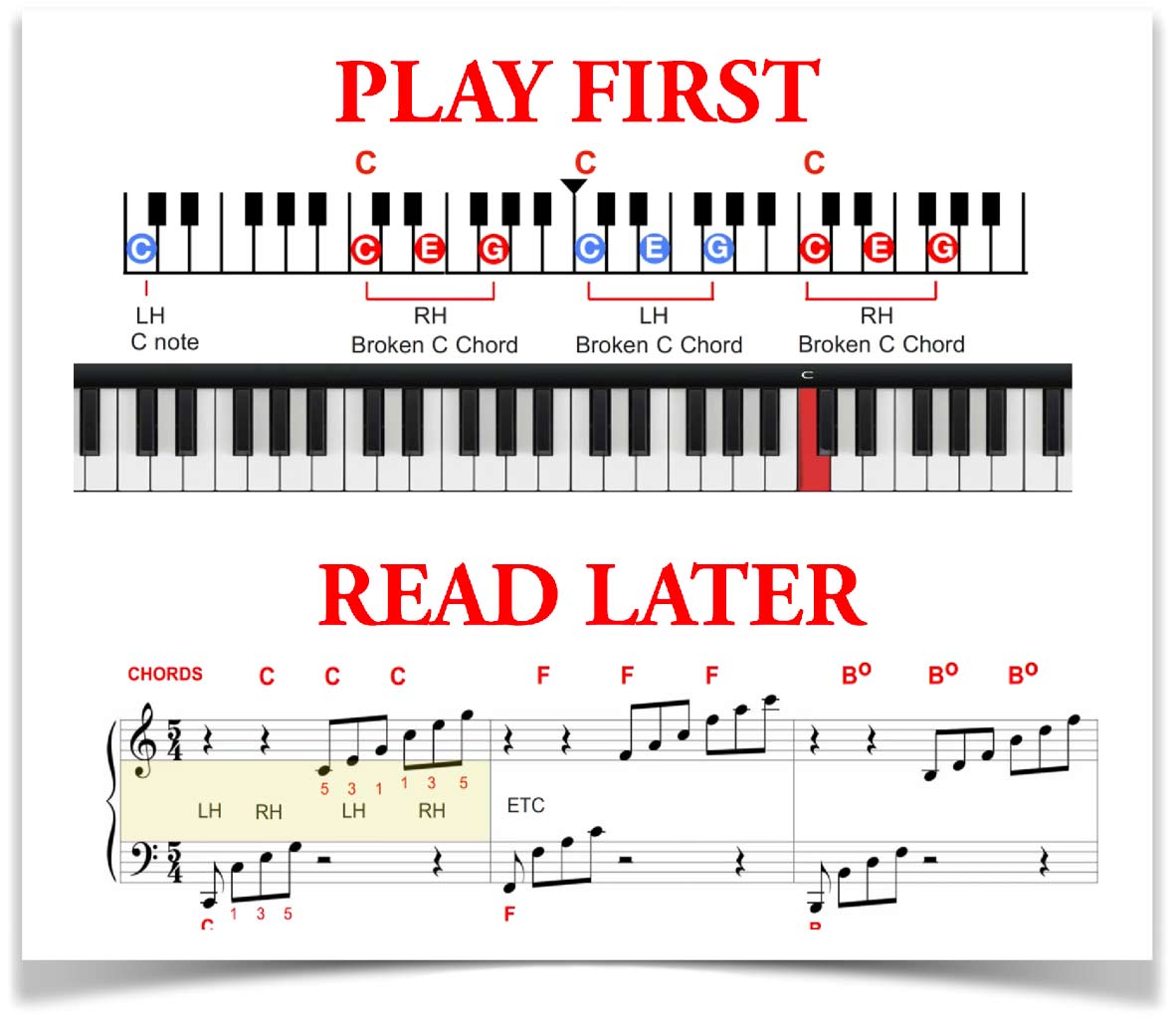
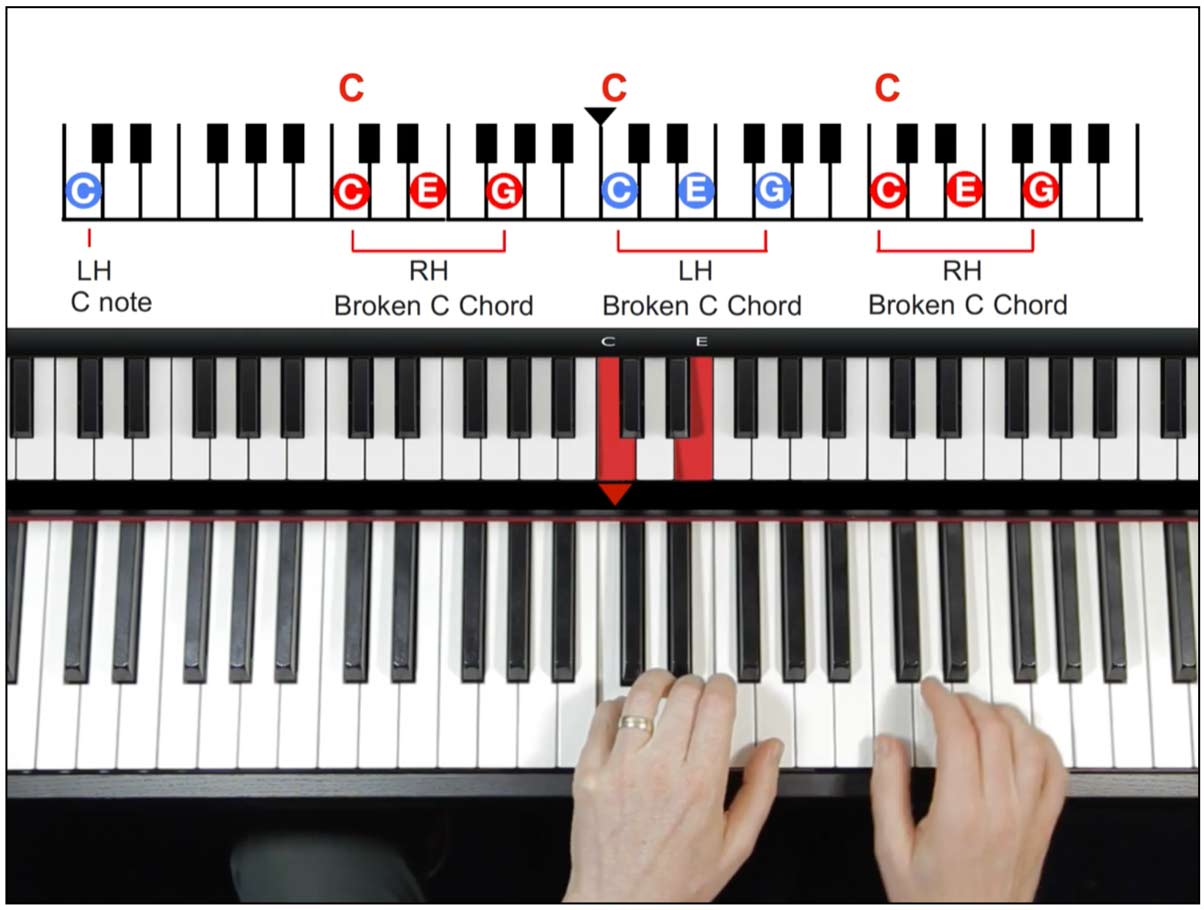
Pianoforall builds hand independence through rhythm: its first book teaches 15 popular rhythm styles where the left and right hands play together from the start. It teaches you to see the keyboard as shapes and patterns, with video and audio built into each lesson.
A look inside Pianoforall















FAQ
How long does it take to play piano hands together?
Many beginners can play simple pieces hands together within a few weeks of daily practice; it keeps improving for years.
Should I practice hands separately first?
Yes, until each hand is secure. Then put them together slowly.
Why does my left hand copy my right hand?
The brain prefers mirrored movement. Making the left-hand part automatic before adding the right hand breaks the habit.
What is the easiest left-hand pattern?
A block chord held on the first beat of each bar, then root and fifth.
Next step
Today, play the root-and-fifth pattern in C with your left hand until you can do it while counting out loud, then add three right-hand notes.
Based on standard piano teaching methods for coordinating the hands: automation of left-hand patterns, slow alignment and independence drills. Product details for Pianoforall are from the vendor’s published sales page as of September 29, 2026.