Disclosure: this article contains affiliate links. If you buy through them, we may earn a commission at no extra cost to you. How this works.
Short answer
You can learn piano as an adult, and in some ways you have an edge over a child: you understand structure, you practice on purpose, and you know exactly which music you want to play.
What decides success is the plan, not talent. Start with chords and rhythm so you are playing real songs within weeks, practice 15 to 20 minutes a day, and add note reading once your hands know their way around the keys.
A step-by-step course for adult beginners
- Interactive ebooks with step-by-step video lessons and 1,000+ audio lessons
- Rhythm style first, then ballads, blues, jazz, ragtime and improvising
- Learn to read music as you learn to play by ear
- Lifetime access on any device and a 60-day money-back guarantee
Why adults quit, and how to keep going
Most adults who stop in the first few months stop for the same three reasons. None of them has anything to do with age.
- Childish material. Method books written for eight-year-olds are hard to stay excited about. Choose a method built around the kind of music adults actually listen to.
- Slow early progress. Learning to read every note before you play anything takes months. Chord-based methods get both hands making music much sooner.
- Unrealistic sessions. An hour on Saturday does less than 15 minutes every day, because new motor skills settle in between sessions.
The order that works
| Stage | What you learn | Typical time with daily practice |
|---|---|---|
| 1. Finding your way | The keyboard layout, middle C, the C major scale, posture | The first week or two |
| 2. Chords and rhythm | Major and minor chords, a left-hand bass note, simple rhythms | The first one to three months |
| 3. Songs | Real chord progressions, inversions for smooth changes | Months two to six |
| 4. Reading | Treble and bass clef, note values, easy pieces | Alongside stage 3 and onward |
| 5. Style | Ballads, blues, jazz or classical, depending on your goal | Six months and beyond |
Start with chords, not scales
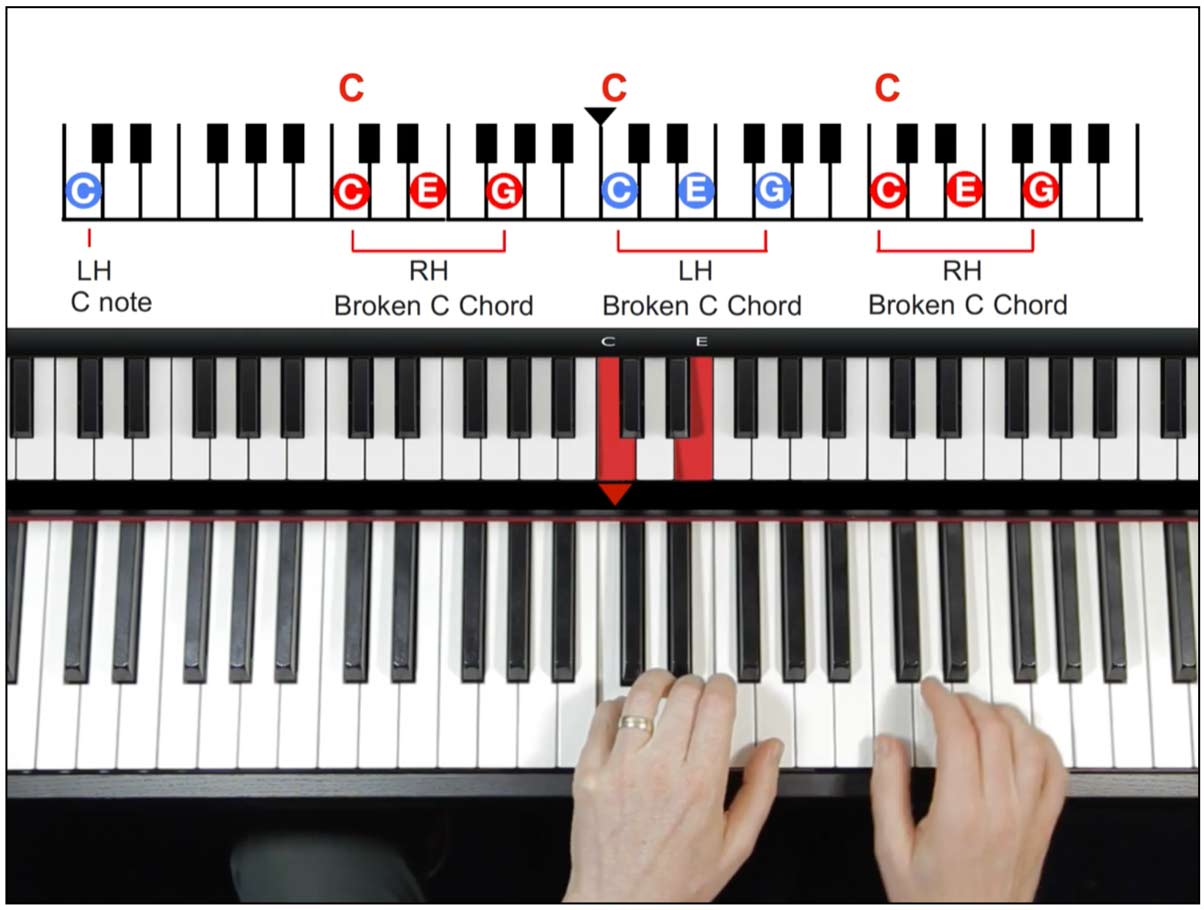
A major chord is a root note, the note four half steps above it, and the note three half steps above that: C, E and G make C major. Learn C, F and G, add A minor, and you can already play the chord progressions behind a long list of popular songs. The shapes are laid out in piano chords for beginners.
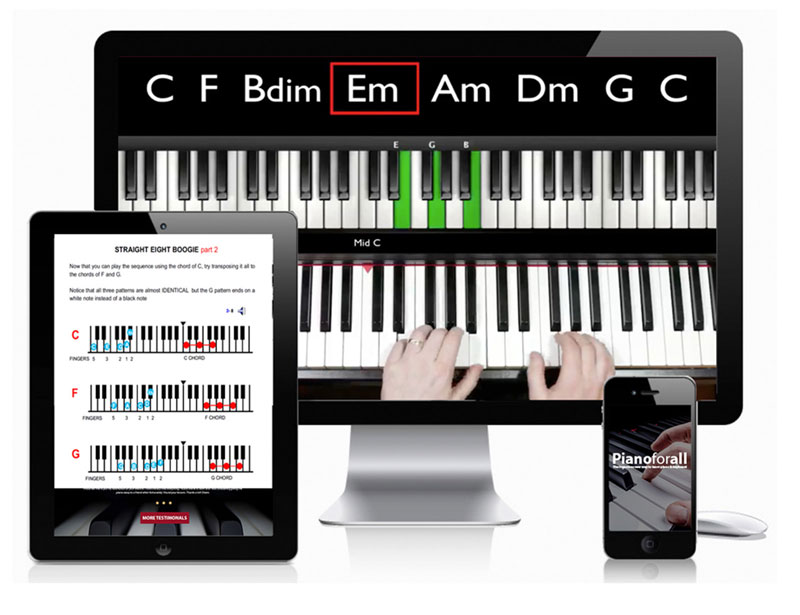
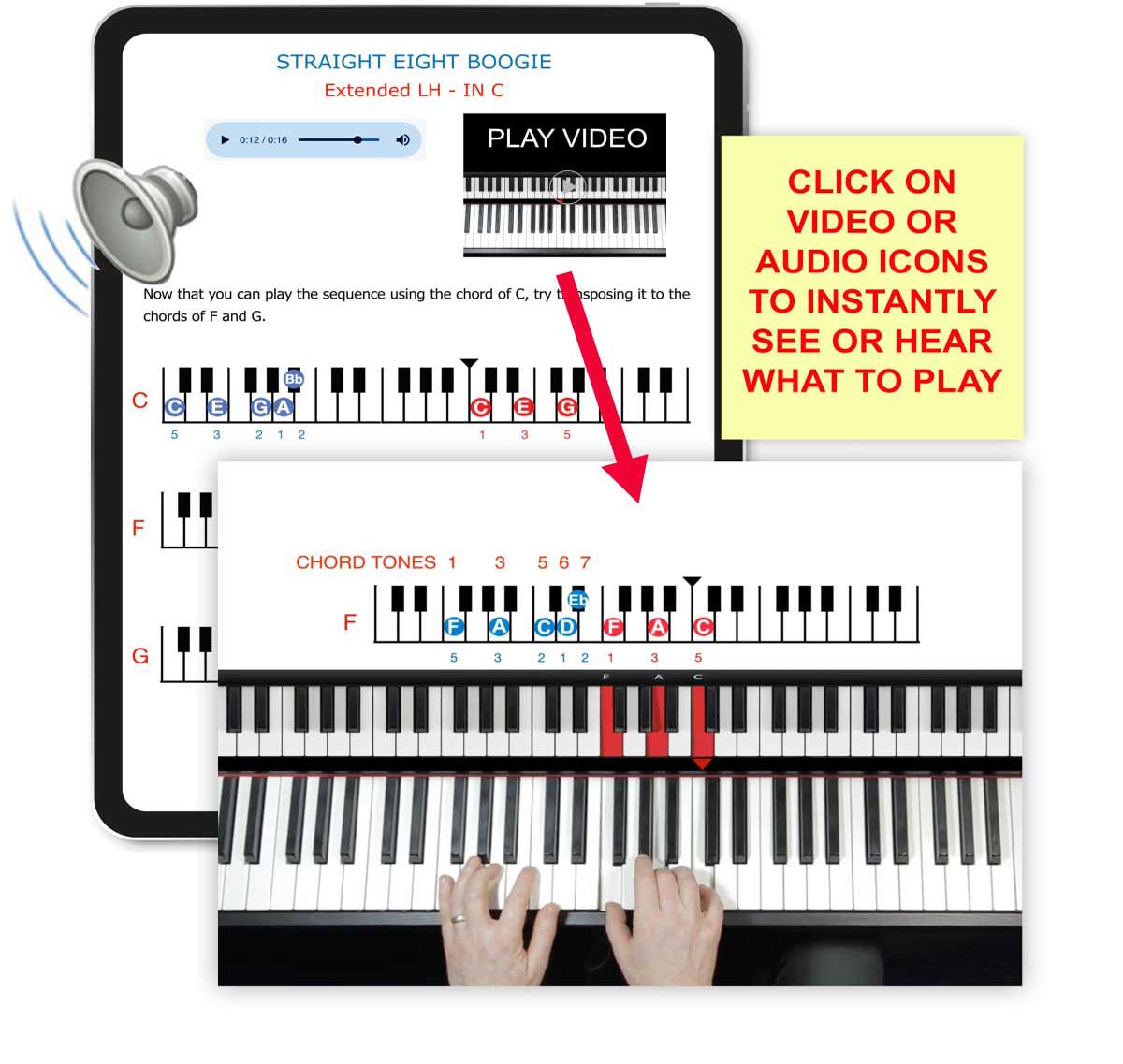
Pianoforall is built on exactly this order. It starts with rhythm-style piano — 15 popular rhythms, chord tricks and classic song progressions — and then moves step by step into ballad, blues and jazz styles, all taught through interactive ebooks with video and audio built into the page.
What to practice on
You do not need a grand piano. A digital piano with 88 weighted keys and a sustain pedal feels close enough to an acoustic instrument that everything you learn carries over, and it lets you practice with headphones at eleven at night.
A smaller, lighter keyboard is fine for the first few weeks. The trade-offs are covered in keyboard vs piano for beginners.
A 20-minute daily routine
- 3 minutes: warm up with the C major scale, hands separately, slowly.
- 7 minutes: chord changes — C to F to G and back — until your hand moves without looking.
- 7 minutes: one song, a few bars at a time.
- 3 minutes: play something just for fun. Improvise over two chords; it is the part that keeps you coming back.
When to learn to read music
Reading opens the door to classical pieces, printed arrangements and playing with other people, so it is worth learning. It just does not have to come first.
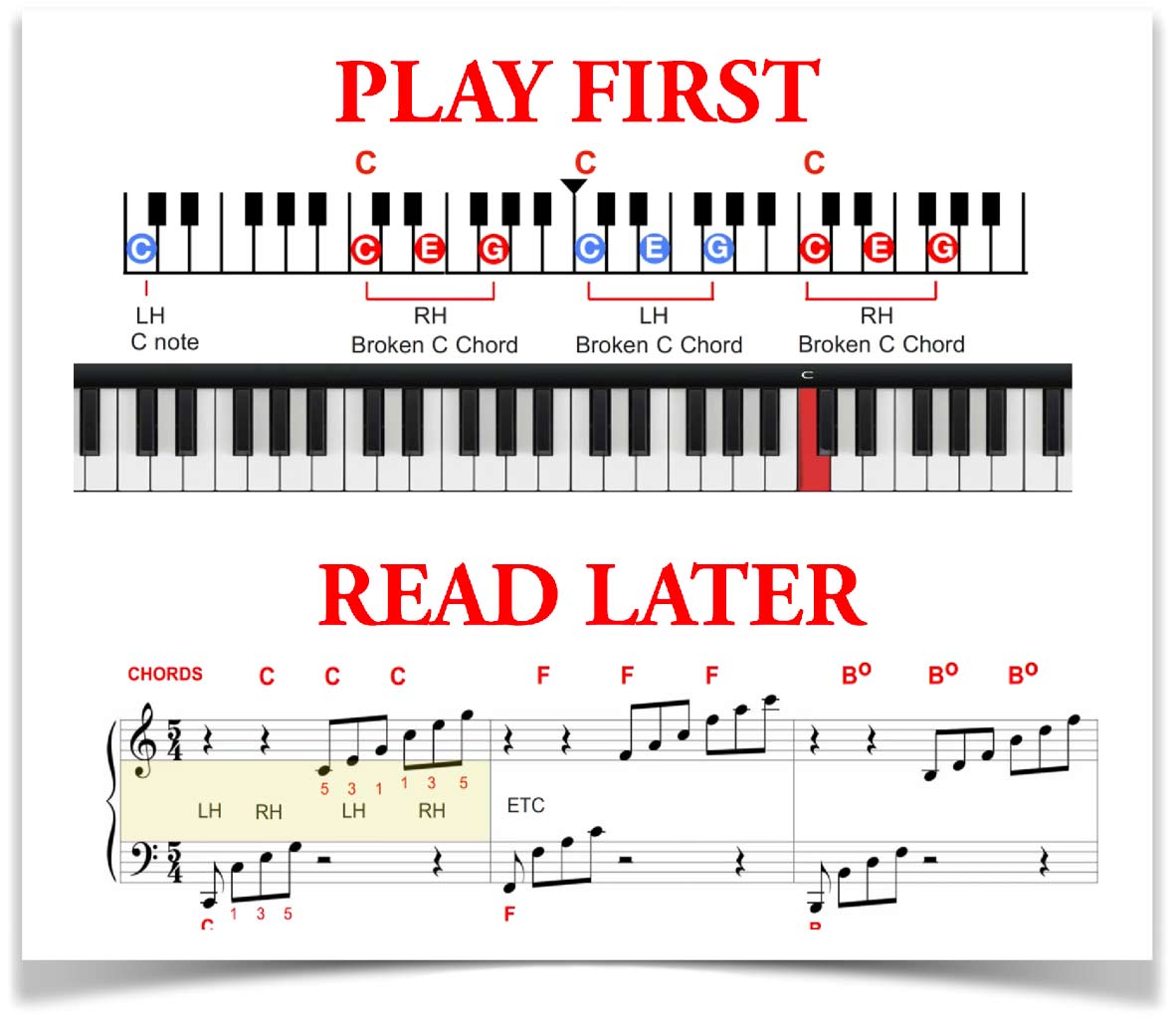
The smoothest route is to add reading alongside chords within the first few months. Pianoforall takes that route: you learn to read sheet music as you learn to play by ear, and later books move into classical pieces.
How to stay with it
- Keep the instrument out and ready. A keyboard in a closet does not get played.
- Record yourself once a month. Progress is hard to feel day to day and obvious month to month.
- Choose songs you genuinely love, not the ones you think you should learn.
- Play for someone, even once. A small audience gives practice a purpose.
A look inside Pianoforall








FAQ
Is it too late to learn piano at 40, 50 or 60?
No. Adults of every age learn piano. What changes with age is free time, not the ability to learn, and short daily practice fits a busy schedule.
How many minutes a day should an adult practice piano?
15 to 30 minutes a day is enough for steady progress. Consistency matters far more than the length of any one session.
Should adults learn chords or notes first?
Chords first gets you playing real music faster. Add note reading alongside it within the first few months.
Can I learn piano online?
Yes. A structured online course with video and audio covers the fundamentals well, and an occasional lesson with a teacher can check your technique.
Next step
Put the keyboard where you will see it every day, and play for 15 minutes tonight: find middle C, then the C, F and G chords.
Based on standard piano teaching practice for adult beginners. Product details for Pianoforall are from the vendor’s published sales page as of September 29, 2026.