Disclosure: this article contains affiliate links. If you buy through them, we may earn a commission at no extra cost to you. How this works.
Short answer
Jazz piano chords for beginners start with seventh chords — four-note chords that stack a seventh on top of a triad — and the ii-V-I progression they live in. In C, that is Dm7, G7 and Cmaj7.
Play them first as simple shells in the left hand, then as rootless voicings, and you will hear the jazz sound within a few practice sessions.
Jazzy chords, runs and riffs, step by step
- Interactive ebooks with step-by-step video lessons and 1,000+ audio lessons
- Rhythm style first, then ballads, blues, jazz, ragtime and improvising
- Learn to read music as you learn to play by ear
- Lifetime access on any device and a 60-day money-back guarantee
The five seventh chords
Every jazz chord grows from a seventh chord: a triad with one more note stacked on top. Five types cover almost everything you will meet in a lead sheet.
| Chord | Formula | In C |
|---|---|---|
| Major 7 (Cmaj7) | 1, 3, 5, 7 | C, E, G, B |
| Dominant 7 (C7) | 1, 3, 5, flat 7 | C, E, G, B-flat |
| Minor 7 (Cm7) | 1, flat 3, 5, flat 7 | C, E-flat, G, B-flat |
| Half-diminished (Cm7b5) | 1, flat 3, flat 5, flat 7 | C, E-flat, G-flat, B-flat |
| Diminished 7 (Cdim7) | 1, flat 3, flat 5, double-flat 7 | C, E-flat, G-flat, A |
The ii-V-I: the progression jazz is built on
Most jazz standards are strings of ii-V-I progressions: a minor seventh chord on the second note of the key, a dominant seventh on the fifth, and a major seventh on the root. In C, that is Dm7 to G7 to Cmaj7.
Play it slowly as full four-note chords in the left hand, and listen to how the G7 wants to resolve to C. That pull is the engine of jazz harmony.
Shell voicings: the first jazz voicings to learn
A shell voicing keeps only the root plus the third or the seventh — the notes that define the chord. In the left hand, alternate root-and-seventh with root-and-third so the hand barely moves: Dm7 as D and C, G7 as G and B, Cmaj7 as C and B.
Listen to the top notes: the C of Dm7 slides down to the B of G7. These guide tones — thirds and sevenths moving by step — are what make jazz chords sound connected.
Rootless voicings: the sound of jazz piano
Jazz pianists often leave the root to the bass player and play four notes that include the ninth or the thirteenth. The classic left-hand ii-V-I in C is F-A-C-E for Dm9, F-A-B-E for G13 and E-G-B-D for Cmaj9.
Notice how little moves: from Dm9 to G13, only the C drops to B. When you play without a bass player, put the root low in the left hand and the voicing in the right.
Add color with extensions
- Add the ninth to major and minor seventh chords: D over Cmaj7, E over Dm7.
- Add the thirteenth to dominant chords: E over G7.
- Save altered notes — flat nine, sharp nine — for later; they sound best once the basics are under your fingers.
- Let your ear decide. If a note sounds harsh against the melody, leave it out.
A practice routine
| Step | What to play |
|---|---|
| 1 | ii-V-I in C with full seventh chords, slowly |
| 2 | The same with shell voicings, root plus third or seventh |
| 3 | Rootless voicings, left hand alone |
| 4 | Move to F (Gm7, C7, Fmaj7) and B-flat (Cm7, F7, B-flat maj7) |
| 5 | Comp in a swing rhythm: chords on beat one and on the and of two |
Where jazz chords come from
Jazz harmony grows out of the basic triads — see piano chords for beginners — and out of the blues, whose dominant seventh chords appear in countless jazz tunes. If you have played a 12-bar blues, as in blues piano for beginners, you already know the sound of the dominant seventh.
Learn jazz the practical way
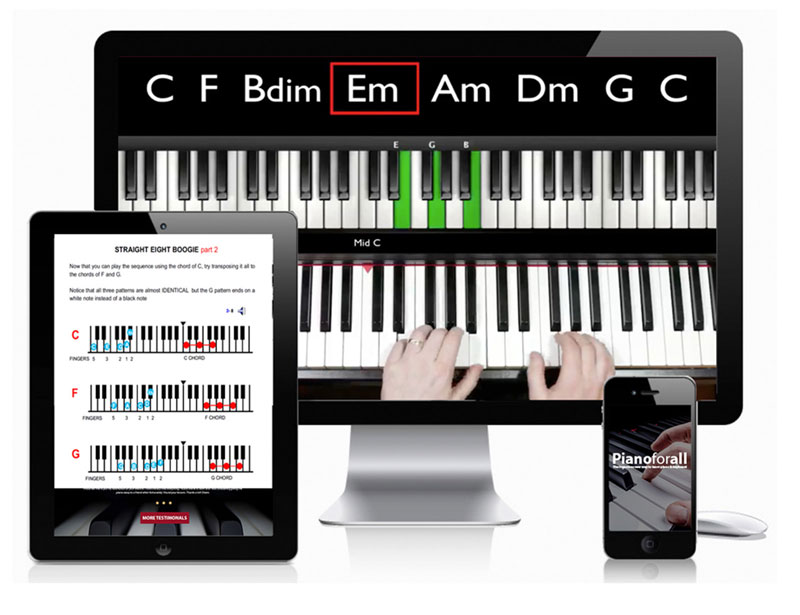
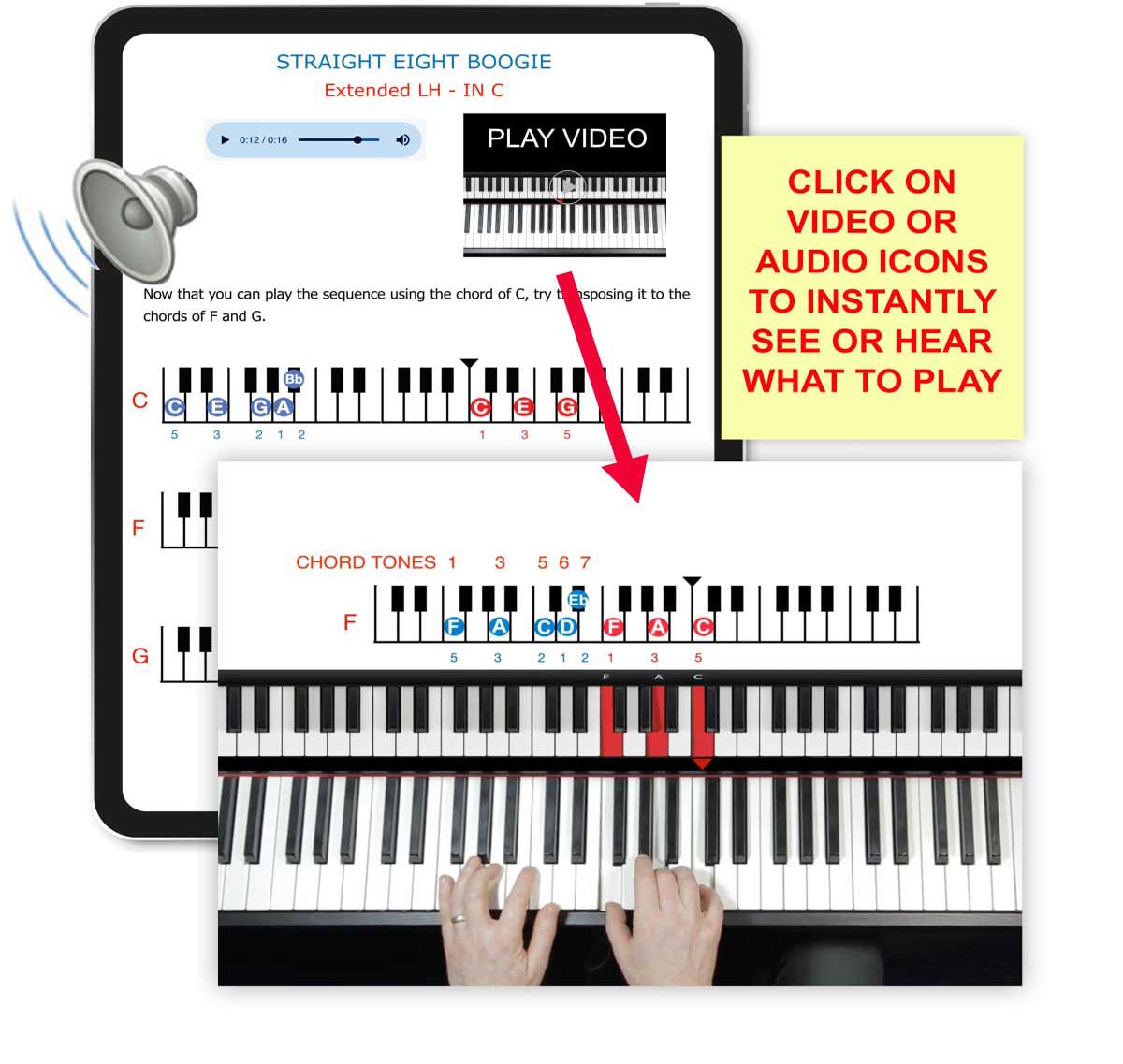
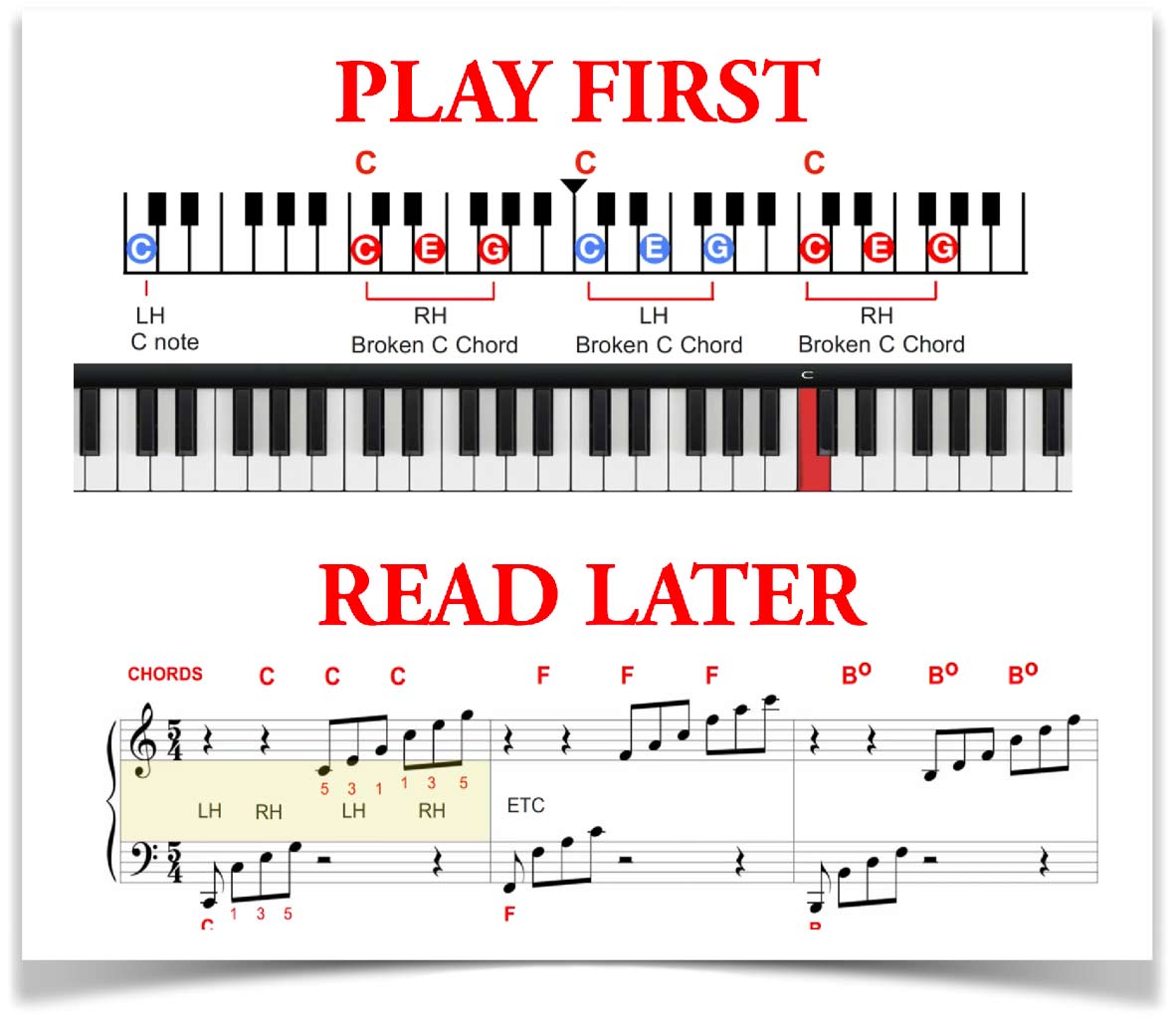
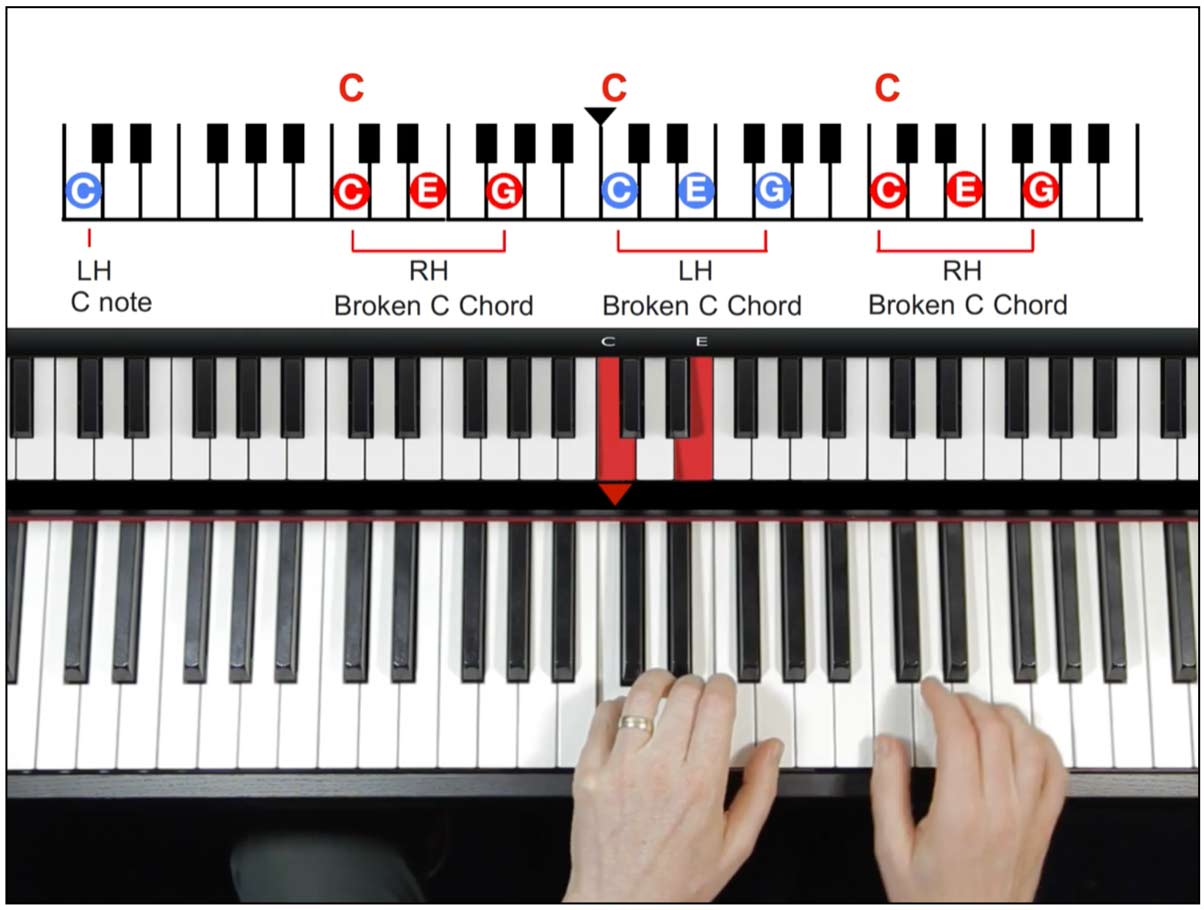
Pianoforall moves step by step from rhythm-style piano into ballad style, blues, jazz, ragtime and improvisation. One of its books is devoted to runs, riffs, jazzy chords, patterns and blues scales, and another teaches advanced chords in a practical rather than theoretical way, with video and audio built into its interactive ebooks.
A look inside Pianoforall










FAQ
What are the basic jazz piano chords?
Major 7, dominant 7, minor 7, half-diminished and diminished 7 chords.
What is a ii-V-I in jazz?
A progression from the chord on the second note of the key, to the fifth, to the root. In C: Dm7, G7, Cmaj7.
What is a shell voicing?
A two-note chord with the root and either the third or the seventh, leaving the other notes out.
Do I need to read music to play jazz piano chords?
No. Chord symbols like Dm7 and G7 tell you what to play, and many jazz pianists learn largely by ear.
Next step
Today, play Dm7, G7 and Cmaj7 as shells in the left hand — D and C, G and B, C and B — until the change feels smooth.
Based on standard jazz harmony: seventh chord construction, the ii-V-I progression, shell voicings and rootless voicings. Product details for Pianoforall are from the vendor’s published sales page as of September 29, 2026.