Disclosure: this article contains affiliate links. If you buy through them, we may earn a commission at no extra cost to you. How this works.
Short answer
Keyboard vs piano for a beginner comes down to three features: 88 keys, weighted keys that feel like a piano’s, and a sustain pedal. A digital piano with all three is the sensible first instrument for most people learning at home.
An acoustic piano sounds and feels best, but it needs space, regular tuning and a tolerant household. A small unweighted keyboard is fine for a first taste, and most learners outgrow it quickly.
A course for your first keyboard or piano
- Interactive ebooks with step-by-step video lessons and 1,000+ audio lessons
- Rhythm style first, then ballads, blues, jazz, ragtime and improvising
- Learn to read music as you learn to play by ear
- Lifetime access on any device and a 60-day money-back guarantee
The three options
| Instrument | Keys | Touch | Best for |
|---|---|---|---|
| Acoustic piano (upright or grand) | 88 | Real hammer action | A permanent home instrument, when space allows |
| Digital piano | 88 | Weighted, hammer-action keys | Most beginners learning at home |
| Portable keyboard | 61 to 76, sometimes 88 | Usually light, unweighted keys | A first taste, travel, young children |
Why weighted keys matter
On an acoustic piano each key throws a small hammer at a string, so the keys have weight and resistance. Weighted digital keys imitate that feel. Practicing on them builds the finger strength and control that transfers to any piano you sit down at.
Touch sensitivity matters too. It means a key played harder sounds louder, which is how you learn to play softly and loudly on purpose. Nearly every digital piano has it; check before buying a basic keyboard.
88 keys or fewer?
Beginner songs fit comfortably on 61 keys, and a portable keyboard with 61 keys can carry you through the first months.
Two-handed pieces, classical music and anything that uses the low bass or high treble need more range. If you are serious about continuing, buy 88 keys from the start and you will not have to buy twice.
The pedal and the details
- Sustain pedal. Almost all piano music uses it. Make sure one is included or can be added.
- Headphones. A digital instrument you can play silently gets played more, especially early in the morning or late at night.
- Polyphony. This is how many notes the instrument can sound at once. With the pedal down, notes pile up quickly; 64 notes is a practical minimum and 128 is comfortable.
- USB or MIDI. A connection to a computer or tablet opens up learning apps and recording.
If you are considering an acoustic piano
An acoustic piano needs tuning at least once a year, more often where humidity swings with the seasons. It is heavy to move, and a used piano should be checked by a piano technician before you buy it — problems inside a piano are not visible from the outside.
If you have the space and the budget, nothing replaces it. If you do not, a good digital piano is not a compromise for a learner; it is the practical choice.
Set up the spot where you practice
Where the instrument lives decides how often it gets played. Put it in a room you pass through every day, with the lid open or the power switch within reach, so sitting down takes seconds.
Sit so your forearms are level with the keys and your elbows hang just in front of your body. An adjustable bench or a firm chair at the right height matters more than most accessories, and a stand that puts a digital piano at the height of an acoustic keyboard, around 29 to 30 inches to the top of the keys, makes practice more comfortable.
Light the music stand, keep headphones on a hook, and leave the tablet or book with your current lesson open. Every small obstacle removed is one more practice session that actually happens.
Whichever you choose, start playing
The instrument matters less than the first months of practice. A plan for those months is in how to learn piano as an adult, and the first shapes to learn are in piano chords for beginners.
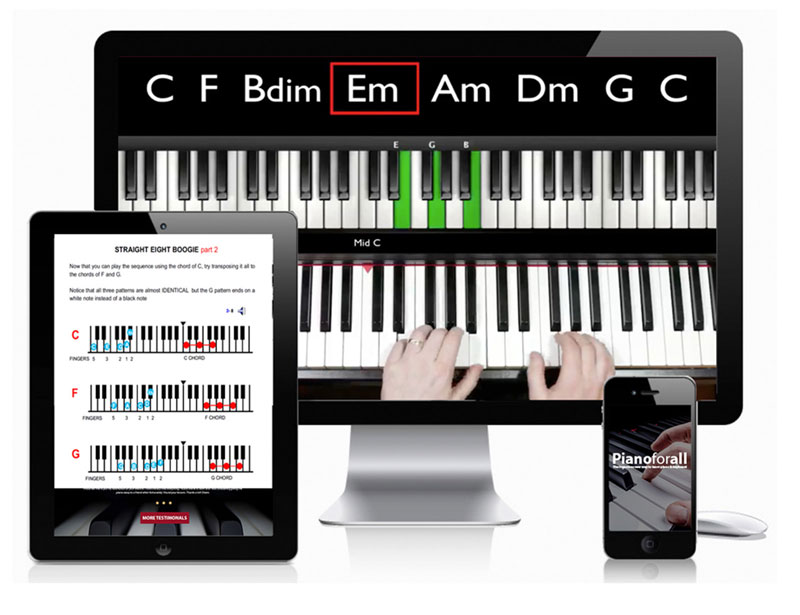
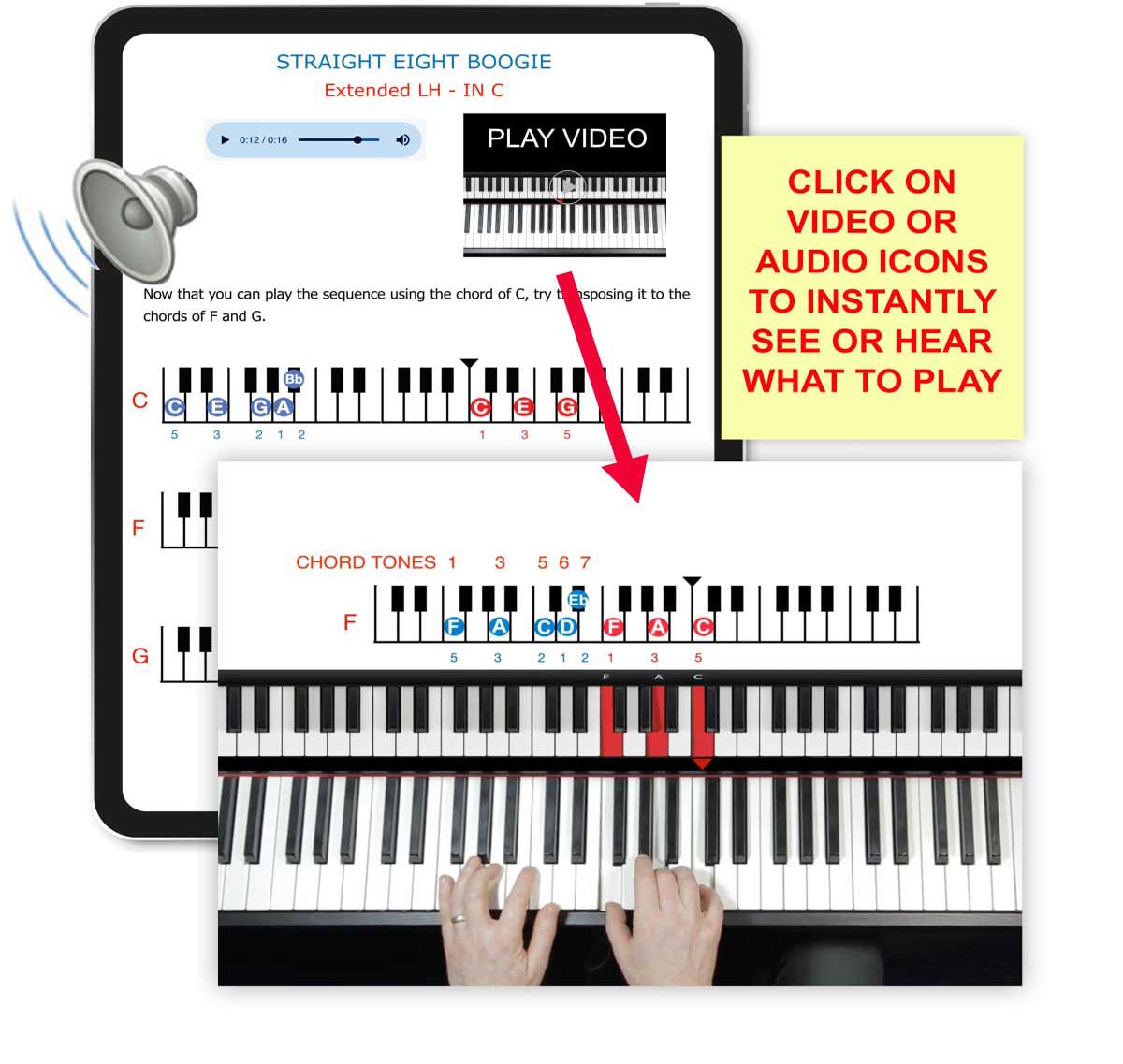
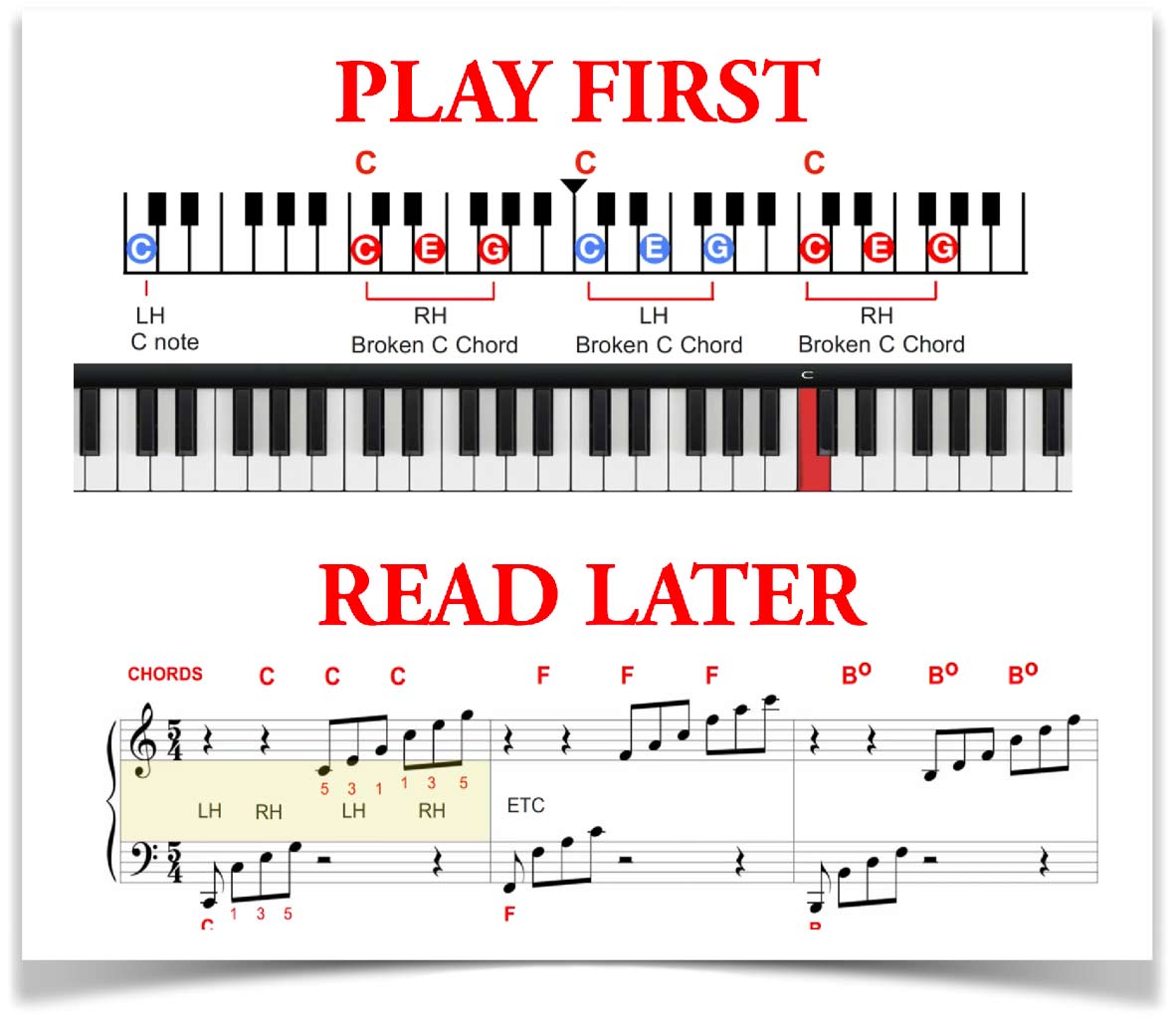
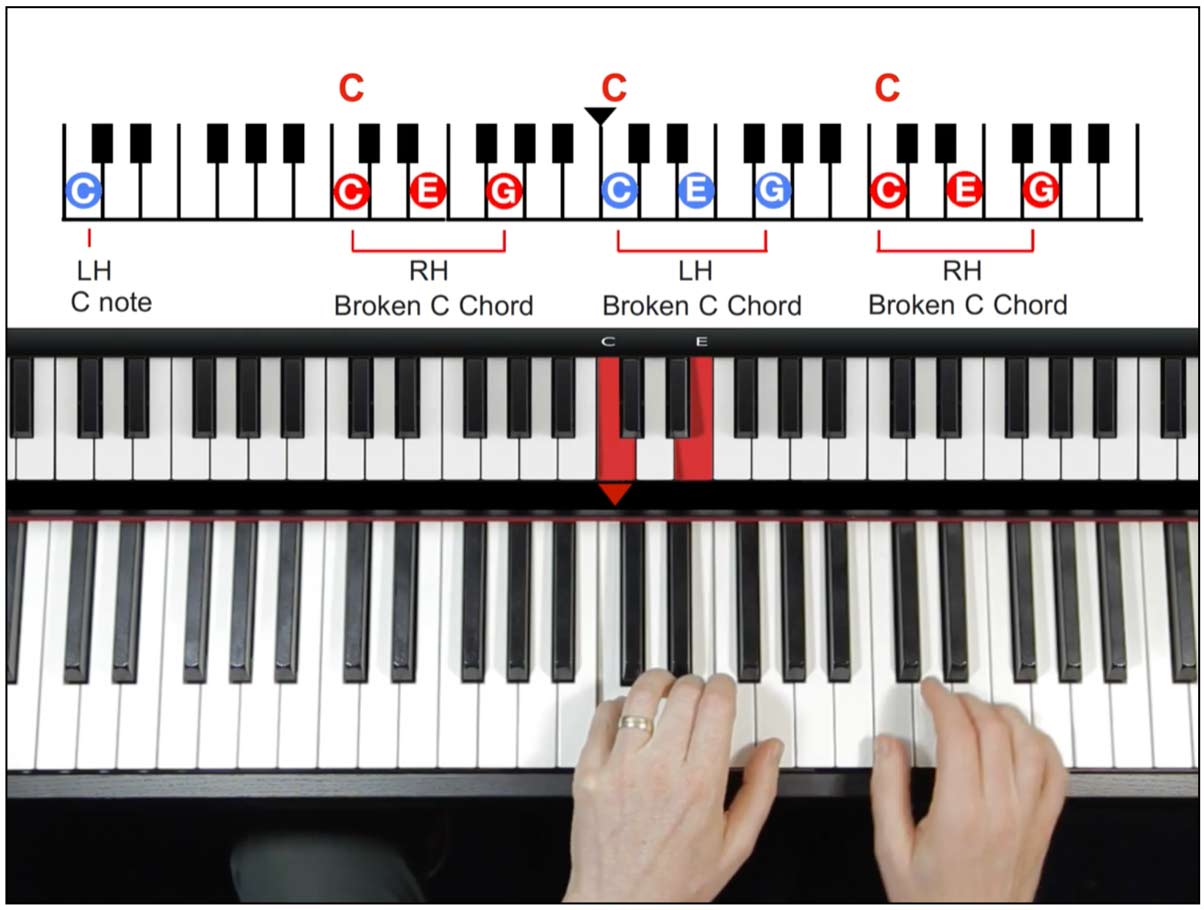
Pianoforall works with whatever you end up buying: the lessons are interactive ebooks with video and audio that run on a PC, Mac, tablet or phone, even without an internet connection, so the course can sit on the music stand right next to the keys.
A look inside Pianoforall







FAQ
Can I learn piano on a keyboard?
Yes. Ideally choose one with 88 weighted keys and a sustain pedal. A 61-key keyboard works for the first few months of songs and chords.
Do beginners need weighted keys?
They are strongly recommended. Weighted keys build the finger control you need on any real piano, so nothing has to be relearned later.
Is a digital piano as good as a real piano for learning?
For learning, a good digital piano comes very close. An acoustic piano has a richer sound and feel, but it costs more to own and needs regular tuning.
How often does an acoustic piano need tuning?
At least once a year, and more often in homes where humidity changes a lot between seasons.
Next step
Decide where the instrument will live, measure the space, and choose the option from the table that fits it. Then start the first lesson the day it arrives.
Based on standard guidance for choosing a first piano or keyboard: key count, key weighting, touch sensitivity, pedals, polyphony and acoustic piano maintenance. Product details for Pianoforall are from the vendor’s published sales page as of September 29, 2026.