Disclosure: this article contains affiliate links. If you buy through them, we may earn a commission at no extra cost to you. How this works.
Short answer
The best piano finger exercises for beginners are simple: five-finger patterns played slowly and evenly, drills that train each finger to move on its own, and short scales and arpeggios. Ten relaxed minutes a day does more than an hour once a week.
The goal is not strength but control — even, relaxed fingers that go where you send them.
A step-by-step course to practice from
- Interactive ebooks with step-by-step video lessons and 1,000+ audio lessons
- Rhythm style first, then ballads, blues, jazz, ragtime and improvising
- Learn to read music as you learn to play by ear
- Lifetime access on any device and a 60-day money-back guarantee
Start with a good hand shape
- Sit at a height where your forearms are about level with the keys.
- Curve your fingers gently, as if holding a ball, and play on the fingertips; the thumb plays on its side.
- Keep the wrist loose and level — not dropped below the keys, not arched high.
- Let the weight of the arm do the work, rather than pressing hard with the fingers.
Five exercises for beginners
| Exercise | How to play it | What it trains |
|---|---|---|
| Five-finger pattern | C-D-E-F-G up and down, fingers 1 to 5, each hand alone | Evenness and a steady pulse |
| Held-note drill | Hold C, E, F and G down silently and repeat D with finger 2; then move to each finger | Finger independence |
| Thumb under | C-D-E, then pass the thumb under to F, and back | Scale fingering |
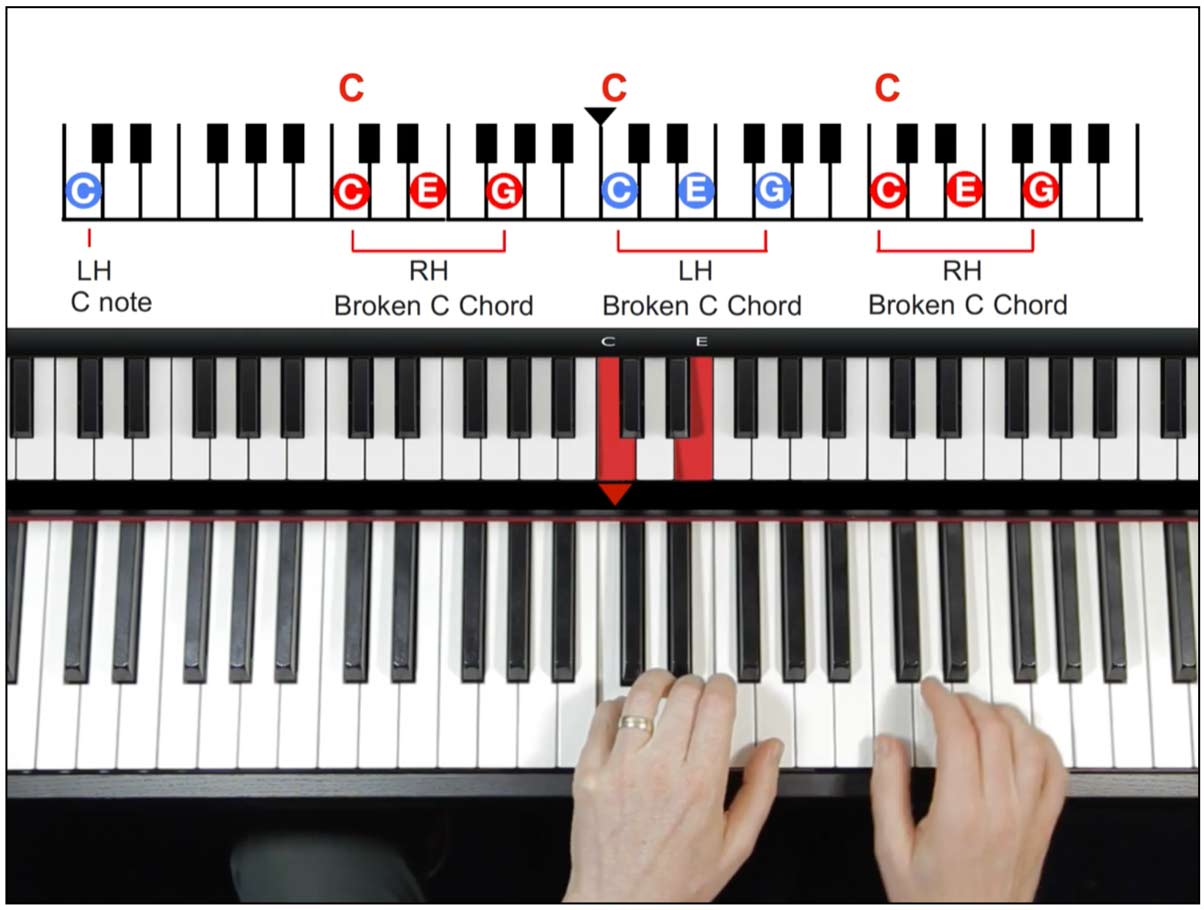
| Broken chord | C-E-G-C up and down with fingers 1-2-3-5 | Stretch and arpeggio shape |
| Legato and staccato | The five-finger pattern smooth, then short and detached | Touch control |
Scales and arpeggios
Once the five-finger pattern is easy, move on to one-octave scales with the thumb passing under, and simple arpeggios. They train the hand for the shapes found in real music. The fingering for the first scales is laid out in piano scales for beginners.
Many teachers also use the first exercises of Hanon’s The Virtuoso Pianist, a set of finger drills written in the 1870s. Played slowly and relaxed, a few of them make a useful warm-up.
Play with the volume
Play the same pattern soft, then loud, then growing from soft to loud. Controlling the volume finger by finger is what makes a melody sing over its accompaniment later on.
Then try the pattern with one hand loud and the other soft. It feels strange at first, and it is exactly the skill a melody over chords needs.
A 10-minute daily routine
| Minutes | Exercise |
|---|---|
| 0 to 2 | Five-finger pattern, each hand, slow and even |
| 2 to 4 | Held-note drill, one finger at a time |
| 4 to 7 | One scale, hands separately, then together |
| 7 to 10 | Broken chords in C, F and G |
Relaxed beats hard
Tension is the enemy of speed. If your forearm, shoulder or wrist tightens, stop, shake the hand out and start again slower. If anything hurts, rest — exercises should never be painful.
Adult beginners often push too hard because progress feels slow. Short, relaxed practice every day wins, as described in learning piano as an adult.
From exercises to music
Exercises are a warm-up, not the main event. Spend most of your practice on real music, and let the exercises make it easier.
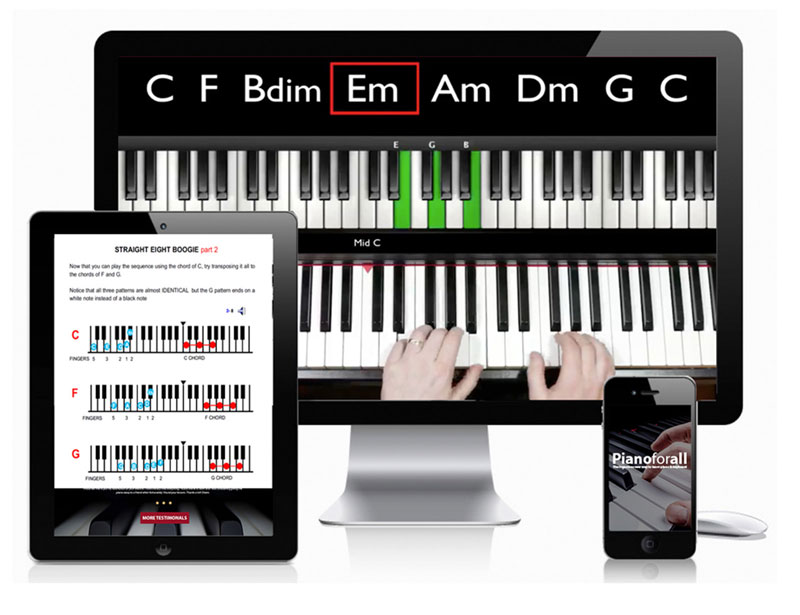
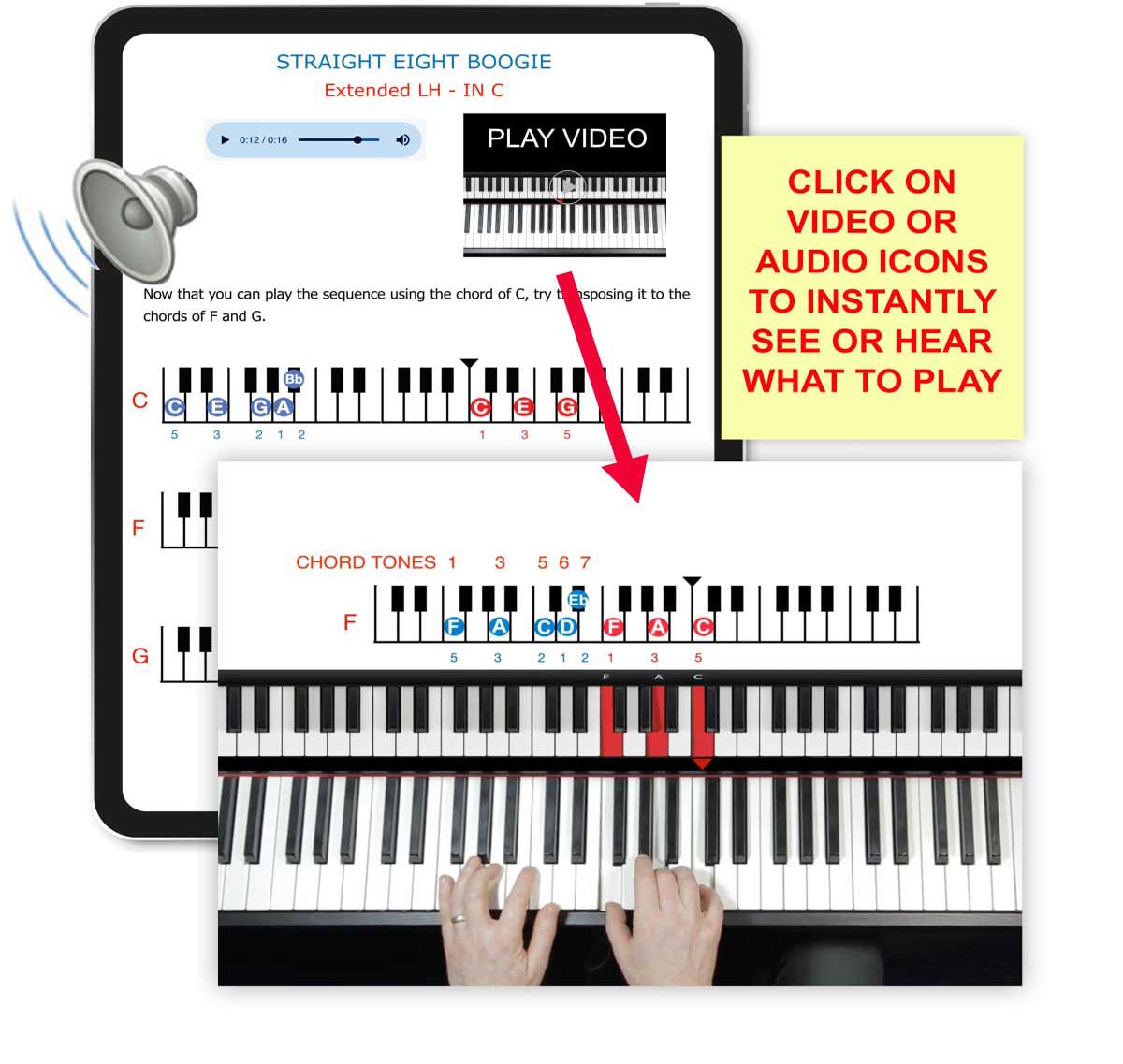
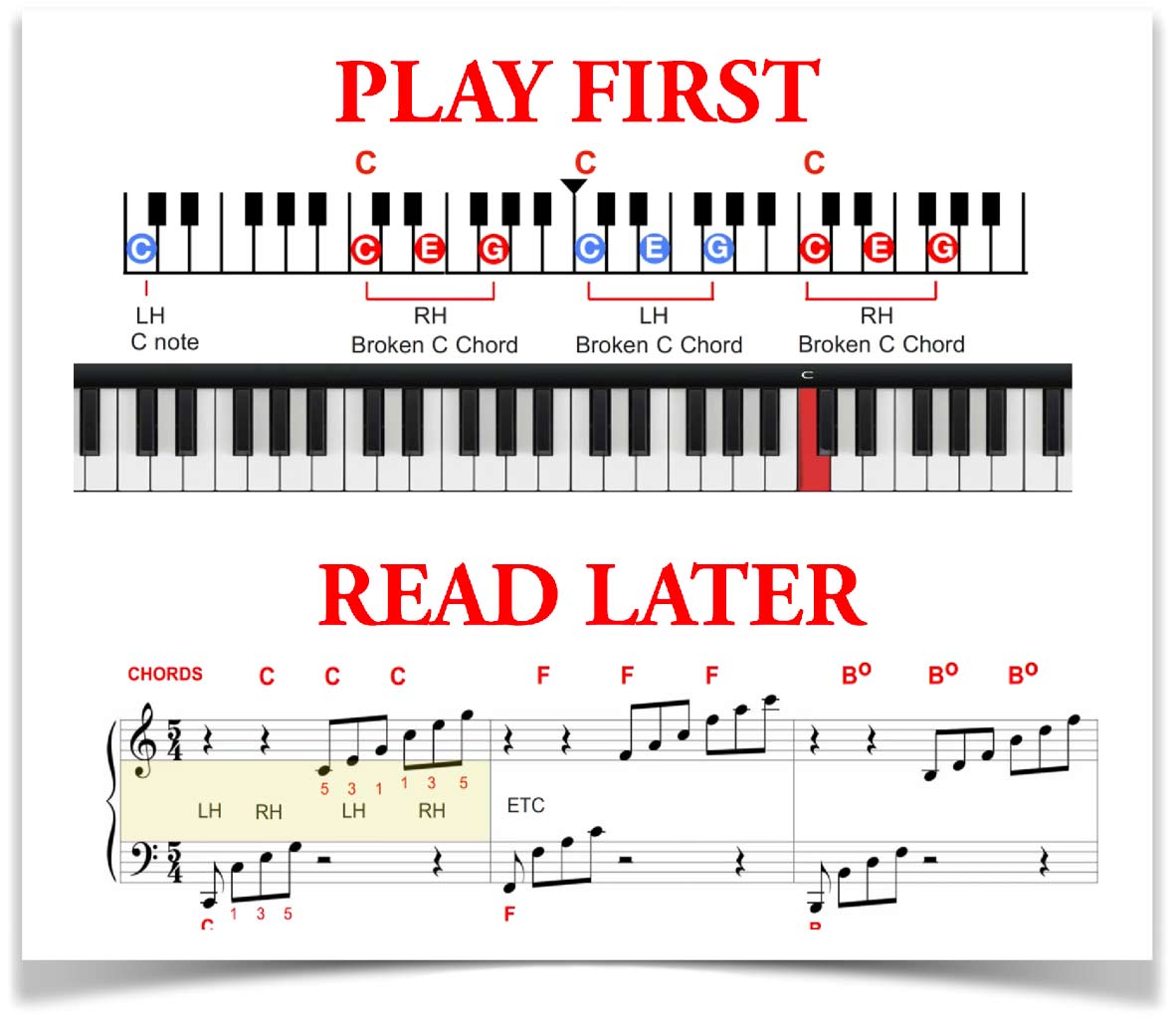
Pianoforall puts music first — it starts with popular rhythm-style piano so you play real songs early — and one of its books is devoted to scale and arpeggio exercises that speed up the learning process. Lessons combine written instruction, keyboard diagrams, notation, video and audio.
A look inside Pianoforall














FAQ
How long should I do finger exercises each day?
About 10 minutes is enough for most beginners, as a warm-up before real music.
Do finger exercises make you play faster?
They build evenness and control, which is what makes speed possible. Speed itself comes from playing slowly and relaxed first.
Are Hanon exercises good for beginners?
The first few, played slowly and relaxed, make a useful warm-up. They work best alongside real pieces, not instead of them.
How do I make my weak fingers stronger?
Focus on independence and control rather than strength: held-note drills and slow five-finger patterns help the fourth and fifth fingers most.
Next step
Before your next practice, play the five-finger pattern in C ten times, slowly, listening for every note at the same volume.
Based on standard piano technique for beginners: hand position, five-finger patterns, independence drills, scales and arpeggios. Product details for Pianoforall are from the vendor’s published sales page as of September 29, 2026.