Disclosure: this article contains affiliate links. If you buy through them, we may earn a commission at no extra cost to you. How this works.
Short answer
To read piano sheet music, you learn two things: which key each note on the staff stands for, and how long to hold it. Piano music uses two staffs at once — treble clef for the right hand, bass clef for the left — joined into the grand staff.
Start from a few landmark notes, learn the rhythm values, and read a little every day. Most beginners work through simple pieces within a few months.
Read music as you learn to play by ear
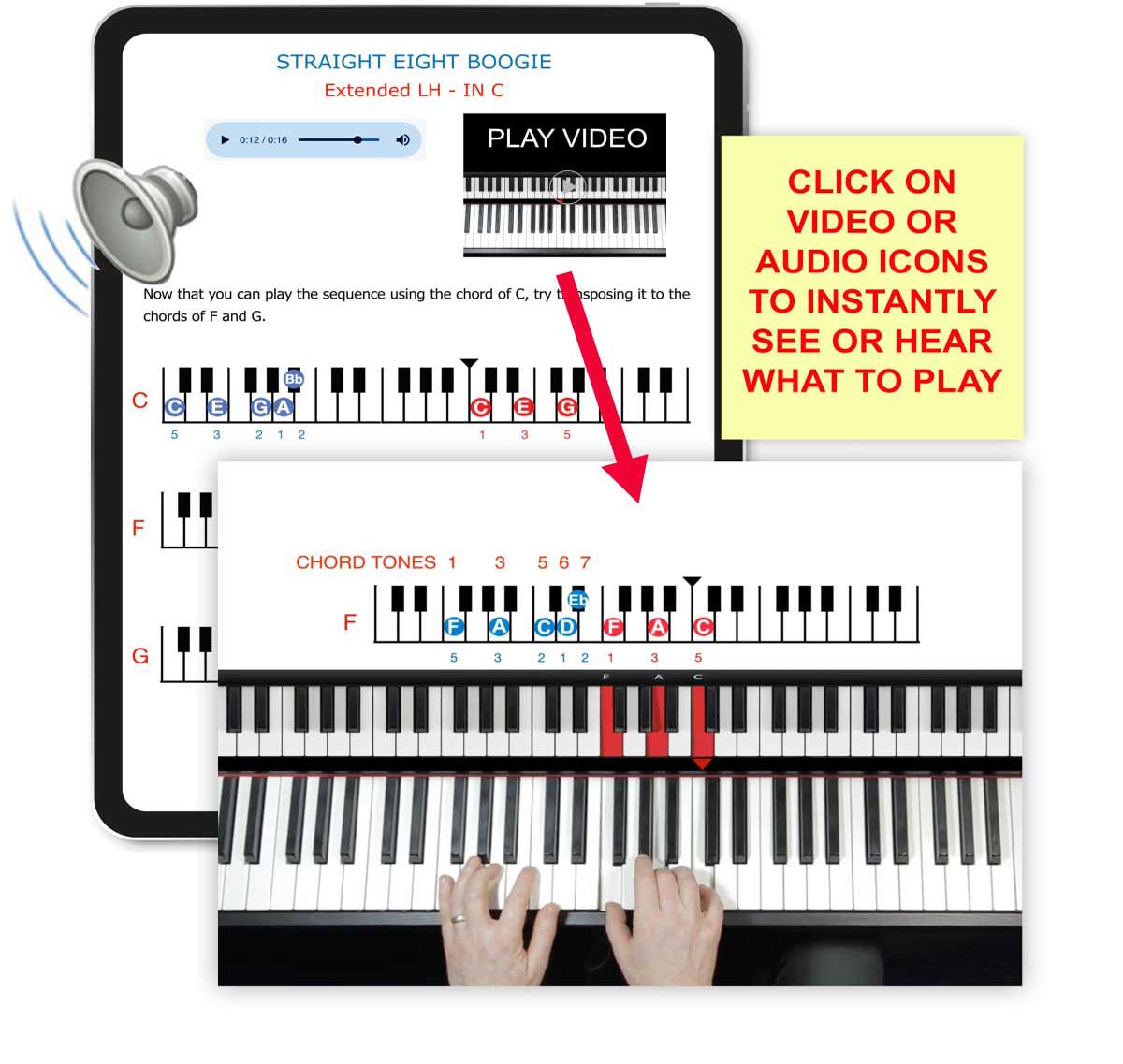
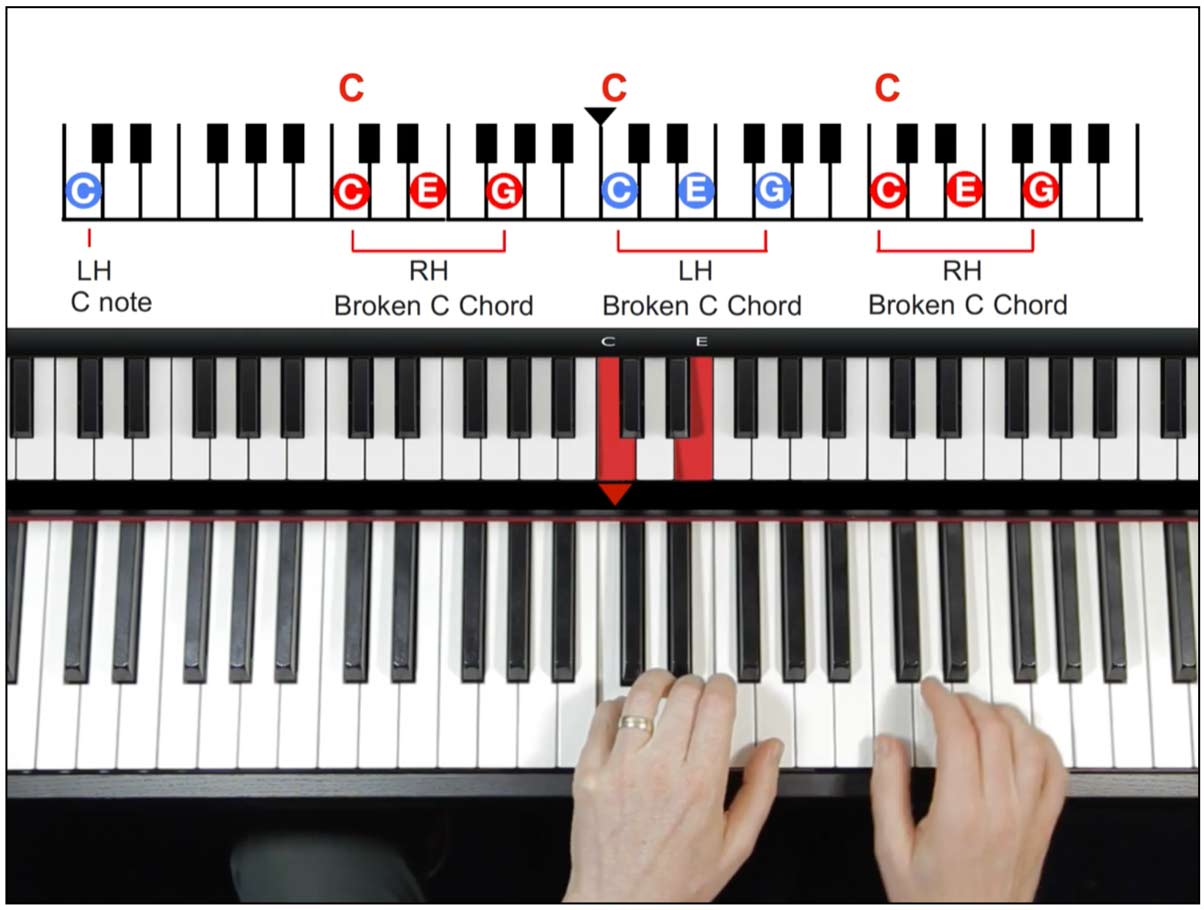
- Interactive ebooks with step-by-step video lessons and 1,000+ audio lessons
- Rhythm style first, then ballads, blues, jazz, ragtime and improvising
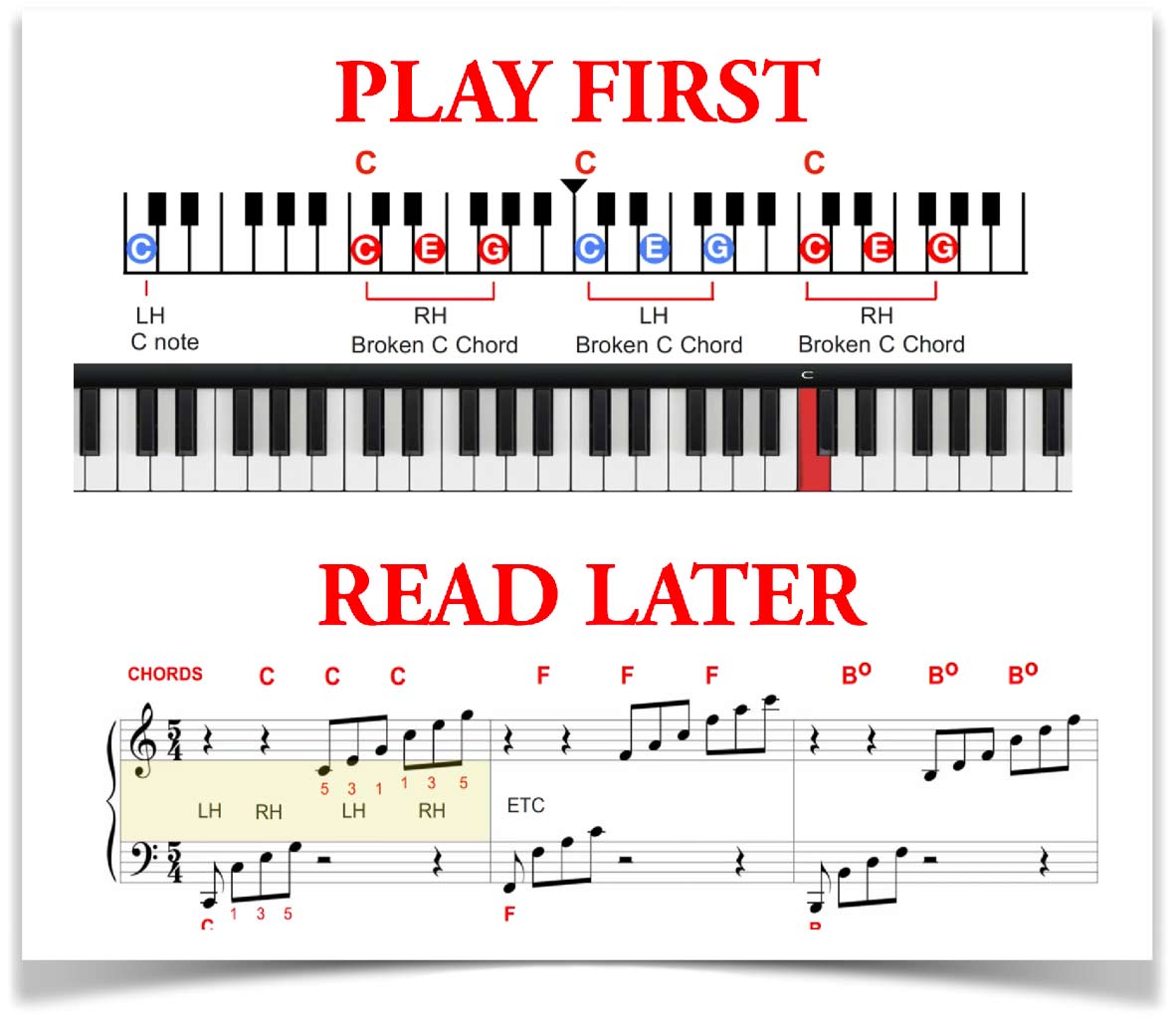
- Learn to read music as you learn to play by ear
- Lifetime access on any device and a 60-day money-back guarantee
The grand staff
Each staff has five lines and four spaces, and every line and space is a note. The clef at the start tells you which notes: the treble clef (or G clef) curls around the line for G above middle C; the bass clef (or F clef) puts its two dots around the line for F below middle C.
Middle C sits on a short extra line — a ledger line — exactly between the two staffs. It is the same key on the piano whichever staff it appears in, and it is the best place to start.
The notes on each clef
Two memory tricks cover the whole grand staff. Read the lines and spaces from the bottom up.
| Clef | Lines (bottom to top) | Spaces (bottom to top) | Memory aid |
|---|---|---|---|
| Treble | E G B D F | F A C E | Every Good Boy Does Fine / FACE |
| Bass | G B D F A | A C E G | Good Boys Do Fine Always / All Cows Eat Grass |
Read from landmarks, not from scratch
Counting up from the bottom line every time is slow. Instead, learn three landmark notes by sight — middle C, the treble G and the bass F — and read everything else as a distance from them.
Distances are easy to see. A note on the next line or space is one step away; a note that skips a line or space is two. Reading in steps and skips is how fluent readers work, and it is faster than naming every note.
Rhythm: how long each note lasts
The time signature at the start of the piece tells you how to count. The top number is how many beats are in each measure; the bottom number is which note value gets one beat. In 4/4, the most common, there are four quarter-note beats per measure; in 3/4, the waltz time, there are three.
Every note value has a matching rest, a symbol for silence of the same length. Count the rests out loud as carefully as the notes.
| Note | Beats in 4/4 time |
|---|---|
| Whole note | 4 |
| Half note | 2 |
| Quarter note | 1 |
| Eighth note | 1/2 |
Sharps, flats and key signatures
A sharp raises a note by a half step — to the very next key on the right. A flat lowers it a half step, to the next key on the left. A natural sign cancels either one.
Sharps or flats written right after the clef form the key signature, and they apply to every matching note in the piece unless a natural sign says otherwise. Check the key signature before playing a note.
A 10-minute daily reading routine
- Two minutes naming notes from flashcards or an app, landmarks first.
- Clap and count the rhythm of one short line before touching the keys.
- Name the notes of that line out loud.
- Play it hands separately, slowly, then together.
- Stop after ten minutes. Short daily reading sticks far better than one long session.
Reading and playing by ear, together
You do not have to choose between reading and playing by ear, and chords make reading easier: once you know the shapes in piano chords for beginners, you start seeing them on the page. A realistic timeline for all of this is in how long it takes to learn piano.
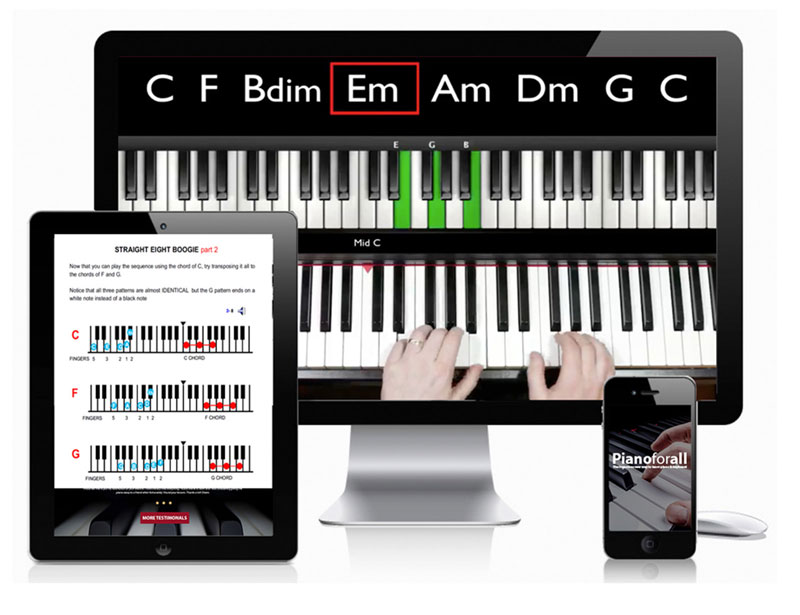
Pianoforall teaches you to read sheet music as you learn to play by ear, and its classical book then takes you into pieces by Beethoven, Bach, Chopin and Mozart once the basics are in place.
A look inside Pianoforall









FAQ
How long does it take to learn to read sheet music?
A few weeks to name the notes with the memory tricks, and a few months of daily practice to read simple pieces at a slow tempo.
Do I need to read music to play piano?
No — many pianists play from chords and by ear. Reading opens up classical music and printed arrangements, so it is worth learning alongside.
What is the easiest way to remember the notes?
Use the memory aids for each clef, then learn middle C, treble G and bass F by sight and read everything else as steps and skips from them.
What does a time signature mean?
The top number is how many beats are in each measure; the bottom number is which note value counts as one beat. 4/4 means four quarter-note beats per measure.
Next step
Tonight, find middle C on the page and on the keyboard, then name every note in the first line of an easy piece before you play it.
Based on standard music notation: the grand staff, clefs, note values, time signatures and key signatures. Product details for Pianoforall are from the vendor’s published sales page as of September 29, 2026.