Disclosure: this article contains affiliate links. If you buy through them, we may earn a commission at no extra cost to you. How this works.
Short answer
To calm an overexcited dog, stop feeding the excitement — stay slow and quiet — and teach an off switch: short bursts of play followed by a cue to settle, with calm rewarded every time. Add enough sleep, sniffing and mental work, and the overexcited moments get shorter.
Excitement is not bad behavior; it is a skill the dog has not learned yet. A dog can learn to go from high to calm the same way it learns to sit.
Impulse control and settling, taught through games
- Created by Adrienne Farricelli, a CPDT-KA certified trainer
- 21+ force-free games in graded modules, with video demonstrations
- An archive of solutions for barking, chewing, jumping, digging and more
- Instant access and a 60-day money-back guarantee
Why excitement snowballs
- Arousal builds: each exciting moment stacks on the last, until the dog cannot think.
- Too little rest: many adult dogs sleep 12 hours or more a day, and a tired dog, like a tired child, often gets wilder, not calmer.
- Accidental rewards: attention, eye contact and play given to a bouncing dog teach it that bouncing works.
- The wrong exercise: long games of fetch build fitness and arousal; sniffing and problem solving settle the mind.
In the moment: be boring
When the dog is spinning, lower your voice, slow your movements and stop talking. Fast hands and a high voice add fuel. Stand still, fold your arms and wait for four paws on the floor, then reward calmly and quietly.
If the excitement is aimed at visitors, manage it first — a leash, a gate or a separate room — and use the greeting routine in how to stop a dog jumping on guests.
Teach an off switch: play, then settle
- Play a short, lively game of tug or chase for 10 to 20 seconds.
- Stop, stand still and say your settle cue once.
- The instant the dog pauses — sits, lies down or simply stops — mark it and give a calm reward.
- Then invite the dog to play again. Calm makes the fun come back.
- Repeat a few rounds, stretching the calm part each time.
Give calm a place
A mat or bed where the dog learns to relax gives it somewhere to go when life gets busy. Build it with small rewards for lying down and staying there, as in how to teach a dog to settle on a mat.
Licking and chewing help many dogs wind down. A frozen food toy or a long-lasting chew on the mat after a walk turns settling into a habit.
A calmer daily routine
| Part of the day | What helps |
|---|---|
| Morning | A sniffy walk at the dog’s pace rather than a fast march |
| Midday | A food puzzle or a short training game |
| Afternoon | Nap time in a quiet spot |
| Evening | A few rounds of play-and-settle, then a chew on the mat |
Tire the brain
Brain games burn energy without winding the dog up. Scent games, food puzzles and short training sessions are ideal — see dog mental stimulation games for a set that works even in a small space.
When to get help
If excitement tips into hard mouthing, growling or fear, or comes with a sudden change in behavior, talk to your vet and a certified trainer. Overexcitement that looks like panic is a different problem from a happy dog with no brakes.
Games that teach self-control
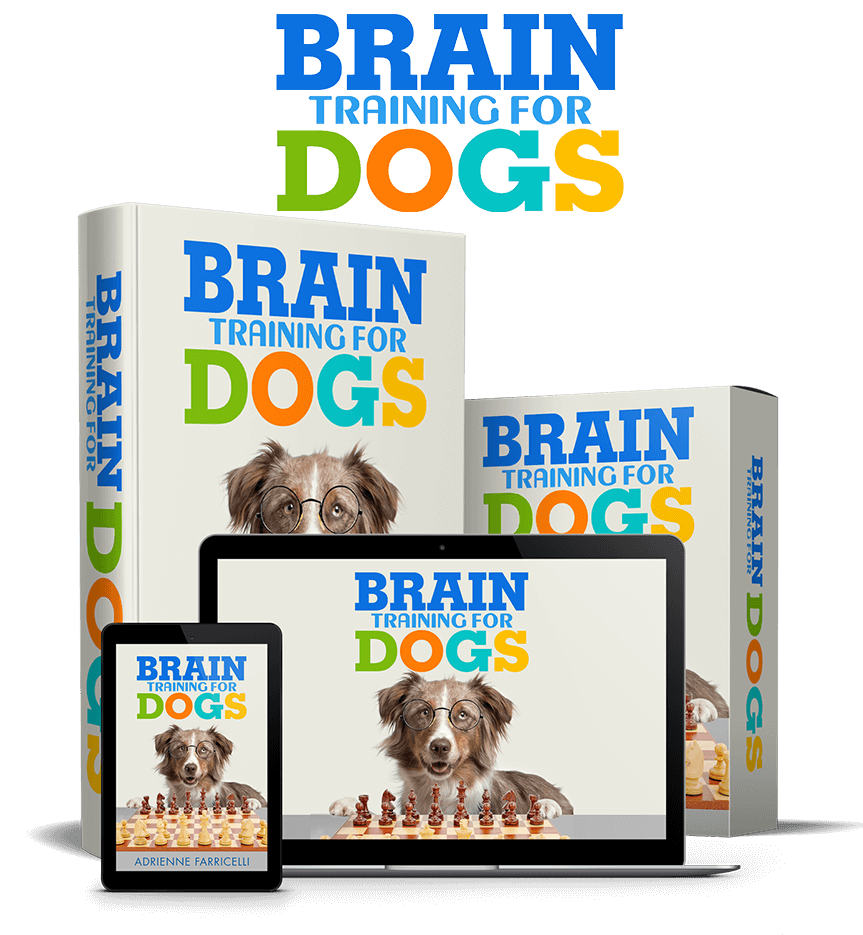
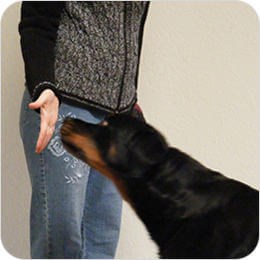
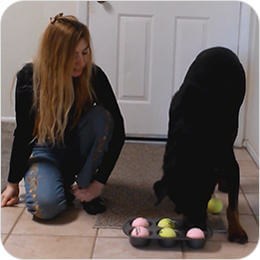
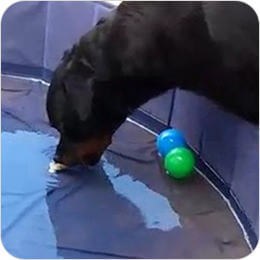
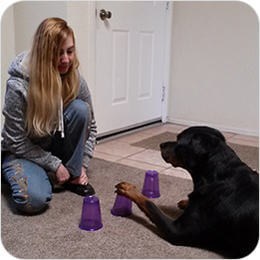
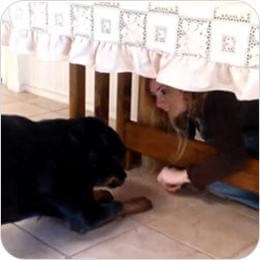
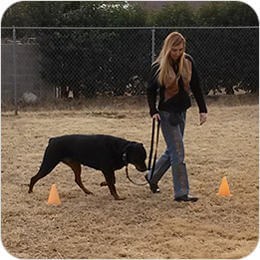
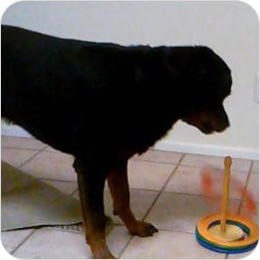
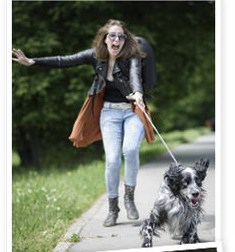
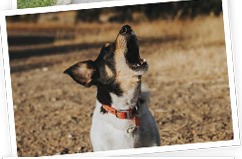
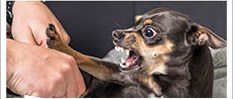
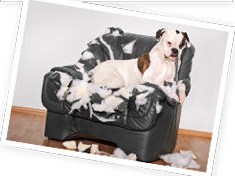
Brain Training for Dogs lists dogs that get overexcited and are hard to settle down among the problems it addresses, and its impulse-control module includes a game called jazz up and settle down that works on exactly this skill. The program has more than 21 brain games and was created by CPDT-KA certified trainer Adrienne Farricelli.
A look inside Brain Training for Dogs

FAQ
Why does my dog get so overexcited?
Usually a mix of built-up arousal, too little rest, and excitement that has been rewarded with attention in the past.
How do I calm my dog down quickly?
Go still and quiet, wait for a pause, and reward it calmly. Then give the dog something to do, like lying on its mat with a chew.
Does exercise calm a hyper dog?
Some, but mental work and sniffing settle a dog better than long games of fetch, which can build even more excitement.
Will my dog grow out of being overexcited?
Many dogs calm down with age, but teaching an off switch speeds it up and makes the change last.
Next step
Tonight, play three rounds of play-then-settle: 15 seconds of tug, a pause, a calm reward.
Based on standard force-free training for arousal and impulse control. Product details for Brain Training for Dogs are from the vendor’s published page as of September 29, 2026.