
Disclosure: this article contains affiliate links. If you buy through them, we may earn a commission at no extra cost to you. How this works.
Short answer
Adolescent dog behavior usually shows up between about six and eighteen months: a dog that knew its cues suddenly ignores them, pulls again, jumps, chews and wanders off after smells. It is a normal stage of development, not a failure of training.
The answer is to go back to basics for a while — easier setups, better rewards, a long line for recall — and to add more mental exercise. The phase passes, and the training you keep up now is what remains when it does.
Keep a teenage dog’s brain busy, the force-free way
- Created by Adrienne Farricelli, a CPDT-KA certified trainer
- 21+ force-free games in graded modules, with video demonstrations
- An archive of solutions for barking, chewing, jumping, digging and more
- Instant access and a 60-day money-back guarantee
When adolescence starts and ends
Adolescence in dogs runs roughly from six months to eighteen months, the stretch between puppyhood and social maturity. Small breeds tend to start and finish earlier; large and giant breeds can stay adolescent until two years or more.
Hormones, a growing brain and a new confidence about the world all arrive at once. The result looks a lot like a human teenager: more independence, more testing of limits, and selective hearing.
What the research found
A 2020 study published in Biology Letters followed young guide-dog candidates — Labradors, golden retrievers and crosses of the two — through adolescence. At eight months, the dogs were more likely to ignore a sit cue from their own caregiver than they had been at five months, while their response to a stranger did not drop the same way.
The same research found that caregivers rated their dogs as less trainable at eight months than at five months or at twelve months. In other words, the dip is real, it is aimed at the people the dog knows best, and it passes.
Common teenage behaviors
- Selective hearing: cues that worked at home fail outside, and recall falls apart.
- Pulling again: leash manners slip as the world gets more interesting.
- Jumping and mouthing: more energy and more size, with the same puppy enthusiasm.
- Chewing: a second round of destructive chewing is common in this period.
- New worries: some dogs become wary of things they used to ignore.
- More interest in other dogs: sniffing, marking and wandering off after smells.
The plan: manage, simplify, reward
- Manage first. Use gates, a crate, even a leash indoors if needed, so the dog cannot practice the behaviors you do not want.
- Make it easier. Go back to quieter places and shorter distances until the dog is succeeding again, then build back up.
- Pay better. Raise the value of rewards for the hard cues, especially recall.
- Use a long line. A 20- to 30-foot line lets the dog explore while you keep recall safe, as described in dog recall training.
- Keep everyone consistent. The same cues and the same rules from every person in the house.
- Leave punishment out. It damages the relationship at exactly the moment the dog is testing it.
Go back to the basics
Treat this period as a refresher course. Run through the cues from the start — sit, down, stay, come, leave it, drop it — in short sessions, as if the dog were learning them for the first time. The step-by-step methods are in basic dog commands.
Expect good days and bad days. A cue that worked perfectly on Monday may fall apart on Tuesday; lower the difficulty, get a few easy wins, and end the session there.
Tire the brain, not just the legs
An adolescent dog with pent-up energy finds its own entertainment, usually at the expense of the sofa. Long runs help, but they also build a fitter dog that needs even more exercise. Mental work — food puzzles, sniffing games, short training games — tires a dog in a way that settles it.
A few short sessions a day, with games like those in dog mental stimulation games, take the edge off the teenage restlessness.
Questions for your vet
The timing of spaying or neutering, and any sudden change in behavior that looks like pain or fear, are questions for your vet, who knows your dog’s breed, size and health history.
Training that carries you through
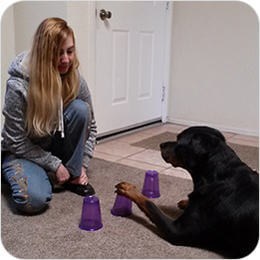
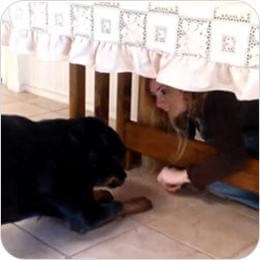
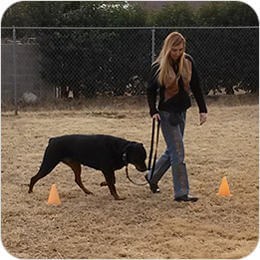
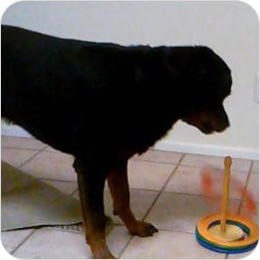
Brain Training for Dogs pairs more than 21 brain games with an Obedience 101 section — sit, lie down, stay, heel, drop and walking by your side — and a behavior-problem archive covering barking, digging, jumping, chewing, pulling and whining, all created by CPDT-KA certified trainer Adrienne Farricelli.
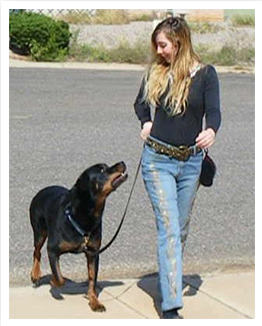
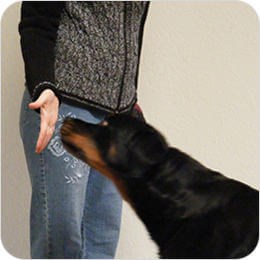
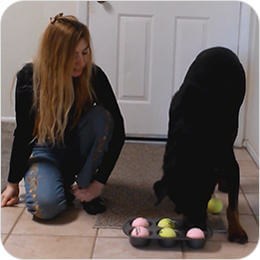
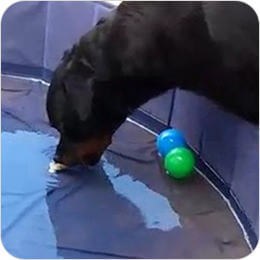
A look inside Brain Training for Dogs












FAQ
At what age are dogs teenagers?
Roughly six to eighteen months, starting and ending earlier in small breeds and later in large ones.
Why does my adolescent dog ignore me?
Growing independence and a more interesting world. Research found the dip is strongest toward the dog’s own caregiver, and that it passes.
Does adolescent dog behavior go away?
Yes. Keep training through it, lower the difficulty for a while and manage the environment, and the lost ground comes back.
Should I start training over with my teenage dog?
In a sense, yes: go back to easier versions of each cue and build up again, with better rewards.
Next step
This week, put a long line on your dog for every off-leash outing and pay every recall with the best treat you have.
Based on standard force-free training practice and a 2020 study on adolescence in dogs published in Biology Letters. Product details for Brain Training for Dogs are from the vendor’s published page as of September 29, 2026.