Disclosure: this article contains affiliate links. If you buy through them, we may earn a commission at no extra cost to you. How this works.
Short answer
When a dog ignores you outside, it is almost never stubbornness. The cue was learned in a quiet room and never re-taught in a place with grass, squirrels and other dogs.
The fix is a ladder: raise one thing at a time — distance, duration or distraction — and pay far better outdoors than you do at home.
Games that teach your dog to focus on you
- Created by Adrienne Farricelli, a CPDT-KA certified trainer
- 21+ force-free games in graded modules, with video demonstrations
- An archive of solutions for barking, chewing, jumping, digging and more
- Instant access and a 60-day money-back guarantee
Dogs do not generalize the way we assume
A dog who sits perfectly in the kitchen has learned “sit, in the kitchen, with you standing in front of me, holding a treat”. Change the room, your posture or the smells and, to him, it is a new problem.
This is normal learning, not defiance. Trainers plan for it, which is why the same cue gets taught again in five or six different contexts before anyone calls it reliable.
So the question stops being “why won’t he listen?” and becomes “which version of this have we actually practised?”.
The three dials, one at a time
When you add the park, you have raised the distraction dial to the top. Drop distance and duration back to beginner level for a session or two and the dog catches up fast.
| Dial | What it means | How to raise it |
|---|---|---|
| Distance | How far you are from the dog | One step at a time, return to pay |
| Duration | How long the behavior lasts | Add seconds, mix easy reps in |
| Distraction | What else is happening | Move closer to the trigger over sessions |
Build the ladder for your street
Two or three sessions per rung, and drop back a rung whenever he misses twice in a row. The ladder is the whole method — everything else is detail.
- Rung 1: hallway, door closed.
- Rung 2: garden or balcony, no one around.
- Rung 3: quiet street, early morning.
- Rung 4: same street at a normal hour.
- Rung 5: park entrance, 30 m from the action.
- Rung 6: park, 10 m from another dog.
- Rung 7: park, dogs playing nearby.
Pay the outdoor rate
Kibble works in the kitchen and fails in a field. Outside, the competition is a squirrel, so the payment has to be chicken, cheese or a game of tug.
Reward more often outdoors than indoors, at least at first: every few steps of loose leash, every check-in, every head turn toward you. You are buying attention back from the environment.
And use the environment itself as a reward. “Yes” then “go sniff” is one of the strongest payments there is for a dog on a walk — the same principle behind the release in recall training.
Stop repeating the cue
Saying “come, come, come, COME” teaches the dog that the word means nothing until the fourth, angry version. Say it once. If nothing happens, walk to the dog, take the collar gently, and make the next rep easier.
Same with sit, down and leave it. One cue, then help — never a chorus.
If you find yourself repeating a lot, the environment is above the dog’s current rung.
The five-minute rule on walks
Train for the first five minutes, then let the rest of the walk be a walk. Dogs need sniffing time, and an owner who trains the entire hour usually stops going out.
Those five minutes, done daily on the right rung, do more than an hour of frustrated repetition on a Saturday.
If your dog arrives at the door already over the top, the problem is arousal before the walk, not attention during it — fix that with a settle routine and ten minutes of nose work first.
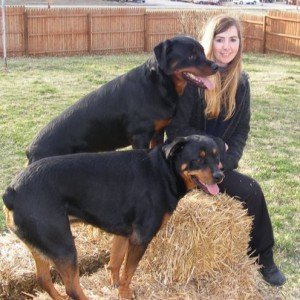
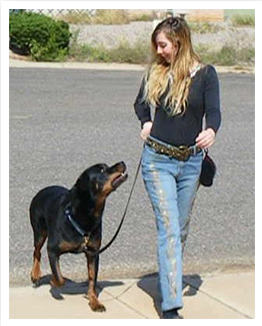
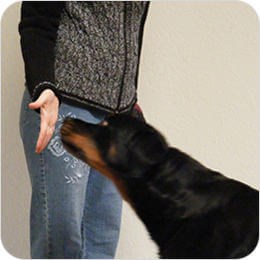
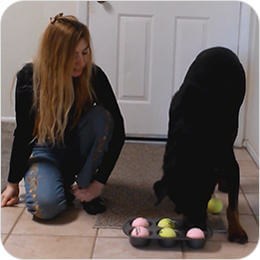
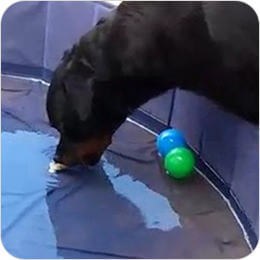
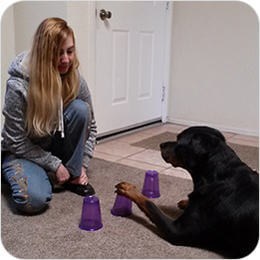
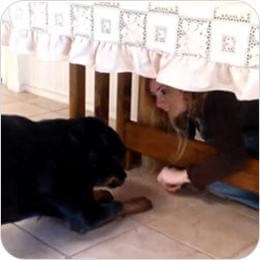
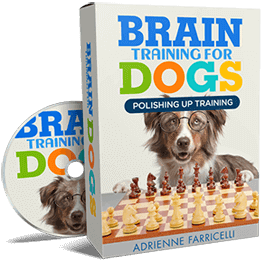
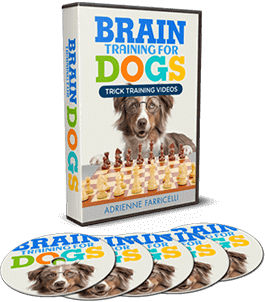
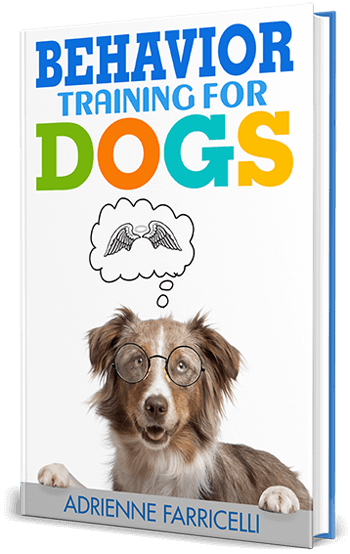
“Your dog doesn’t listen to you” is the first problem on the list that Brain Training for Dogs covers: more than 21 games with step-by-step guides and video demonstrations, created by CPDT-KA certified trainer Adrienne Farricelli.
A look inside Brain Training for Dogs

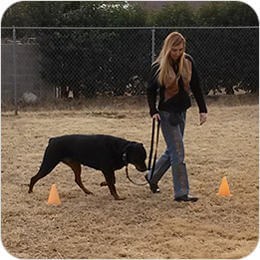
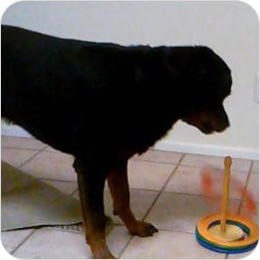

FAQ
Is my dog being dominant?
No. Modern behavior science dropped the dominance framing decades ago for pet dogs. What looks like defiance is almost always an unproofed cue or an over-aroused dog.
How long does proofing take?
A few weeks per cue for most dogs, with short daily sessions. Scent hounds and adolescents take longer, and adolescence itself makes everything wobble for a few months.
Should I use a long line in the park?
Yes, until the recall works at that rung. It keeps the dog safe and stops him rehearsing the habit of ignoring you.
Do treats become a bribe?
A bribe comes out before the behavior; a reward comes after. Keep the food out of sight until the dog has done the thing, then pay well.
Next step
Pick one cue and one rung tonight — the garden, five minutes, high-value treats. Move up only when he is right five times out of five.
Based on standard force-free, positive-reinforcement training practice as taught by certified trainers. Product details for Brain Training for Dogs are from the vendor’s published page as of September 28, 2026.