Disclosure: this article contains affiliate links. If you buy through them, we may earn a commission at no extra cost to you. How this works.
Short answer
The best easy piano songs for beginners use a handful of notes in one hand position and a steady rhythm: Mary Had a Little Lamb, Twinkle Twinkle Little Star, Ode to Joy, Frère Jacques and Jingle Bells are classic first pieces for a reason.
Start with the right hand alone, then add a simple left hand — one note or one chord per bar — and you are playing real music within days.
Popular rhythms and classic song progressions
- Interactive ebooks with step-by-step video lessons and 1,000+ audio lessons
- Rhythm style first, then ballads, blues, jazz, ragtime and improvising
- Learn to read music as you learn to play by ear
- Lifetime access on any device and a 60-day money-back guarantee
What makes a song easy
- It fits one hand position, so you never have to move your hand while reading the notes.
- It moves mostly by step, from one key to the next.
- It has a simple, steady rhythm and repeats itself.
- It works with two or three chords, so the left hand stays simple.
Ten easy songs, in order
| Song | Starting notes or chords | What it teaches |
|---|---|---|
| Mary Had a Little Lamb | E D C D E E E | A stepwise melody with three fingers |
| Twinkle, Twinkle, Little Star | C C G G A A G | Small jumps and a full five-finger position |
| Ode to Joy (Beethoven) | E E F G G F E D | Steady, even quarter notes |
| Frère Jacques | C D E C, C D E C | Repeated patterns, and playing it as a round |
| Jingle Bells (chorus) | E E E, E E E, E G C D E | Repeated notes and rhythm |
| When the Saints Go Marching In | C E F G | Pickup notes before the first strong beat |
| Amazing Grace | Chords C, F and G | Three chords under a slow melody |
| Happy Birthday | Chords C, G and F | Waltz time and an octave leap |
| Für Elise (opening) | E D# E D# E B D C A | Your first black key and a famous theme |
| Pachelbel’s Canon (chords) | D A Bm F#m G D G A | A chord pattern in the left hand |
How to learn each song
- Find the starting position and play the first phrase slowly with the right hand alone.
- Say or sing the note names as you play; it links the sound to the keys.
- Once the melody flows, add the left hand: one note — the root of the chord — on the first beat of each bar.
- Then replace that single note with the full chord.
- Use a metronome at a slow speed, and only go faster when you can play the song three times without a mistake.
Add simple chords in the left hand
Most of these songs need only C, F and G in the key of C. Learn those three chords as blocks first, then break them into patterns — root and fifth, or a simple broken chord — and every song on the list starts to sound full. The shapes are in piano chords for beginners.
Use inversions so the hand barely moves: C as C-E-G, F as C-F-A and G as B-D-G all sit under one hand position. Changing between them smoothly is the skill that carries you into hundreds of other songs.
Read the notes, or learn by ear
These songs are ideal for either path. Read them from simple sheet music to connect notes on the page with keys on the piano — see how to read piano sheet music — or pick them out by ear, since you already know how they go.
Doing both is the fastest way forward: a tune you know by ear helps you check that you are reading it correctly.
A 15-minute daily routine
| Minutes | What to do |
|---|---|
| 0 to 3 | Warm up with a five-finger pattern in C, both hands |
| 3 to 8 | Right hand on today’s song, slowly |
| 8 to 12 | Left-hand chords for the same song, then hands together |
| 12 to 15 | Play an older song from the list, just for fun |
From first songs to real music
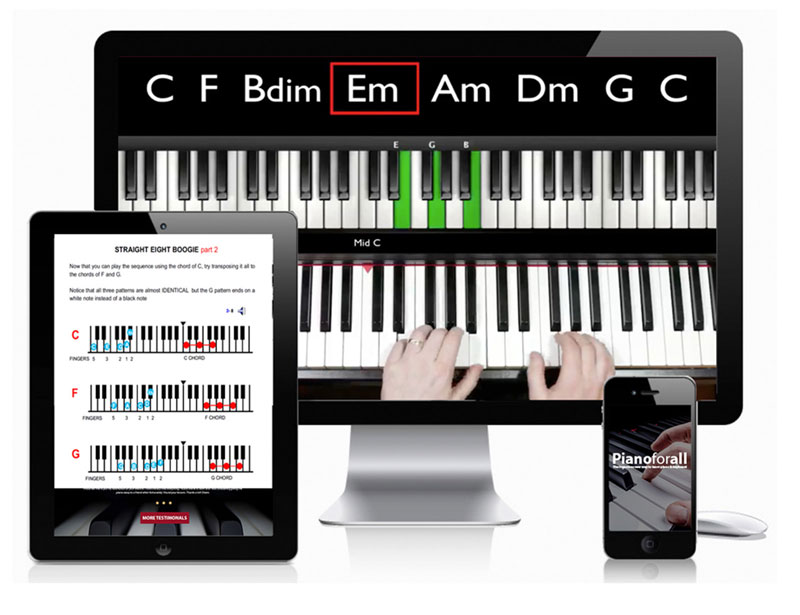
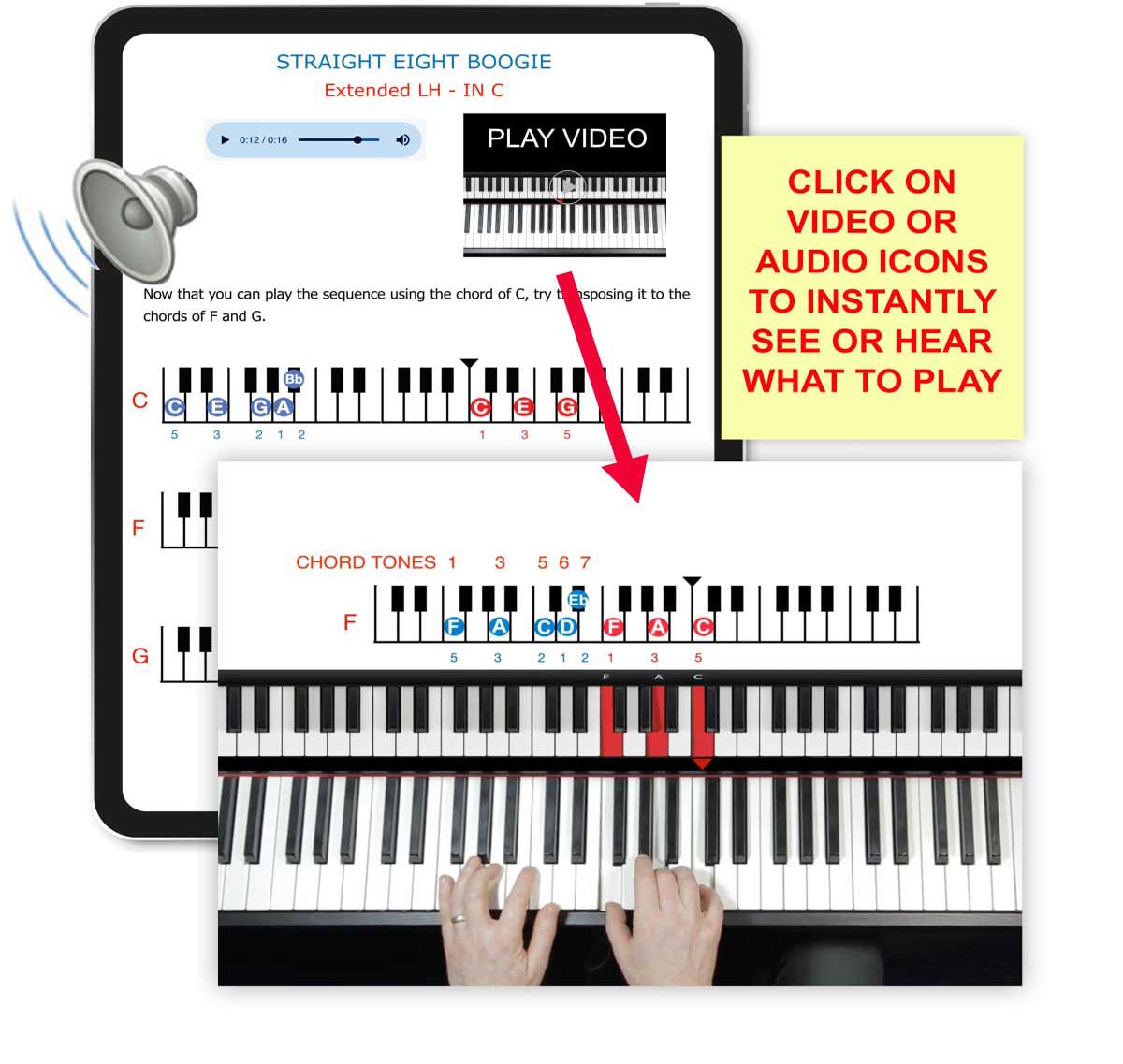
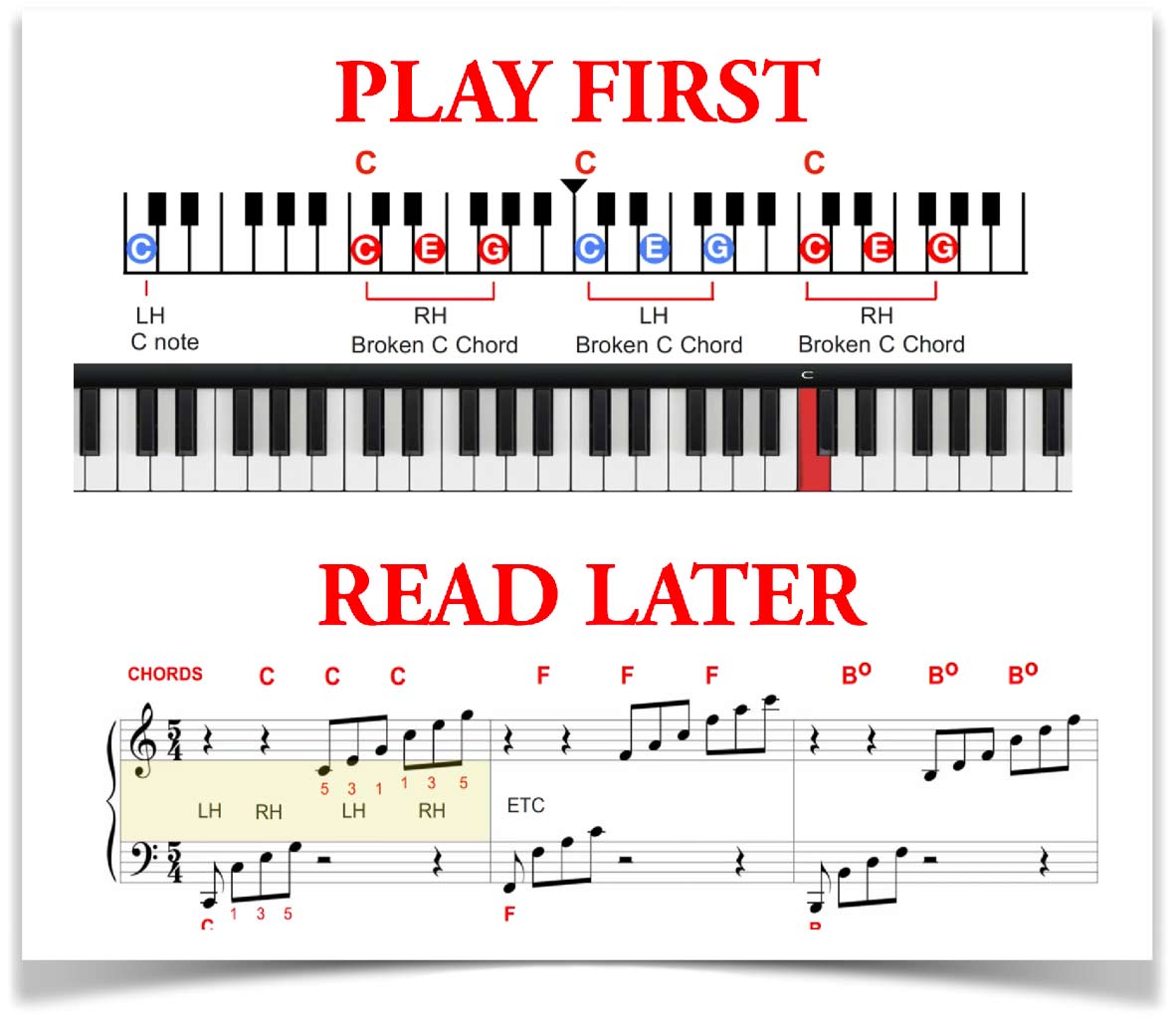
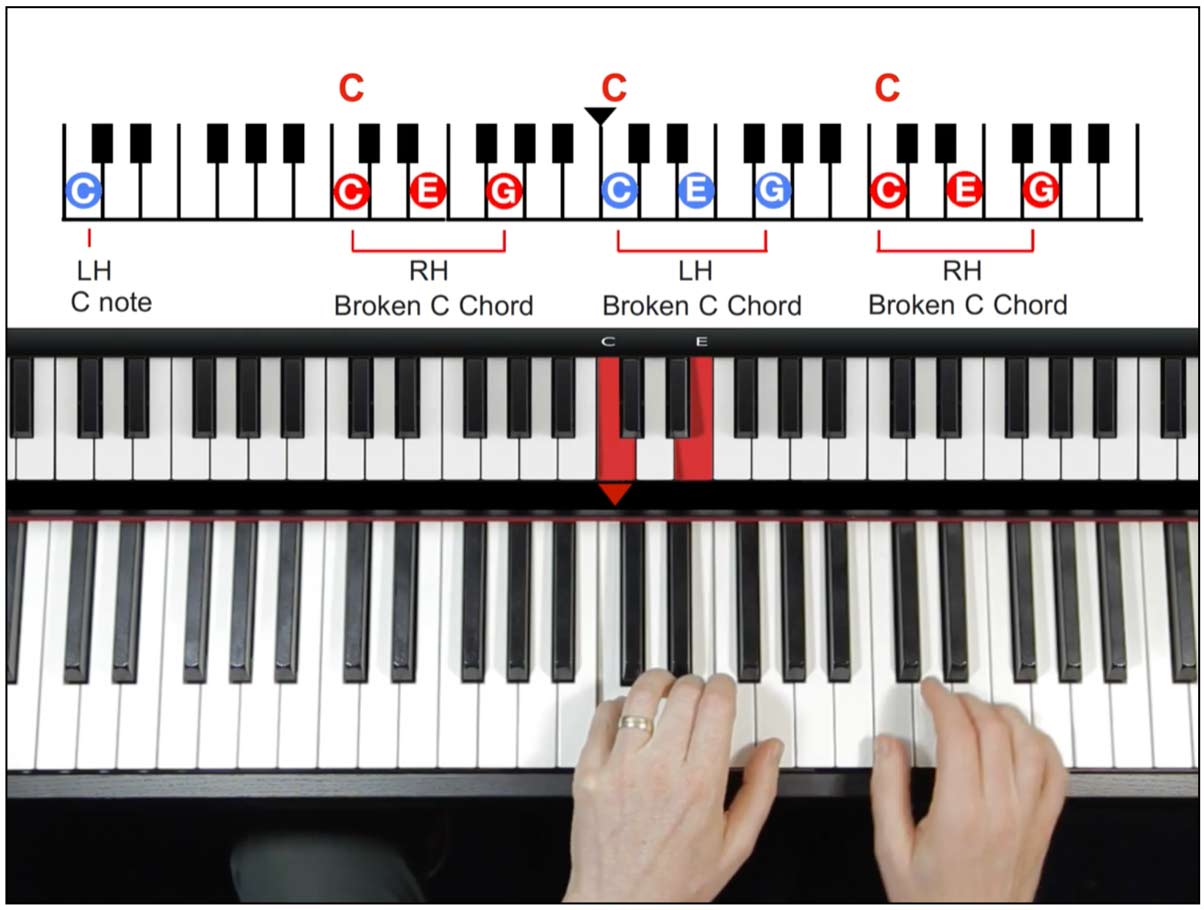
Once the first melodies are under your fingers, the next step is playing songs with chords and rhythm — which is exactly where Pianoforall starts. Its first book teaches 15 popular rhythm styles so you play real songs from the beginning, and the course expands step by step into ballads, blues, jazz, ragtime and even classical pieces, with video and audio built into each lesson.
A look inside Pianoforall








FAQ
What is the easiest song to play on piano?
Mary Had a Little Lamb: three notes, one hand and a steady rhythm.
What should I learn after beginner songs?
Simple chords in the left hand, then songs that combine a melody with chords, such as Amazing Grace.
How long does it take to learn an easy song on piano?
A short melody like Ode to Joy often takes a few sessions with the right hand, and a week or so hands together.
Can I learn piano songs without reading music?
Yes. Many beginners learn by ear and from chord charts, and pick up reading along the way.
Next step
Today, play Mary Had a Little Lamb and then Ode to Joy with your right hand. Tomorrow, add one left-hand note on the first beat of each bar.
Based on standard beginner piano teaching: five-finger positions, stepwise melodies and three-chord accompaniment. The melodies listed are traditional or classical works. Product details for Pianoforall are from the vendor’s published sales page as of September 29, 2026.