
Disclosure: this article contains affiliate links. If you buy through them, we may earn a commission at no extra cost to you. How this works.
Short answer
Piano scales for beginners start with C major — all white keys, from C to C — played with a fingering that tucks the thumb under so the hand never runs out of fingers. Learn that one pattern well and G major and F major follow quickly.
Five minutes a day, hands separately, slowly and evenly, does more for your playing than any single long session.
A step-by-step course, from first chords to real songs
- Interactive ebooks with step-by-step video lessons and 1,000+ audio lessons
- Rhythm style first, then ballads, blues, jazz, ragtime and improvising
- Learn to read music as you learn to play by ear
- Lifetime access on any device and a 60-day money-back guarantee
Why scales are worth five minutes a day
Scales train evenness, finger independence and the thumb-under movement that almost every melody needs. They also teach the notes of each key, which is exactly what you use when you build chords and play by ear.
They are a warm-up, not the goal. Keep them short and move on to music.
C major: the fingering
Fingers are numbered 1 to 5 from thumb to little finger, on both hands. The trick in every scale is where the thumb passes under — or where a finger crosses over — so the hand can keep going.
| Hand | Notes (going up) | Fingering |
|---|---|---|
| Right hand | C D E F G A B C | 1 2 3 1 2 3 4 5 |
| Left hand | C D E F G A B C | 5 4 3 2 1 3 2 1 |
The thumb-under move
The thumb should start moving under the hand while fingers 2 and 3 are still playing, so it arrives at F without a lurch. Keep the wrist level and let the elbow drift slightly outward; do not twist the wrist to reach.
Practice just that move — E to F in the right hand, then back — ten times, slowly. Most uneven scales are uneven exactly there.
G major and F major next
- G major has one sharp, F#. The right-hand fingering is the same as C major: 1 2 3 1 2 3 4 5.
- F major has one flat, B-flat. The right hand changes: 1 2 3 4 1 2 3 4, because the thumb tucks under after the B-flat.
- A natural minor uses the same white keys as C major, starting on A — a good first minor scale with C major fingering.
A five-minute daily routine
- One octave, right hand alone, at a slow and perfectly even tempo.
- The same with the left hand.
- Add a metronome at a comfortable speed and play one note per click, then two.
- Only when both hands are even alone, try hands together, one octave.
- Stop while it still sounds good. Tired scales teach tired habits.
When to add a second octave
Once one octave is even at a steady tempo with each hand, extend it to two. The second octave repeats the same fingering, with one extra thumb crossing where the first octave would have ended, so it trains the movement you already know under a little more pressure.
Keep the metronome slow for the first week of two-octave scales. Speed is the last thing to add: an even scale at a moderate tempo is worth far more than a fast one that stumbles at the crossing.
From scales to music
The notes of a scale are the raw material for the chords in piano chords for beginners — C, E and G all come from C major — and steady scale work is part of the timeline in how long it takes to learn piano.
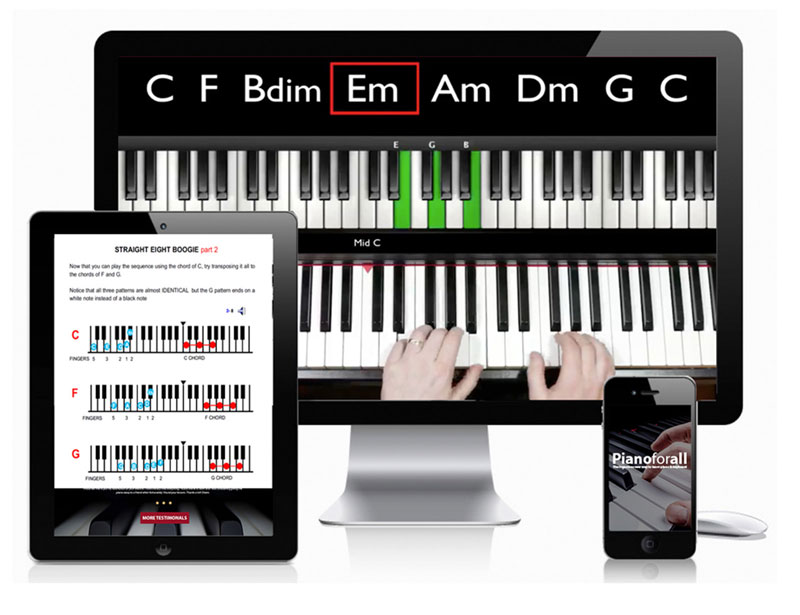
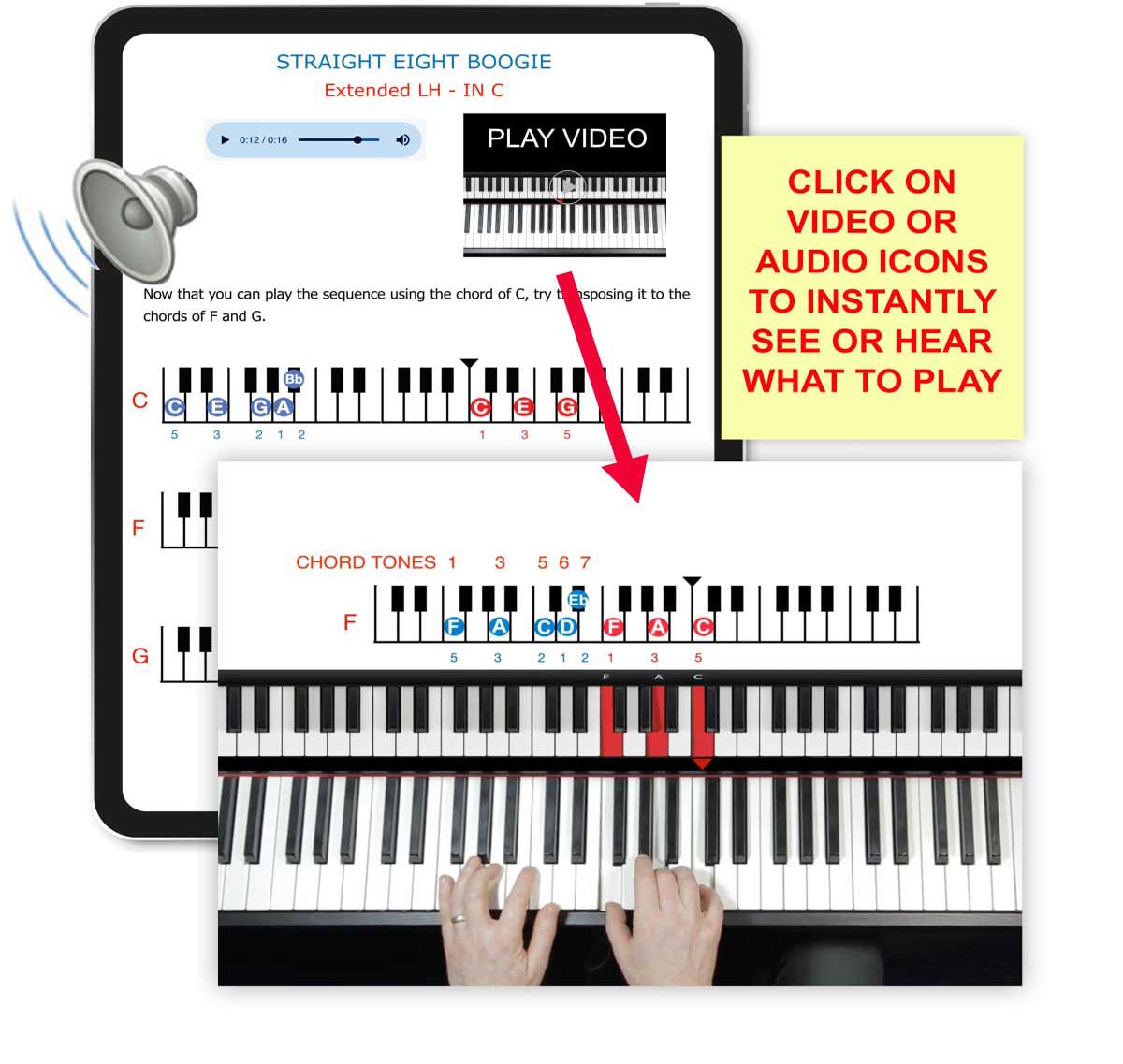
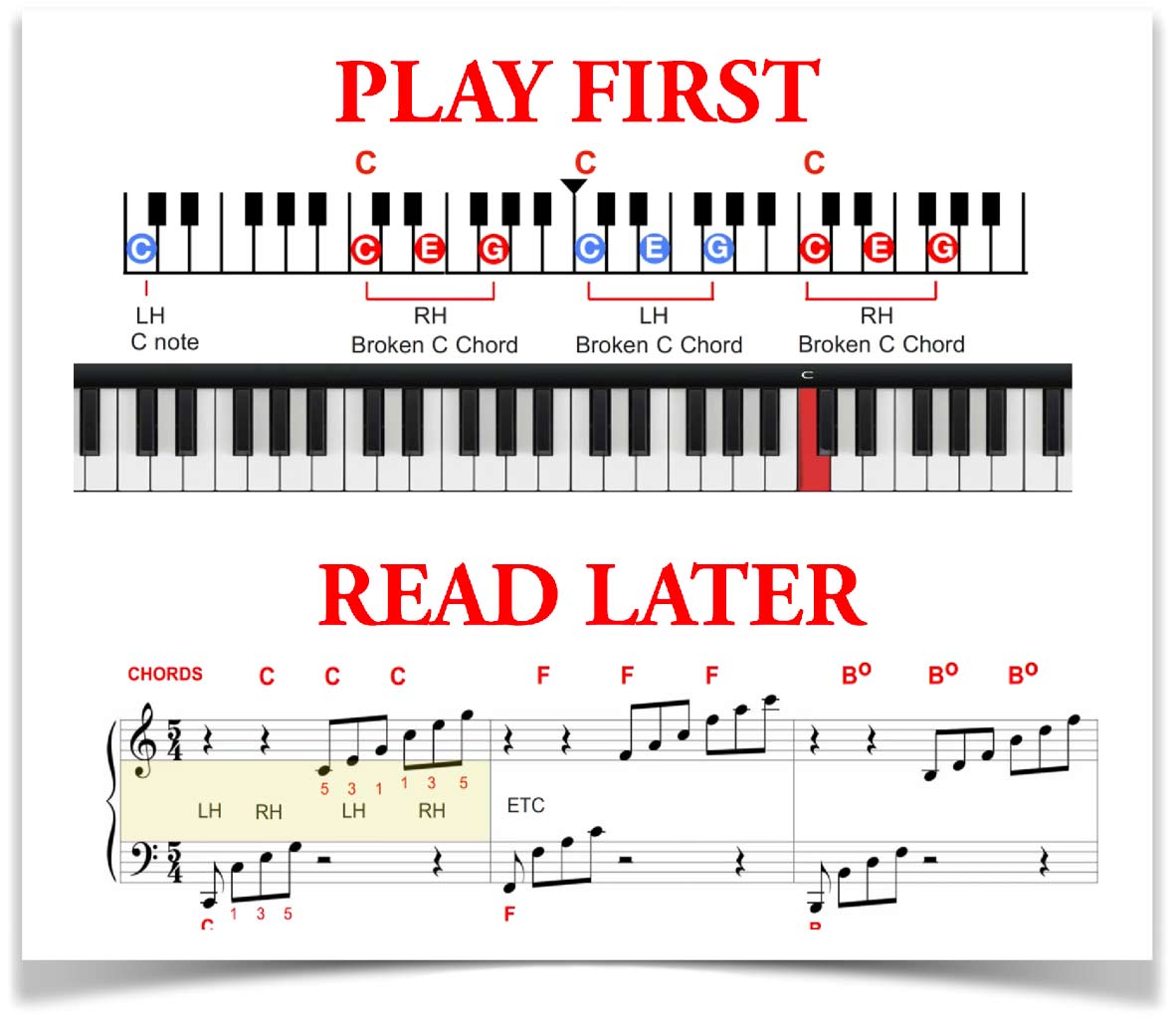
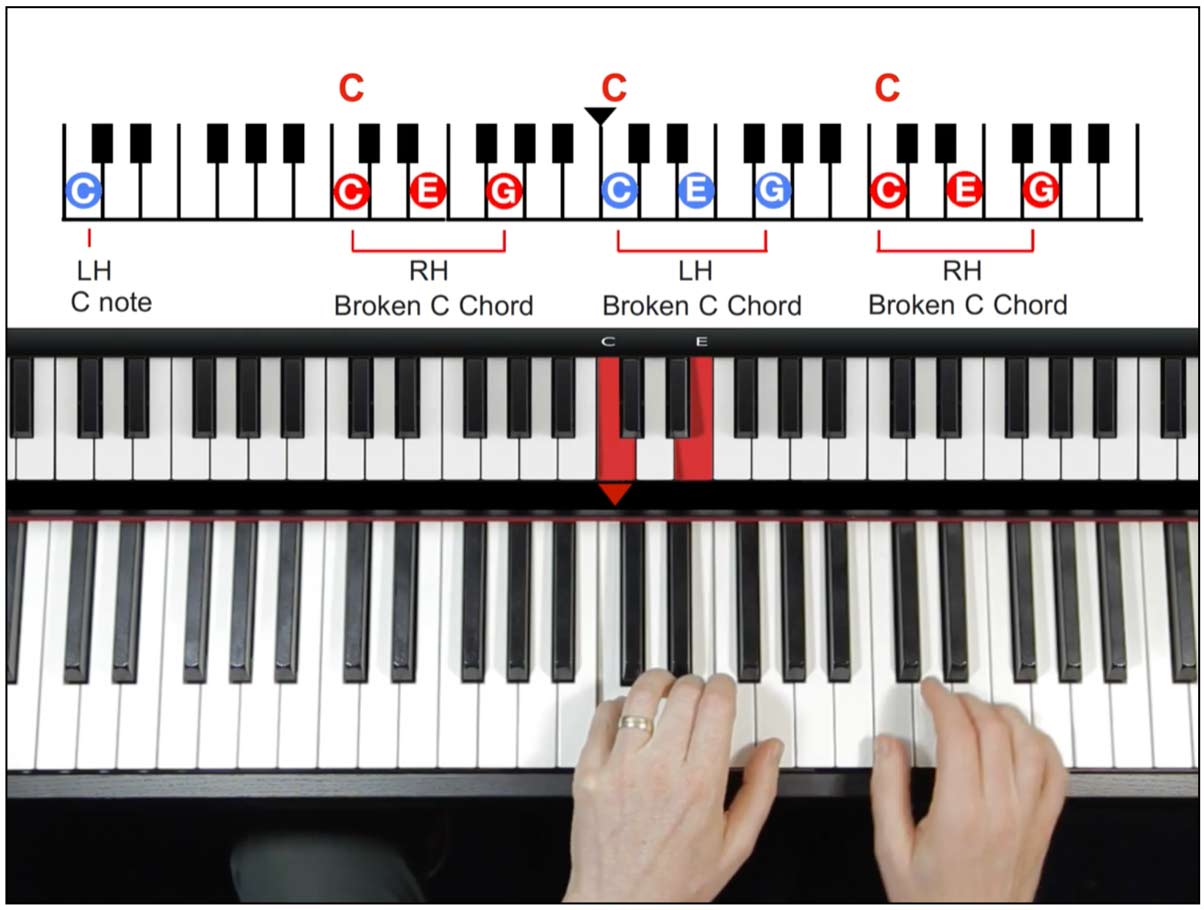
Pianoforall teaches through interactive ebooks with its lessons on video and audio built in, so you can see the hand position and hear the evenness you are aiming for before you play a note.
A look inside Pianoforall














FAQ
Which piano scale should a beginner learn first?
C major. It uses only white keys, so all your attention can go to the fingering and the thumb-under move.
How long should I practice scales each day?
Five to ten minutes is plenty for a beginner. Use them as a warm-up, then play music.
Why does my scale sound uneven?
Usually the thumb crossing arrives late. Practice just that move slowly, keep the wrist level, and use a metronome.
Should I practice scales hands together?
Only after each hand is even on its own. Hands together too early just adds tension.
Next step
Tonight, play the C major scale ten times with the right hand only, as slowly and evenly as you can, then five times with the left.
Based on standard piano technique for major and natural minor scales and their conventional fingerings. Product details for Pianoforall are from the vendor’s published sales page as of September 29, 2026.