Disclosure: this article contains affiliate links. If you buy through them, we may earn a commission at no extra cost to you. How this works.
Short answer
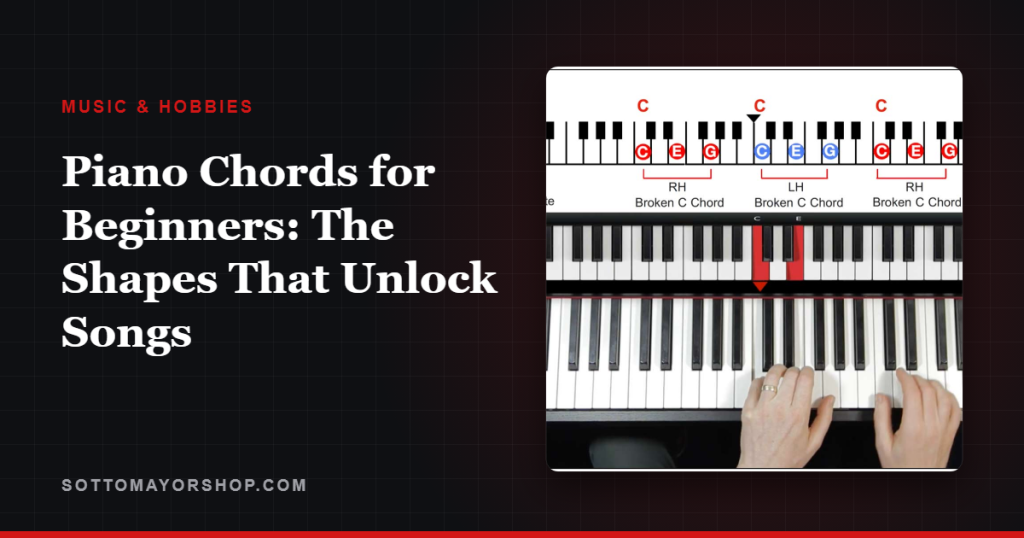
Piano chords for beginners start with one pattern: a major chord is a root note, the note four half steps above it, and the note three half steps above that. C–E–G is C major. Move the same shape to any other key and you have every major chord.
Learn C, F, G and A minor first. Those four chords, played in different orders, carry a remarkable number of popular songs.
Chords and progressions, taught step by step
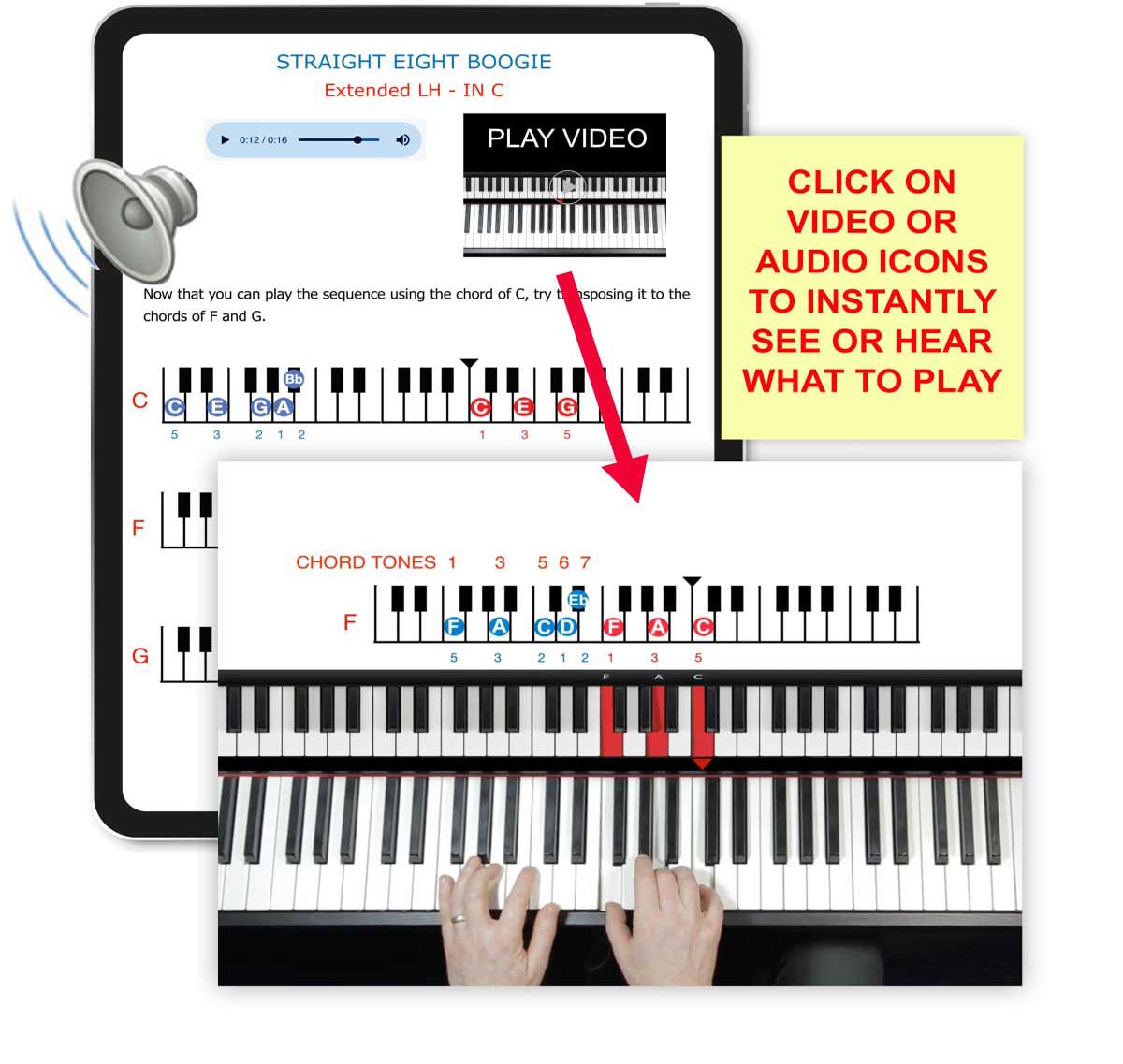
- Interactive ebooks with step-by-step video lessons and 1,000+ audio lessons
- Rhythm style first, then ballads, blues, jazz, ragtime and improvising
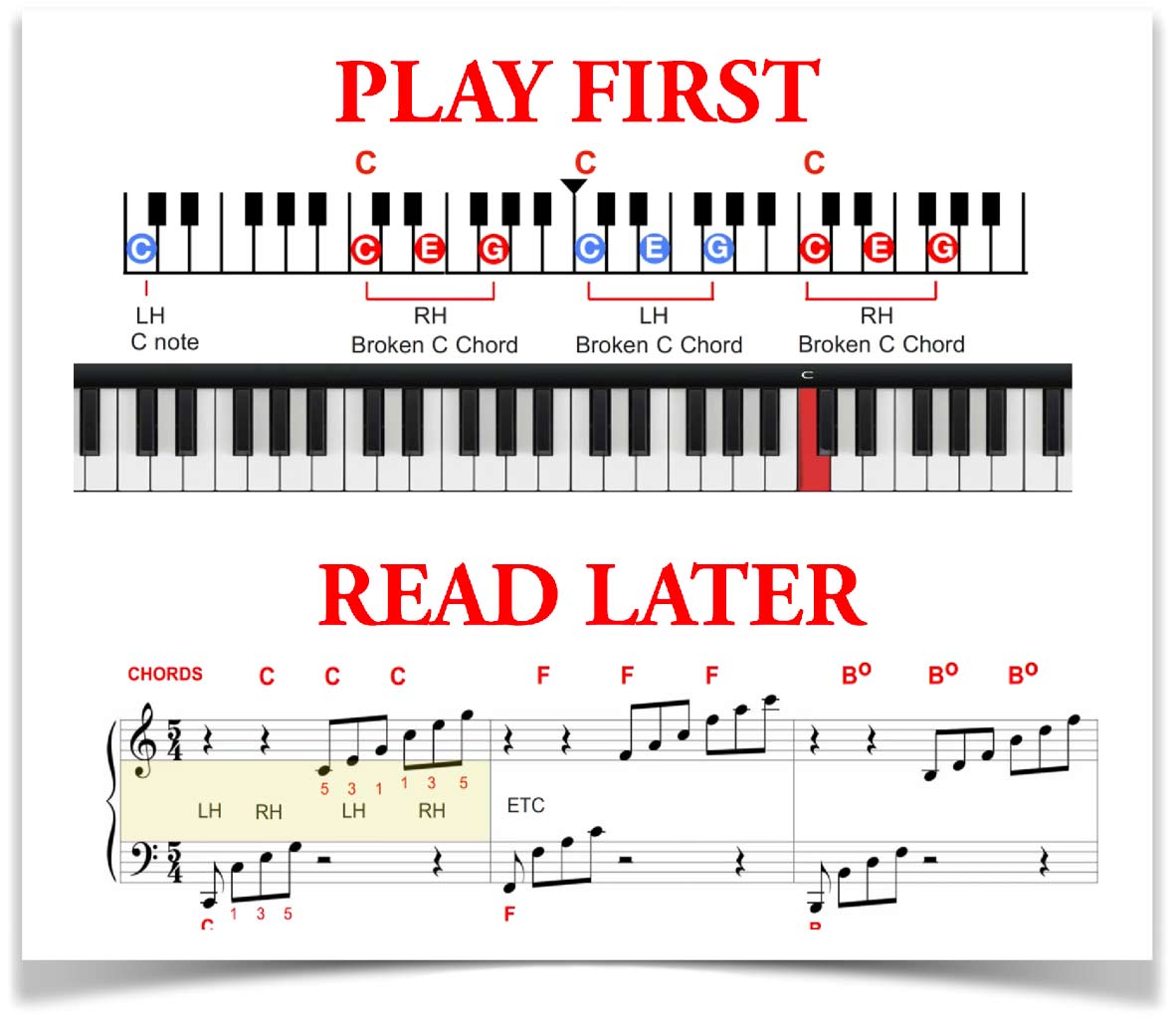
- Learn to read music as you learn to play by ear
- Lifetime access on any device and a 60-day money-back guarantee
How a chord is built
A half step is the distance from one key to the very next key, black or white. Count them and every chord becomes a formula: a major chord is 4 half steps, then 3; a minor chord is 3, then 4. That single swap is the whole difference between a bright chord and a sad one.
| Chord | Notes | Formula |
|---|---|---|
| C major | C – E – G | Root, +4, +3 half steps |
| F major | F – A – C | Root, +4, +3 |
| G major | G – B – D | Root, +4, +3 |
| A minor | A – C – E | Root, +3, +4 |
| D minor | D – F – A | Root, +3, +4 |
| E minor | E – G – B | Root, +3, +4 |
The four chords to learn first
In the key of C, the progression C – G – A minor – F is the famous four-chord pattern behind a long list of pop songs, and it sits comfortably under the hand once the shapes are familiar.
Play each chord for four slow beats, then move to the next. The goal at first is not speed; it is changing without stopping to look.
Inversions: the key to smooth changes
An inversion uses the same three notes in a different order. C major in root position is C–E–G; first inversion is E–G–C; second inversion is G–C–E.
Inversions let the hand stay in one place. Going from C major (C–E–G) to F major, play F in second inversion (C–F–A): the C stays put and only two fingers move. The changes that felt clumsy become smooth.
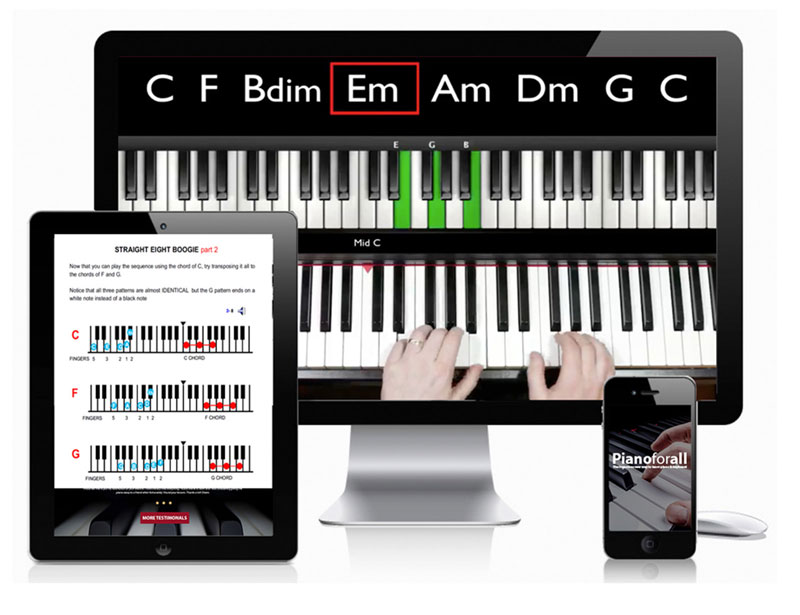
Pianoforall drills exactly this — changing chords at speed with inversions — backed by a piano chord chart and speed-learning exercises for the basic chords.
Add the left hand
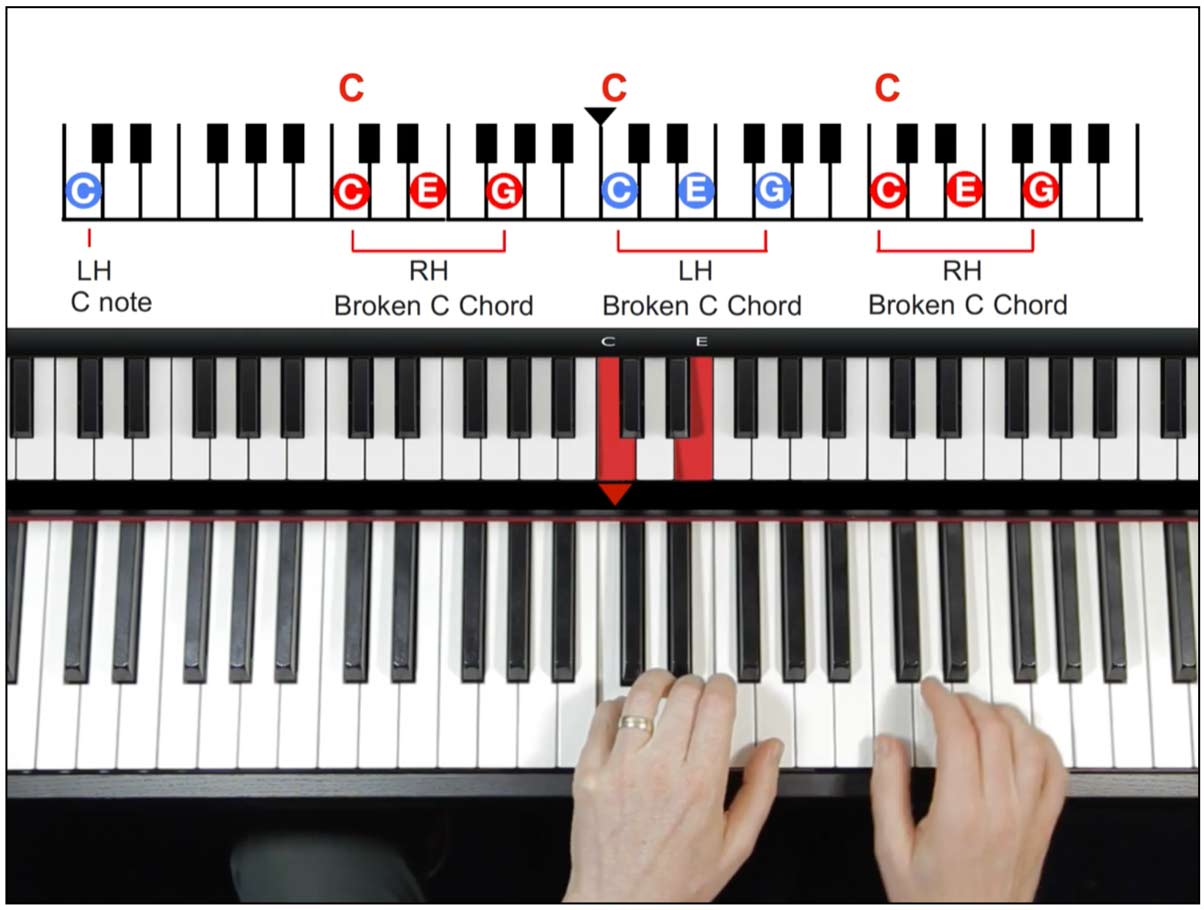
Once the right hand knows the shapes, give the left hand the root note of each chord, played an octave or two lower. C under C major, F under F major. That one note makes the music sound full.
Then break the chord up: play the notes one after another instead of together. Broken chords are the basis of most accompaniment patterns, from ballads to classical pieces.
A practice routine for chords
- Work on one pair of chords a day until the change is automatic.
- Use a metronome at a slow tempo — around 60 beats per minute — and change on every fourth beat.
- Play the four-chord progression in root position, then again using inversions so your hand barely moves.
- Finish by playing the progression along with a song you like.
From chords to songs
Lead sheets and fake books print a song’s melody with the chord names above it. Once you know the chord shapes, you can play a huge range of songs from them without reading every note of a full arrangement.
That is also why learning chords first keeps adult beginners going, as covered in how to learn piano as an adult, and why the instrument you practice on matters less than you might think — see keyboard vs piano for beginners.
If you want the whole path laid out, Pianoforall starts with rhythm-style piano — 15 popular rhythms and classic song progressions — so the chords you learn here turn into songs right away.
A look inside Pianoforall
















FAQ
What are the easiest piano chords to learn?
C, F and G major, then A minor. All four use only white keys, and together they cover a huge share of beginner songs.
How many piano chords do I need to know?
Start with six: C, F, G, A minor, D minor and E minor. They are the main chords of the key of C and enough for many songs.
Should I learn chords or scales first?
Both, in small doses. Chords get you playing music sooner; a few minutes of scales each day builds finger control.
What is a chord inversion?
The same notes in a different order, such as E–G–C instead of C–E–G. Inversions keep the hand in one place so chord changes are smoother.
Next step
Tonight, play C, G, A minor and F in that order, four beats each. Then play it again with inversions so your hand barely moves.
Based on standard music theory for triads, inversions and common chord progressions. Product details for Pianoforall are from the vendor’s published sales page as of September 29, 2026.