
Disclosure: this article contains affiliate links. If you buy through them, we may earn a commission at no extra cost to you. How this works.
Short answer
A good online dog training course gives you three things a YouTube playlist cannot: an order to work through, video of the timing, and somewhere to ask about your own dog.
Six checks tell you whether a course is worth paying for: who wrote it, which method, how it is structured, whether the videos show real timing, what support exists, and how the refund works.
The one we point people to
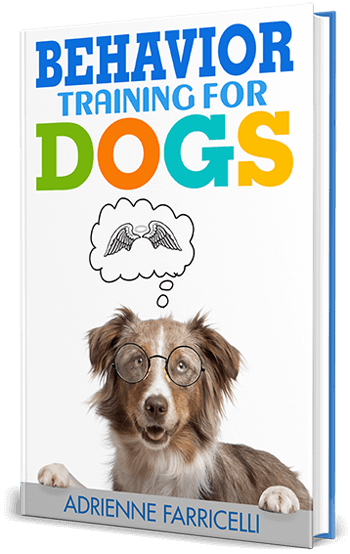
- Written by Adrienne Farricelli, CPDT-KA certified trainer
- 21 force-free games in graded modules, video for each one
- Behavior-problem archive and a private members forum
- One payment of $67, money-back guarantee
Check 1 — Who wrote it
Look for a named trainer with a credential you can verify: CPDT-KA, KPA-CTP, IAABC, or a veterinary behaviorist (DACVB). Those letters mean assessed knowledge and continuing education, not a weekend certificate.
A course with no author name, or one whose only claim is a number of followers, is selling reach rather than expertise.
Check 2 — Which method
Force-free, reward-based training is the mainstream position of the professional bodies, and it is what you want in a course you will run at home without supervision.
Red flags in the sales copy: “pack leader”, “dominance”, “corrections”, e-collars sold as a shortcut. Beyond the welfare question, aversive methods are easy to apply badly when nobody is watching you do it.
Check 3 — Is there an order?
A library of tips is not a course. You want modules that build: attention first, then impulse control, then the applications. Without that, you end up cherry-picking and stalling.
Our own 30-day plan is free and follows the same order, so you can see what a sensible progression looks like before you pay for one.
| Check | Good sign | Weak sign |
|---|---|---|
| Author | Named trainer, verifiable credential | Anonymous brand |
| Method | Force-free, reward-based | Dominance, corrections, e-collars |
| Structure | Graded modules | Unordered list of tips |
| Video | Full reps with visible timing | Highlight reels and results only |
| Support | Forum, Q&A or email | None |
| Refund | Clear window, stated on the page | Buried or absent |
Check 4 — Watch what the video actually shows
The value in a training video is the second between the behavior and the reward. If the clips only show finished behavior — the dog already doing it perfectly — you cannot learn the timing, which is the part beginners get wrong.
Good courses show the messy reps, the dog getting it wrong, and the trainer adjusting.
Check 5 — Where do you ask questions?
Your dog will do something the lesson did not predict. A forum, a Q&A or an email line is what turns a video library into something that solves your case.
It is also the cheapest form of support that exists: a few dollars once, against sixty to a hundred an hour for a private trainer.
Check 6 — The refund window
Any course sold online should state its refund terms plainly on the page. A stated window means you can work the first module with your dog and decide with evidence rather than hope.
It also tells you something about the seller: people who expect refunds hide the policy.
When a course is not the answer
Aggression, resource guarding with teeth, separation panic and sudden behavior changes need a person in the room — a certified behaviorist, and a vet first to rule out pain. No online course substitutes for that, and honest ones say so.
For the everyday stuff — pulling, barking, jumping, recall, settling — a structured course plus ten minutes a day is usually enough.
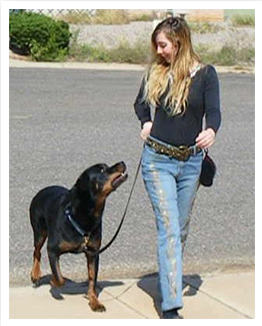
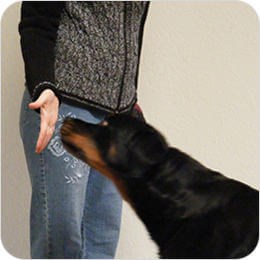
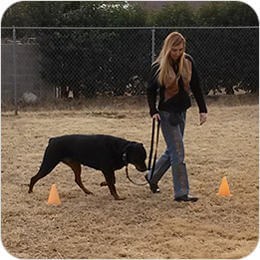
A look inside Brain Training for Dogs


















Who gets the most from a course
- You want a plan to follow instead of assembling one from videos.
- You learn better by watching the timing than by reading about it.
- You have a specific problem and want a written protocol for it.
- You would rather spend once than book several private sessions.
FAQ
Is an online course as good as a trainer?
For everyday manners, it gets most people there. For aggression, fear or anything with a bite risk, a qualified professional in person is the right call.
How much should it cost?
Serious programs sit in the $30 to $100 range for lifetime access. Above that you are usually paying for coaching, which is a different product.
How long until I see progress?
With ten minutes a day, most owners see the first changes in a week — a check-in outdoors, a calmer door routine.
Can I start with a puppy?
Yes, and it is the easiest time. Start with focus and handling, then add the potty schedule and bite inhibition.
Next step
Run the six checks against whatever course you are considering. If you want the shortcut, this is the one we point people to.
Based on the vendor’s published page as of September 27, 2026, on the professional credential standards published by CCPDT and IAABC, and on standard force-free training practice.