Disclosure: this article contains affiliate links. If you buy through them, we may earn a commission at no extra cost to you. How this works.
Short answer
To read chord symbols, start with the letter: on its own it means a major chord, so C is C-E-G. Everything after the letter changes the chord — m for minor, 7 for a dominant seventh, maj7 for a major seventh, sus4 for a suspended chord — and a slash names the bass note.
Once you know a dozen symbols, you can play almost any song from a lead sheet: melody on top, chords written above it.
Chords and progressions, taught step by step
- Interactive ebooks with step-by-step video lessons and 1,000+ audio lessons
- Rhythm style first, then ballads, blues, jazz, ragtime and improvising
- Learn to read music as you learn to play by ear
- Lifetime access on any device and a 60-day money-back guarantee
The common chord symbols
| Symbol | Name | Notes in C |
|---|---|---|
| C | Major | C-E-G |
| Cm | Minor | C-E♭-G |
| C7 | Dominant seventh | C-E-G-B♭ |
| Cmaj7 | Major seventh | C-E-G-B |
| Cm7 | Minor seventh | C-E♭-G-B♭ |
| Cdim | Diminished | C-E♭-G♭ |
| Caug or C+ | Augmented | C-E-G♯ |
| Csus4 | Suspended fourth | C-F-G |
| Csus2 | Suspended second | C-D-G |
| Cadd9 | Added ninth | C-E-G-D |
| C6 | Sixth | C-E-G-A |
Reading a symbol in three steps
- The letter is the root. Find it on the keyboard.
- The quality — m, dim, aug, sus — changes the third or the fifth.
- The number — 6, 7, 9 — adds a note on top. A plain 7 is the dominant seventh; maj7 raises it a half step.
Slash chords
A slash chord names a bass note: C/E means a C chord with E in the bass, and G/B means a G chord over B. Play the note after the slash with the left hand and the chord with the right. Many slash chords are simply inversions, and choosing the right inversion keeps your hands close together — see piano chord inversions.
Playing from a lead sheet
A lead sheet shows the melody on a single staff with chord symbols above it. Each chord lasts until the next symbol appears. The simplest way to play it: right hand on the melody, left hand on the root of each chord. Then try the full chord in the left hand, or chords in both hands if someone else sings the melody.
Reading the melody line uses the same skills as any sheet music — the basics are in how to read piano sheet music.
The chords most songs use
Most pop, rock and folk songs lean on a handful of chords — often the I, IV, V and vi of the key. In C, that is C, F, G and Am. Once those four are comfortable, a huge number of lead sheets become playable, and the rarer symbols turn up only now and then.
Common mistakes
- Playing C7 as a major seventh chord; C7 has B-flat, not B.
- Ignoring the slash. The bass note changes the sound.
- Treating Csus4 as a minor chord. It has no third at all.
- Stopping to find each chord instead of keeping time. Play just the root if you must, and keep going.
Jazz symbols you will meet
- A triangle (Δ) often means major seventh: CΔ7 is Cmaj7.
- A small circle (°) means diminished; a circle with a slash (ø) means half-diminished, also written m7♭5.
- Extensions such as 9, 11 and 13 add color on top of seventh chords.
- More on how jazz pianists voice these chords is in jazz piano chords for beginners.
A practice plan
- Learn the major, minor and seventh chords from every white-key root.
- Pick a simple song’s lead sheet and play just the roots with the melody.
- Add the full chords once the roots feel easy.
- Try a new song each week; chord symbols repeat, so each song gets faster to learn.
Chords the practical way
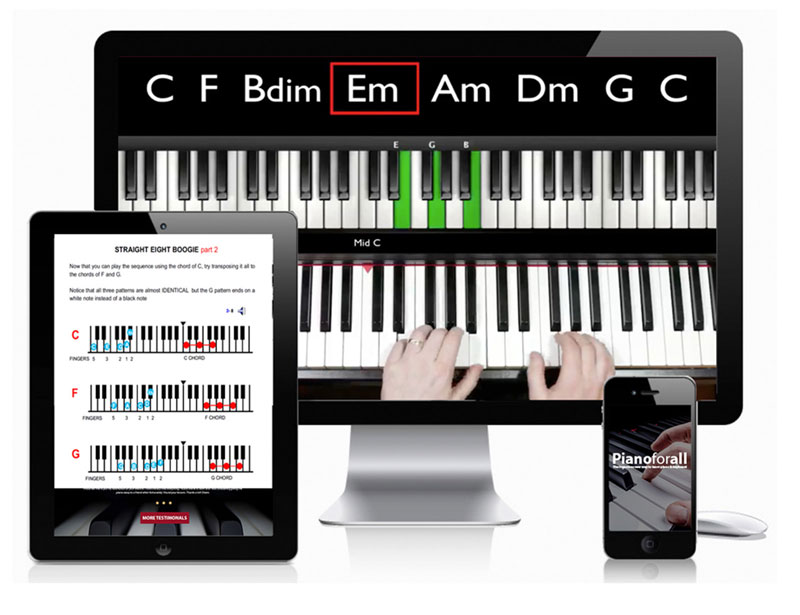
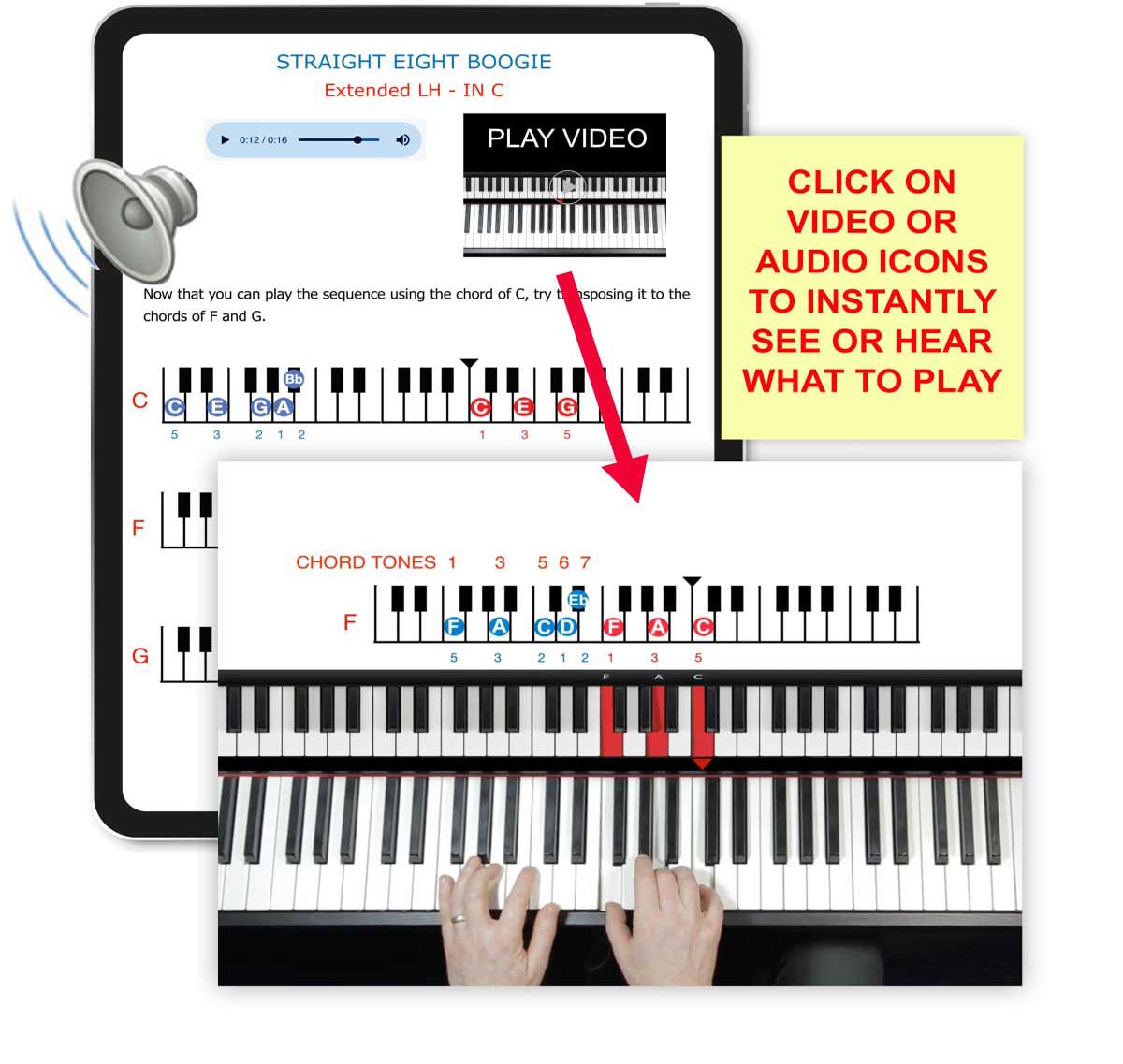
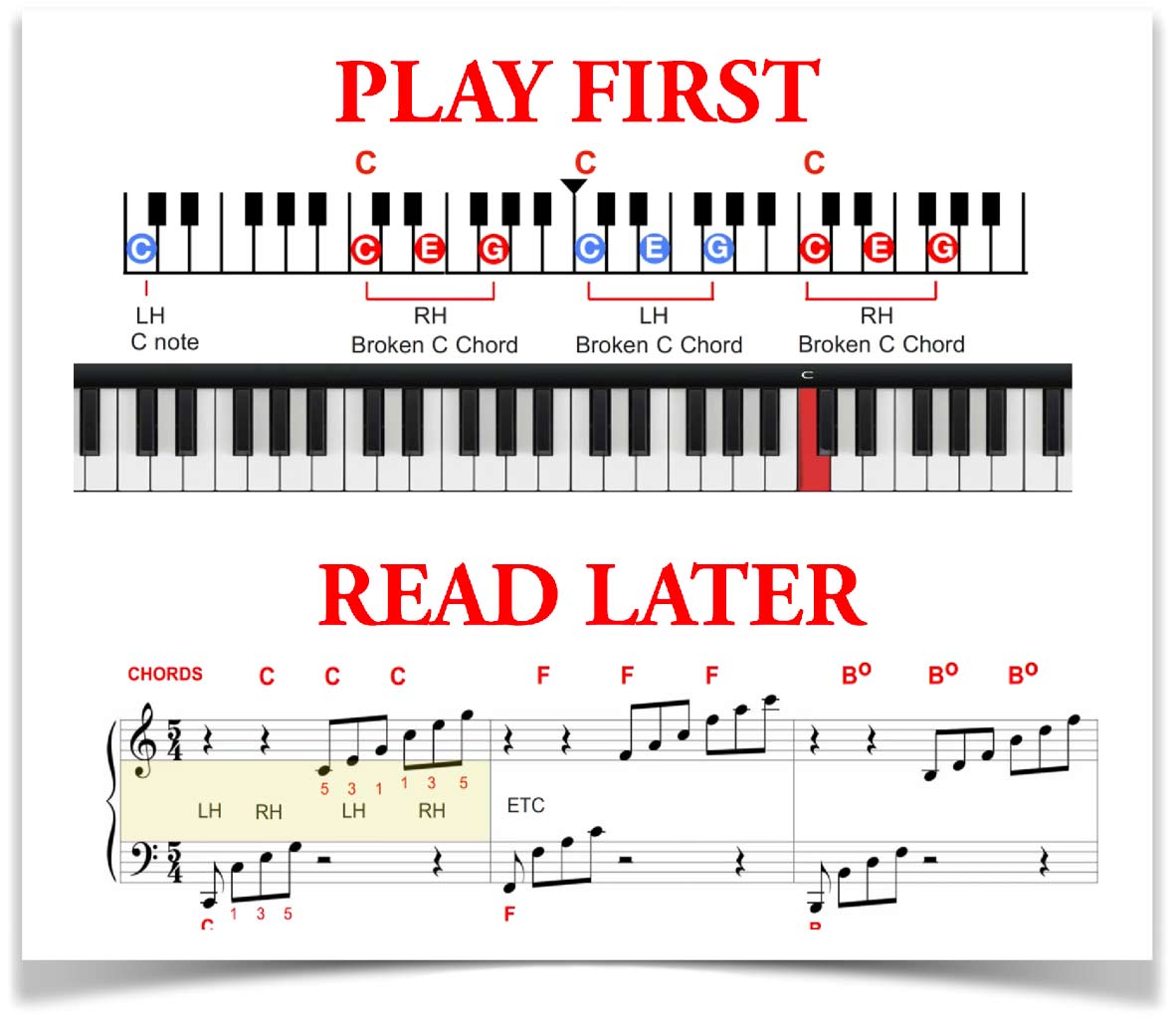
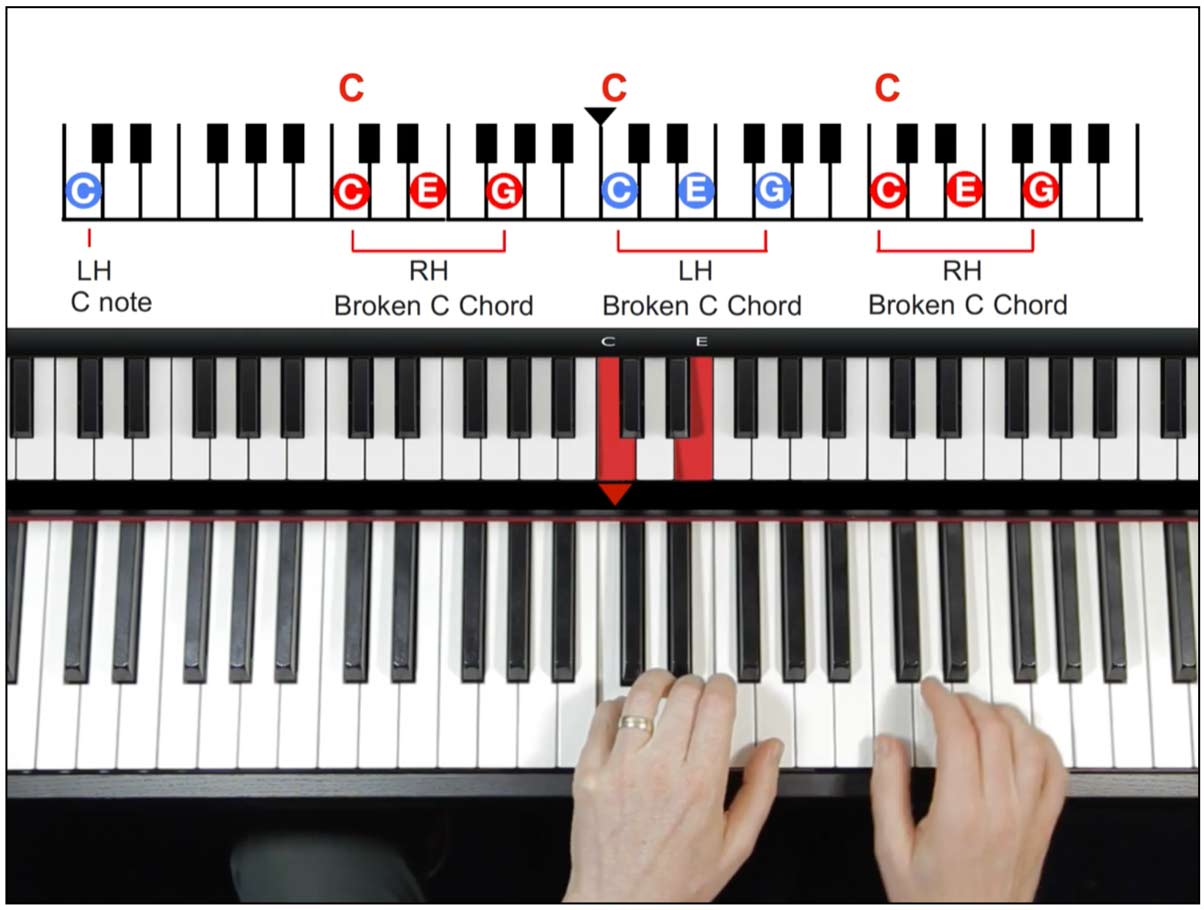
Pianoforall teaches you to see the keyboard as shapes and patterns instead of starting with complex sheet music, and to read music as you learn to play by ear. One of its books covers advanced chords in a practical rather than theoretical way, with video and audio built into each lesson.
A look inside Pianoforall










FAQ
What does a letter alone mean in a chord symbol?
A major chord. C means C-E-G.
What is the difference between C7 and Cmaj7?
C7 adds B-flat (a dominant seventh); Cmaj7 adds B natural (a major seventh).
What does sus mean in a chord?
The third is replaced: sus4 uses the fourth (C-F-G), sus2 uses the second (C-D-G).
What is a lead sheet?
A page with the melody on one staff and chord symbols above it — the standard format for pop and jazz songs.
Next step
Today, play C, Cm, C7 and Cmaj7 one after another and listen to how each symbol changes the sound.
Based on standard chord-symbol notation used in pop and jazz lead sheets. Product details for Pianoforall are from the vendor’s published sales page as of September 29, 2026.