Disclosure: this article contains affiliate links. If you buy through them, we may earn a commission at no extra cost to you. How this works.
Short answer
Ballad piano style is slow, singing accompaniment: the left hand rolls through a broken chord, usually root, fifth and octave, while the right hand holds the chord or plays the melody on top. Add the sustain pedal, changed cleanly on every new chord, and four simple chords start to sound like the intro to a love song.
It is one of the most rewarding styles for beginners, because it sounds full at a slow tempo.
Rhythm style first, then ballads, step by step
- Interactive ebooks with step-by-step video lessons and 1,000+ audio lessons
- Rhythm style first, then ballads, blues, jazz, ragtime and improvising
- Learn to read music as you learn to play by ear
- Lifetime access on any device and a 60-day money-back guarantee
The left hand: root, fifth, octave
Take any chord and play three notes in the left hand, one after another: the root, the fifth above it, then the root an octave up. Over C, that is C, G, C. Over A minor, A, E, A. The pattern fits most hands, sounds open and warm, and works for every major and minor chord.
Once it feels easy, add the third on top of the octave for a longer, more flowing figure: C, G, C, E. Keep it smooth and even, like a slow wave.
The right hand: hold the chord, then add the melody
Start by playing the chord in the right hand on the first beat of each bar and letting it ring while the left hand rolls. Choose inversions that keep your hand near the middle of the keyboard, so you move as little as possible between chords; chord inversions shows how.
Next, make the top note of each chord the melody, and play it a little louder than the rest. That is the sound of a ballad: a clear tune floating over a soft accompaniment.
Four progressions to practice
| Progression | In C major | Feel |
|---|---|---|
| I – V – vi – IV | C – G – Am – F | The sound of countless pop ballads |
| I – vi – IV – V | C – Am – F – G | Classic 1950s ballad |
| vi – IV – I – V | Am – F – C – G | Wistful, starts on minor |
| I – IV – I – V | C – F – C – G | Simple and hymn-like |
Pedal without blur
Ballads live on the sustain pedal, but a pedal held too long turns two chords into mud. The fix is to change the pedal with every new chord: play the new chord, then lift the pedal and press it again right away. The new chord is caught cleanly and the old one disappears.
It feels backwards at first, because your foot moves just after your hands. Practice it on one chord change at a time. The three pedals are explained in piano pedals explained.
Tempo and touch
- Set a slow metronome, around 60 to 72 beats per minute, and keep the left hand perfectly even.
- Play the accompaniment softly; the melody carries the song.
- Let each chord breathe. A ballad played too fast stops being a ballad.
- Record yourself on your phone and listen back: blur and uneven notes are easier to hear than to feel.
Where to use it
Once the pattern is in your hands, any song with a slow chord chart becomes a ballad you can play. Start with the chord shapes in piano chords for beginners, put them through the four progressions above, and you have hours of music from a handful of chords.
Learn ballad style in order
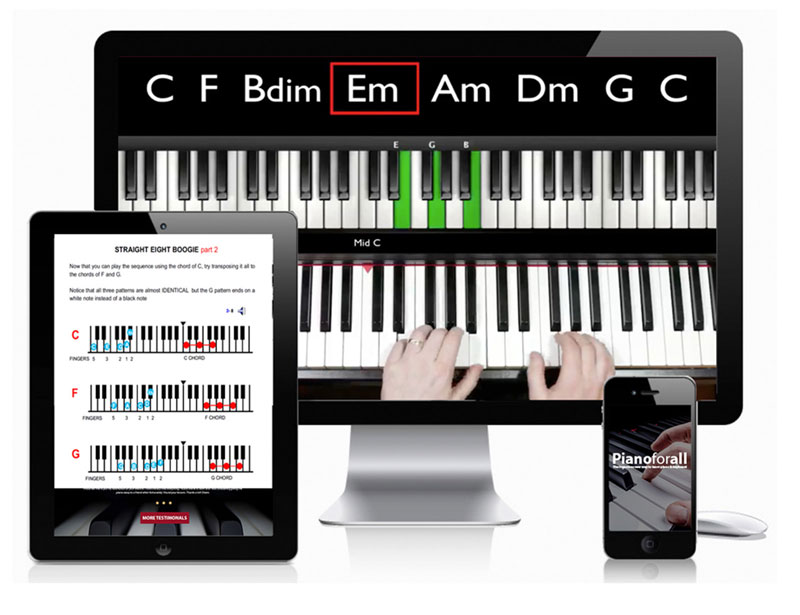
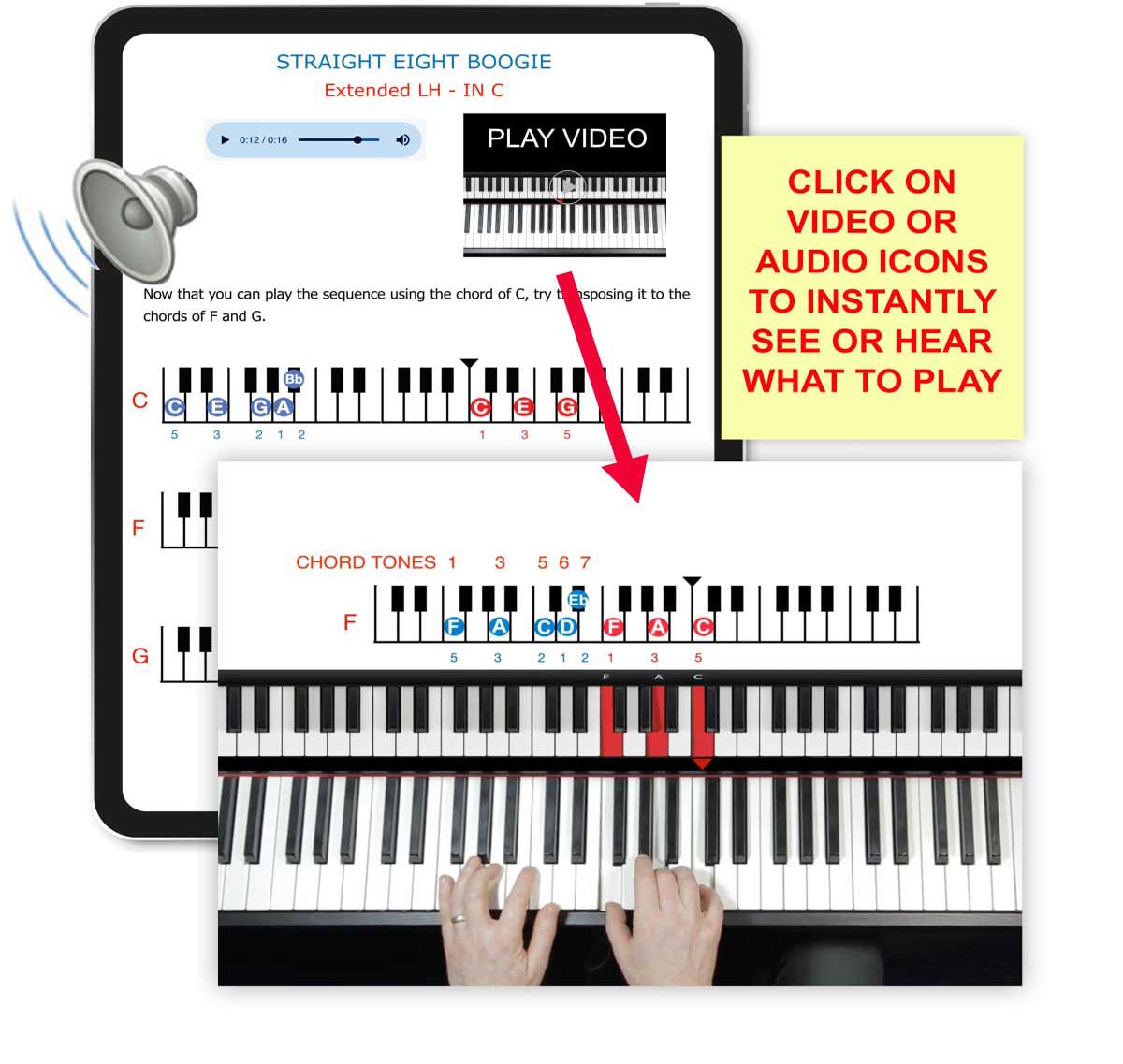
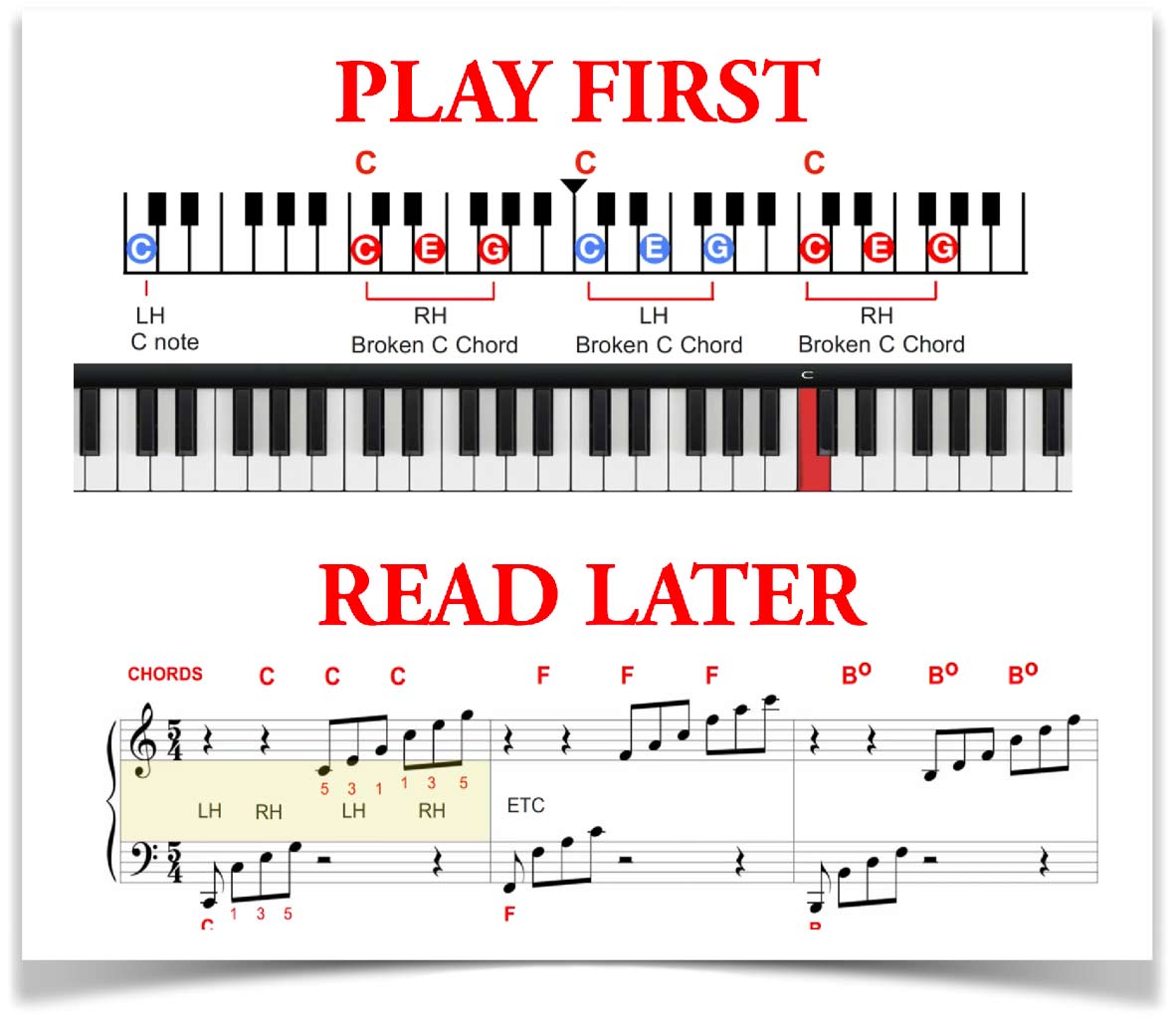
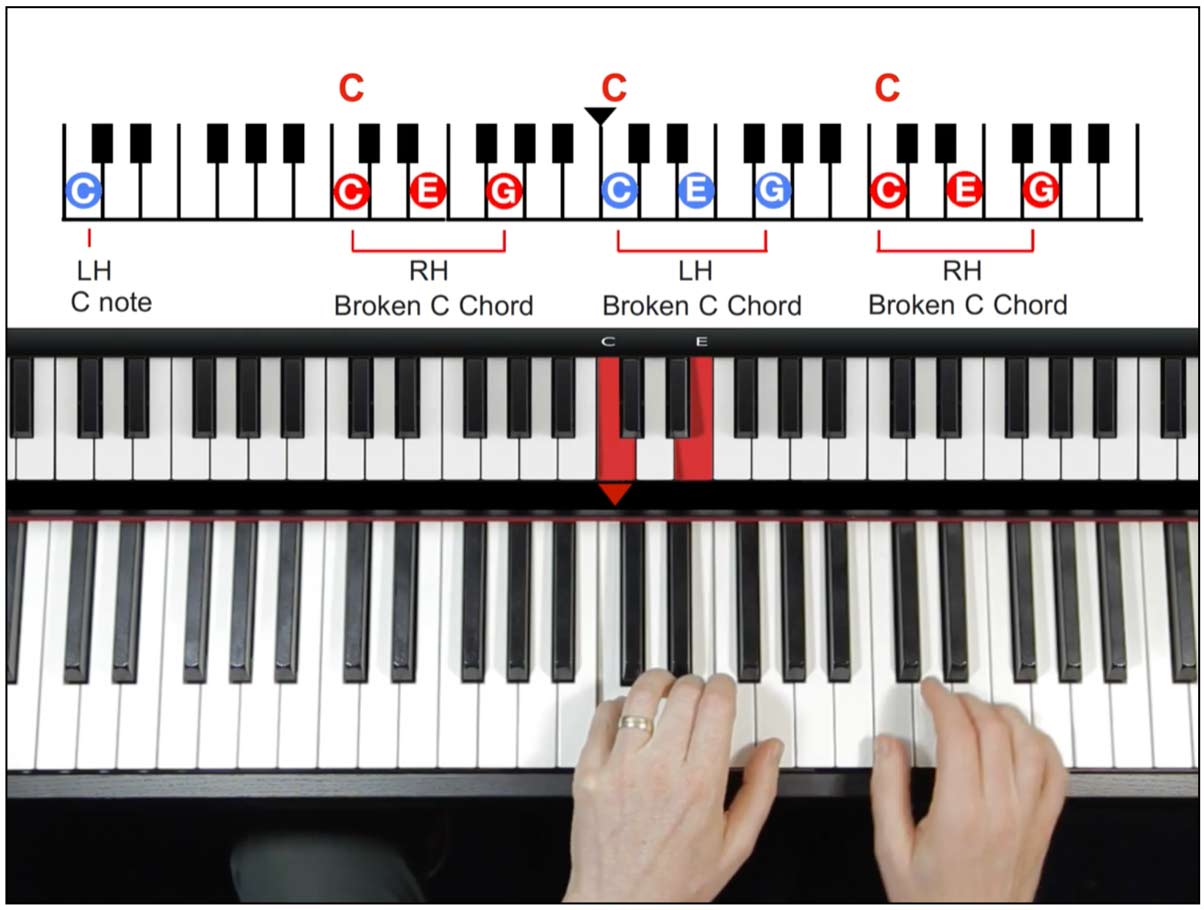
Pianoforall starts with popular rhythm-style piano and then expands step by step into ballad style, blues, jazz, ragtime, improvisation and writing your own melodies. The lessons are interactive ebooks with video and audio built in, and they teach the keyboard as shapes and patterns, so a new progression is quick to pick up.
A look inside Pianoforall













FAQ
What is ballad style on piano?
A slow, expressive way of playing: broken chords in the left hand, sustained with the pedal, under chords or a melody in the right hand.
What is the easiest ballad left-hand pattern?
Root, fifth and octave played one after another, such as C, G and C for a C chord.
How do I stop the pedal from blurring?
Change it on every chord: play the new chord first, then lift and press the pedal again immediately.
Can a beginner play ballad style?
Yes. It is slow by nature, and four chords are enough to start.
Next step
Today, play C – G – Am – F with the root-fifth-octave left hand for ten minutes, changing the pedal on every chord.
Based on standard piano accompaniment technique for ballad style: broken-chord left-hand patterns, chord inversions and legato pedaling. Product details for Pianoforall are from the vendor’s published sales page as of September 30, 2026.