Disclosure: this article contains affiliate links. If you buy through them, we may earn a commission at no extra cost to you. How this works.
Short answer
To soundproof a garage workshop, start with the cheap, high-value steps: seal every air gap and treat the garage door, the weakest point in most garages. Then add mass to walls and ceiling, decouple them if you can, and use quieter tools at quieter hours.
Foam panels on the walls reduce echo inside the shop, but they do very little to stop sound from reaching the neighbors.
A noise plan, plus a list of low-noise tools
- 246-page illustrated guide in six modules
- Tool shopping lists for budgets under $500 and under $1,000
- Layouts for spaces as small as 10 x 6 ft, plus lighting, noise and air quality
- Instant access and a 60-day money-back guarantee
How sound escapes
Sound leaves a garage in two ways: through the air, wherever there is a gap, and through the structure, as walls and doors vibrate. Blocking it takes three things — sealing gaps, adding mass, and breaking the path of vibration. Soft absorbing panels do little for any of these; their real job is taming echo inside the room.
The fixes, in order of value
| Fix | What it does | Effort |
|---|---|---|
| Seal gaps around doors, windows and outlets | Stops airborne sound where it leaks most | Low |
| Garage door seals and insulation | Treats the thin, leaky door | Low to medium |
| Extra layer of drywall | Adds mass to walls and ceiling | Medium |
| Resilient channel or isolation clips | Decouples drywall from the framing | High |
| Absorption panels inside | Cuts echo so the shop is easier on the ears | Low |
Start with gaps and the garage door
- Replace worn bottom and side seals on the garage door, and add a top seal.
- Insulate the door panels, or hang a heavy curtain inside it when you work.
- Weatherstrip the entry door and add a door sweep.
- Seal gaps around windows, pipes and outlets with acoustic sealant.
- Close windows while machines run; an open window undoes everything else.
Add mass, then decouple
Heavier walls block more sound. A second layer of drywall — thicker 5/8-inch panels are common for this — adds mass, and a damping compound between the layers helps further. Insulating the wall cavities with mineral wool adds a little more.
The biggest step is decoupling: mounting new drywall on resilient channel or isolation clips so vibration does not pass straight through the studs. It is real work, so save it for when the simpler fixes are done.
Quieter work habits
- Save the loudest machines for reasonable daytime hours, and check your local noise rules.
- Place the dust collector and compressor on rubber pads, or in a closet of their own.
- Choose hand tools and quieter cordless tools for evening work.
- Tell the neighbors about your hobby. A friendly heads-up buys a lot of goodwill.
Protect your own ears too
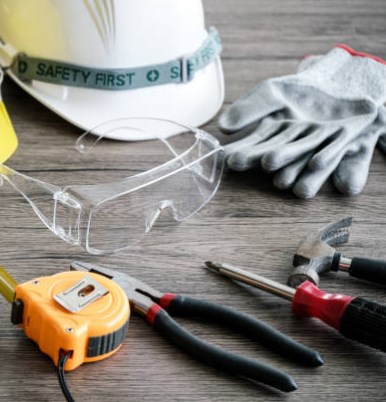
Soundproofing protects the neighbors; hearing protection protects you. Keep earmuffs or earplugs by every loud machine and wear them every time.
Soundproofing works best when planned with the rest of the shop: where the machines sit, how dust is handled and how the room is lit. See how to lay out a small garage workshop, dust collection for a small shop and garage workshop lighting.
A guide that covers noise
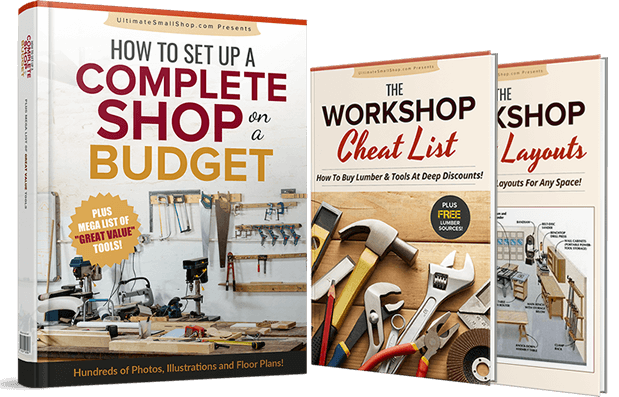
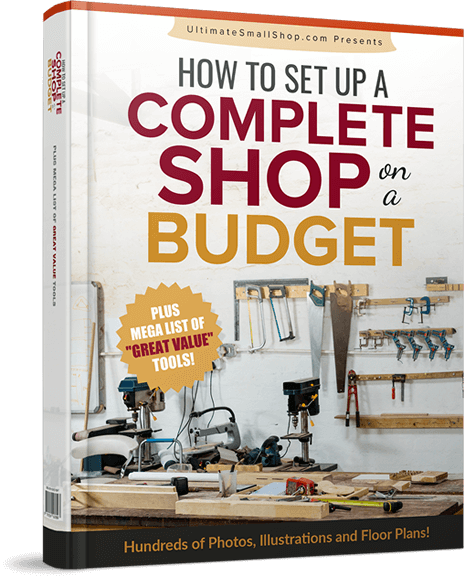
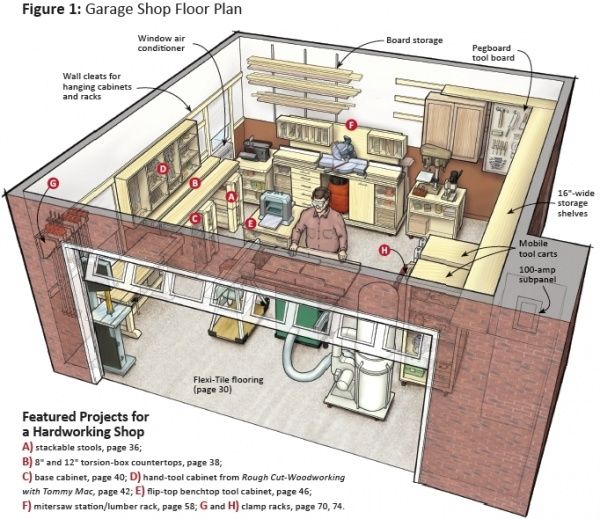
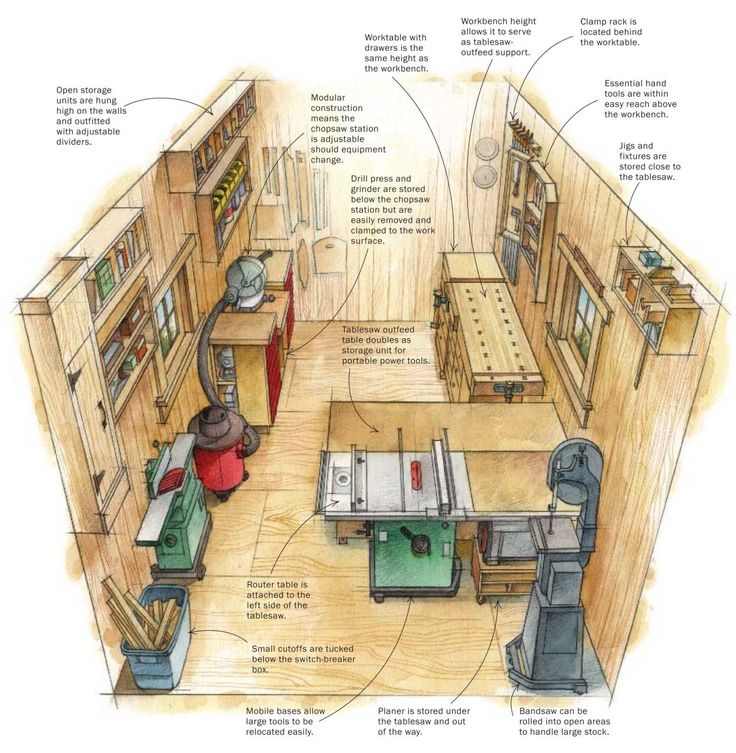
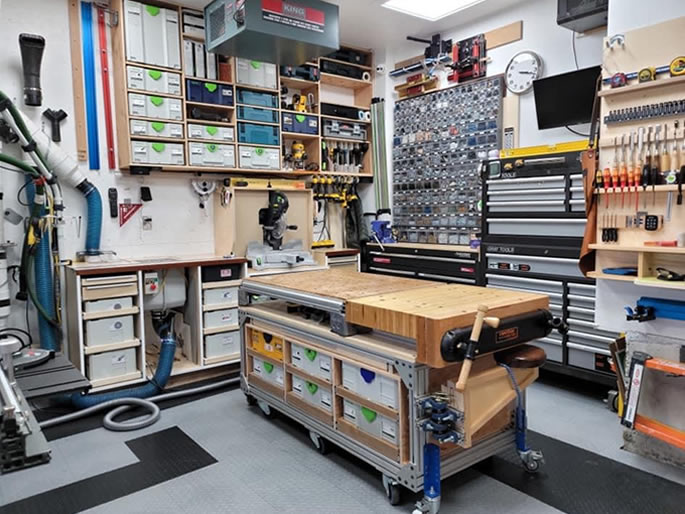
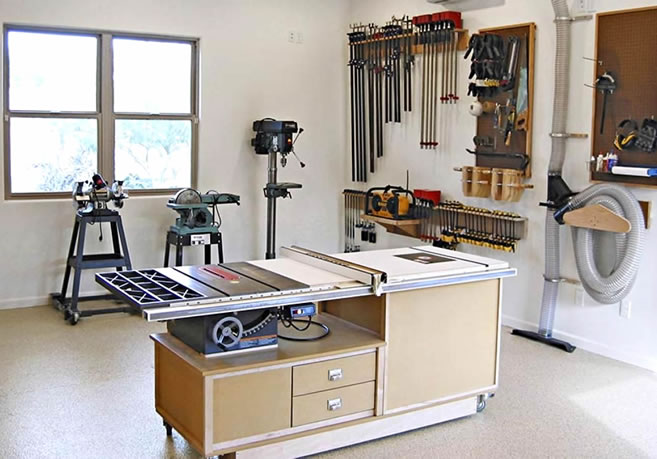
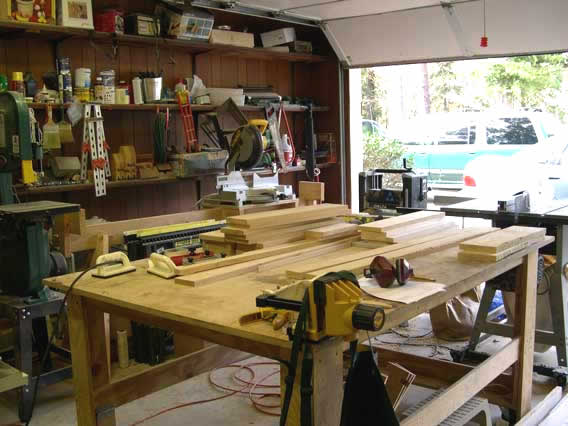
The Ultimate Small Shop guide covers noise in its module on electricity, lighting and soundproofing, where the author describes a way to cut the sound escaping from a shop by up to 70% for under $500. The 246-page illustrated book has six modules, from floor plans for small spaces to heating, cooling, ventilation and dust.
A look inside Ultimate Small Shop






FAQ
What is the cheapest way to soundproof a garage?
Seal the gaps and fix the garage door seals first. Those steps cost little and make a noticeable difference.
Do foam panels soundproof a garage?
Not much. They reduce echo inside the room, but blocking sound takes sealed gaps, mass and decoupling.
How do I soundproof a garage door?
Replace the seals, insulate the panels, and consider a heavy curtain inside the door while you work.
Does insulation reduce noise from a workshop?
Mineral wool in the wall cavities helps a little, most of all when combined with extra drywall.
Next step
Tonight, run a machine while someone walks around outside and notes where it sounds loudest — that is where to start.
Based on basic building acoustics (air sealing, mass, decoupling and absorption) as applied to home workshops. Product details for Ultimate Small Shop are from the author’s published sales page as of September 28, 2026.