Disclosure: this article contains affiliate links. If you buy through them, we may earn a commission at no extra cost to you. How this works.
Short answer
Dust collection in a small shop is not about the chips on the floor. It is about the particles you cannot see, which stay airborne for hours and go deep into the lungs.
The realistic first system is a shop vacuum with a cyclone separator and a good filter, plus a respirator for sanding. That covers a one-person shop for a long time.
Air quality, lighting and noise, solved on a budget
- 246-page illustrated guide in six modules
- Tool shopping lists for budgets under $500 and under $1,000
- Layouts for spaces as small as 10 x 6 ft, plus lighting, noise and air quality
- Instant access and a 60-day money-back guarantee
The stuff you can see is not the problem
Chips and shavings fall to the floor and stay there. They are a nuisance and a slip hazard, and a broom deals with them.
The fraction that matters is the fine dust — the particles small enough to stay suspended in the air long after you have stopped working, and small enough to get past the body’s normal defences.
Wood dust is classified as carcinogenic to humans by the International Agency for Research on Cancer, and hardwood dust is specifically associated with nasal cancers. That is the reason to care, not the sweeping.
What each machine actually throws
If you only ever collect from one tool, make it the sander. It puts the finest particles directly in front of your face.
| Tool | What it produces | How urgent |
|---|---|---|
| Random orbit sander | Almost entirely fine dust, into your breathing zone | Highest |
| Router | Fine dust plus chips, thrown fast | High |
| Table saw | Chips below, fine dust above the blade | High |
| Planer and jointer | Huge volume of chips, less fine dust | Volume problem, not health |
| Miter saw | Sprays everywhere, hardest to capture | High, and hardest |
| Hand tools | Shavings, almost no fine dust | None |
The order to spend money
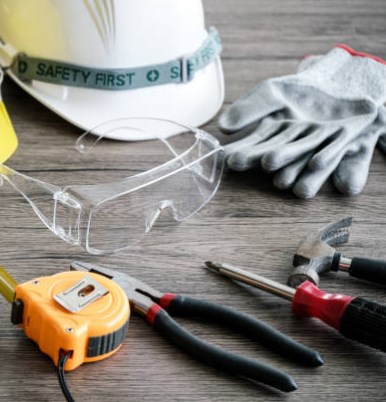
- 1. A respirator. An N95 at minimum, properly fitted, for every sanding session. Cheapest protection that exists.
- 2. A shop vacuum with a HEPA or fine filter, connected to the sander and the router.
- 3. A cyclone separator in front of the vacuum. It drops almost all the debris into a bucket, so the filter stays clean and suction stays constant.
- 4. Air movement. An open door and a box fan blowing out is crude and effective.
- 5. An air filter hanging from the ceiling, running during and after the session.
- 6. A real dust collector, only once you own a planer or a jointer that buries a shop vac in chips.
Why the cyclone matters more than the vacuum
A shop vacuum’s suction collapses as its filter loads, and fine dust loads a filter fast. Half an hour of sanding can halve the airflow.
A cyclone separator spins the debris out into a bucket before it reaches the filter, and typically catches the overwhelming majority of it. The filter stays clean, the suction stays constant, and emptying is a matter of lifting a bucket lid.
For a one-person shop this pairing does more for less money than any other upgrade, and it fits under a bench.
Capture at the tool, not in the room
Air filters and fans clean up what escaped. Collection at the tool stops it escaping. Given a choice, spend on the hose before the ceiling unit.
Most sanders and routers have a port that fits a vacuum hose with an adapter. The miter saw is the stubborn one: the built-in port catches very little, and a simple plywood hood behind the blade with a hose into it does more than the port ever will.
Over-arm collection above a table saw blade catches the fine dust that the cabinet port never sees. It is the difference between a clean floor and clean air.
Housekeeping that does not make it worse
Never blow dust off with compressed air. It puts everything that had settled back into the air you are about to breathe, at the worst possible particle size.
Vacuum rather than sweep, and vacuum the bench and the machines rather than only the floor.
Let the air filter or the fan run for twenty to thirty minutes after you stop. Fine particles stay airborne long after the noise ends, and most people take the mask off at exactly the wrong moment.
Where it sits in a small shop
The vacuum and cyclone want to be mobile, because in a one-car garage every machine takes its turn in the middle of the floor. Put them on a cart with the hose coiled on it.
Plan the hose runs with the zones rather than against them — our small workshop layout guide puts dust third in the ceiling-down order, after lights and power, and it belongs there.
And if you are still building the shop, remember the finishing area wants ventilation for a different reason: solvent vapour, not particles. See choosing a wood finish for the safety side of that.
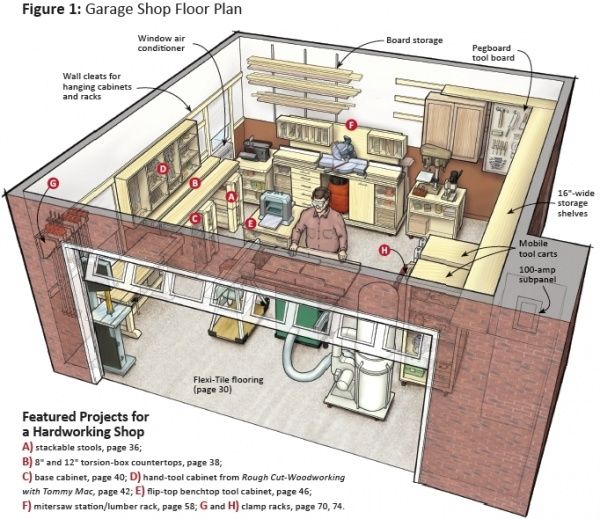
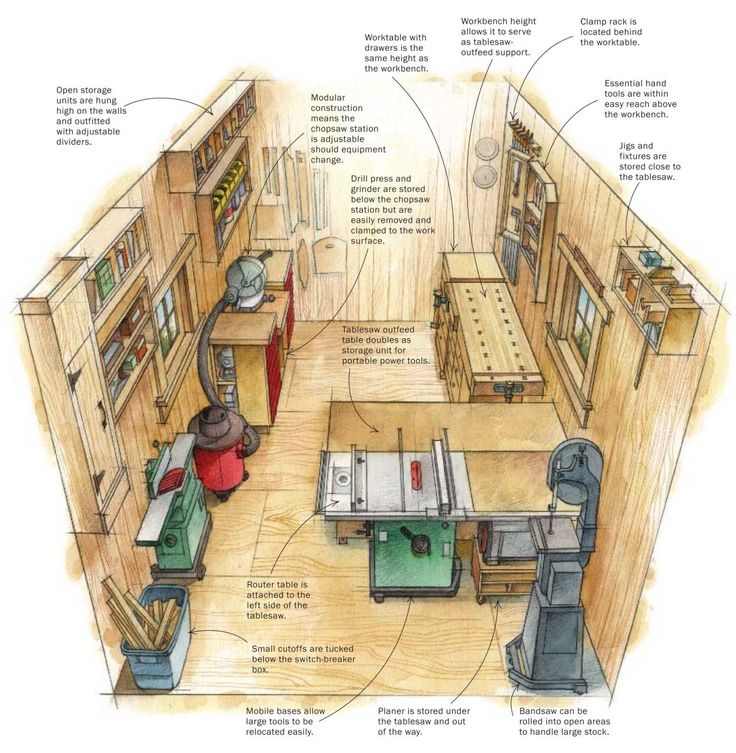
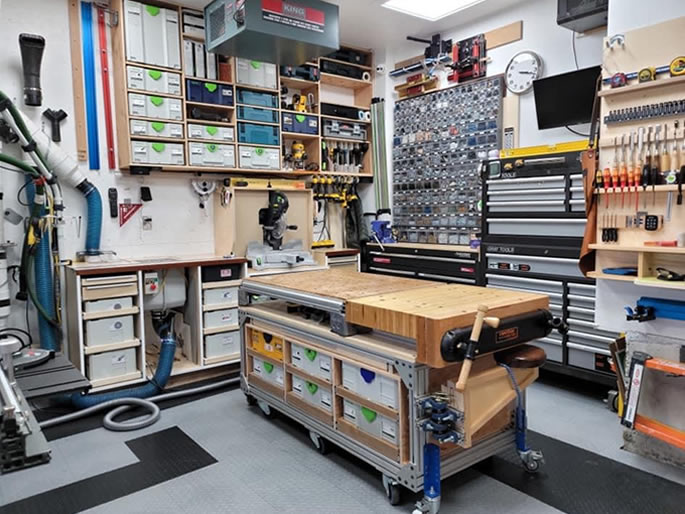
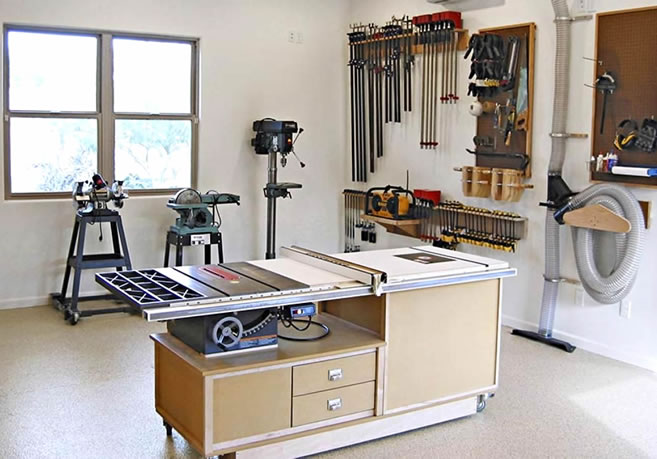
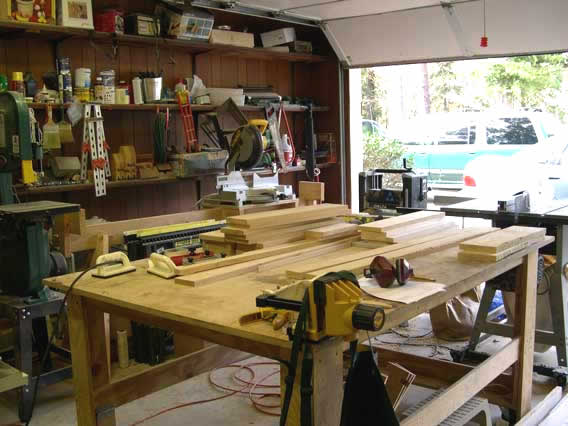
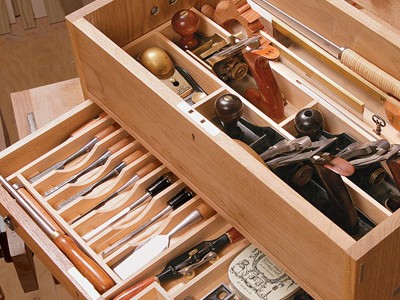
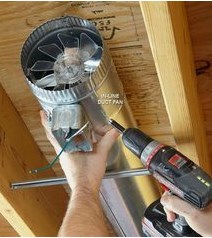
If you are planning the whole shop at once, the Ultimate Small Shop guide works through it in order: a 246-page illustrated book in six modules, with detailed floor plans for small spaces, a module on electricity, lighting and soundproofing, and one on heating, cooling, ventilation and dust.
A look inside Ultimate Small Shop






FAQ
Is a shop vacuum enough?
For a hand-tool and portable-power-tool shop, yes, especially with a cyclone and a fine filter. A planer or jointer is what forces the upgrade.
Do I need a HEPA filter?
It is the difference between capturing fine dust and recirculating it. If the vacuum is your only collection, the filter is the part worth paying for.
Are dust masks enough on their own?
A fitted respirator protects you while you wear it. It does nothing for the dust still hanging in the air when you take it off, which is why collection and ventilation matter too.
Is MDF dust worse?
MDF produces a lot of very fine dust and contains binders, so treat it as a tool-plus-respirator job every time.
Next step
Connect your sander to a vacuum this weekend and put a fitted respirator on the bench, not in a drawer. Those two steps cover most of the risk. Then plan the rest of the workshop with them in mind.
Based on standard shop dust-control practice, on the IARC classification of wood dust as carcinogenic to humans, and on how cyclone separators affect filter loading and airflow in shop vacuums. Product details for the Ultimate Small Shop guide are from the author’s published sales page as of September 28, 2026.