
Disclosure: this article contains affiliate links. If you buy through them, we may earn a commission at no extra cost to you. How this works.
Short answer
To play piano by ear, you find the key of the song, pick out the melody one note at a time, and then work out which of a few common chords fits under it. It is a skill, not a gift, and it grows fastest with simple songs you already know well.
Start with melodies you can hum, learn the three main chords of a key, and give ear training ten minutes a day.
Learn to play by ear and read music together
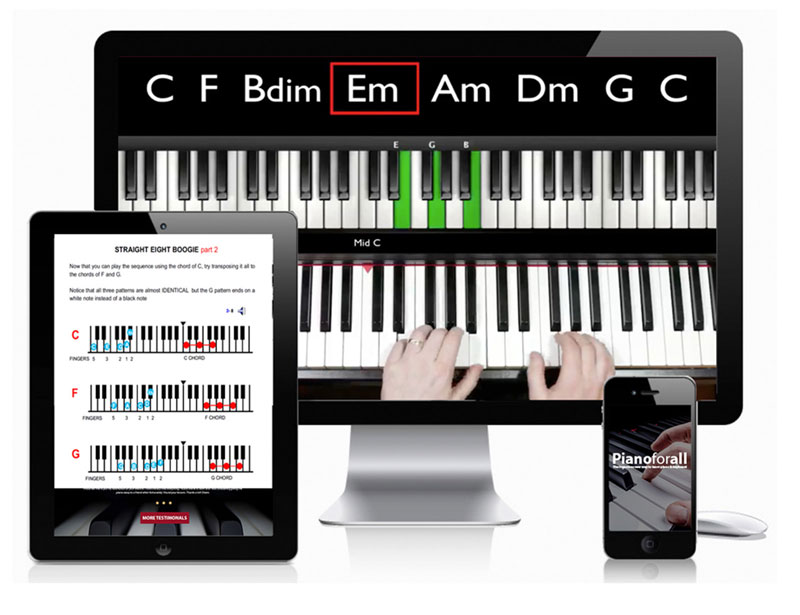
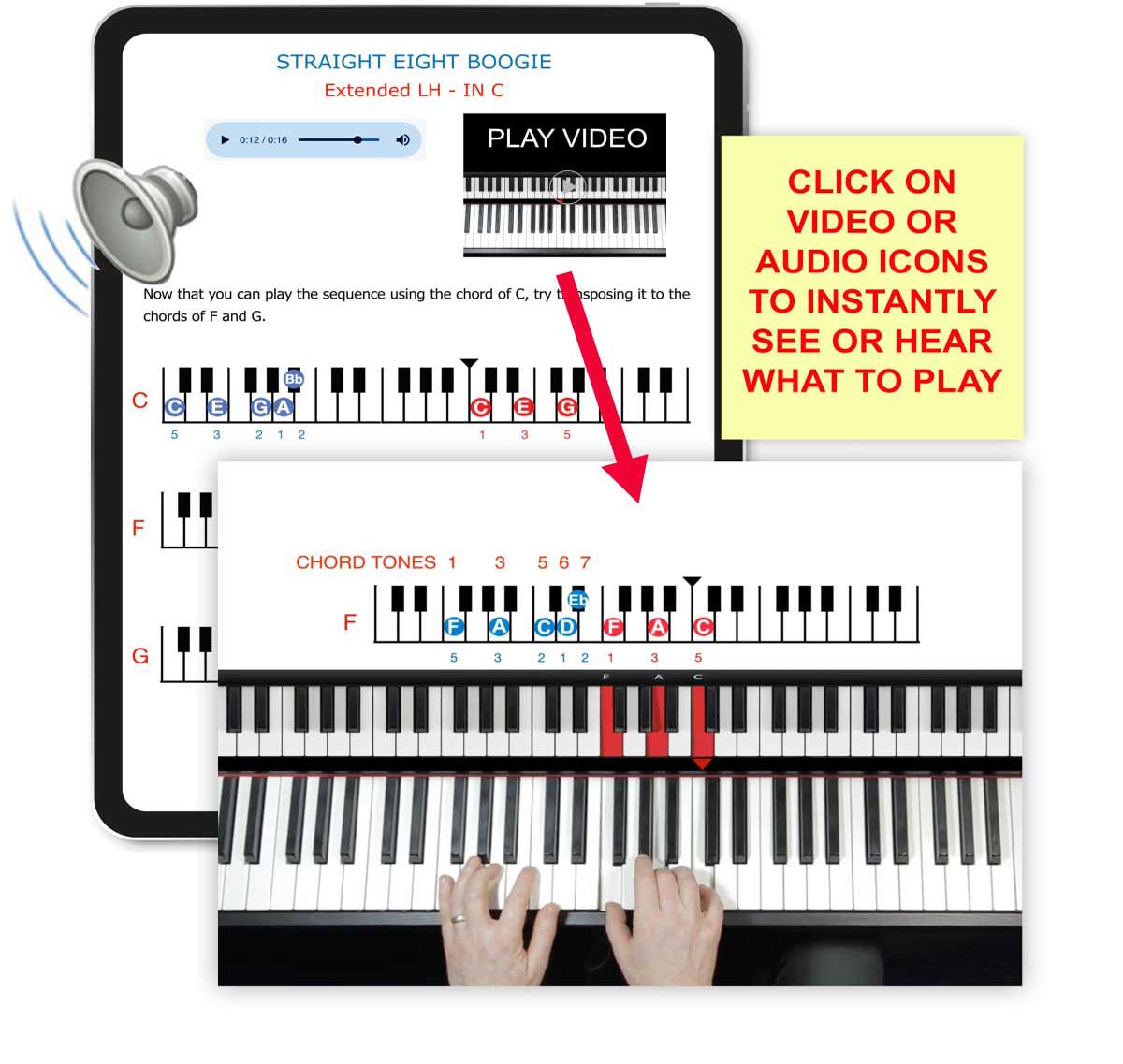
- Interactive ebooks with step-by-step video lessons and 1,000+ audio lessons
- Rhythm style first, then ballads, blues, jazz, ragtime and improvising
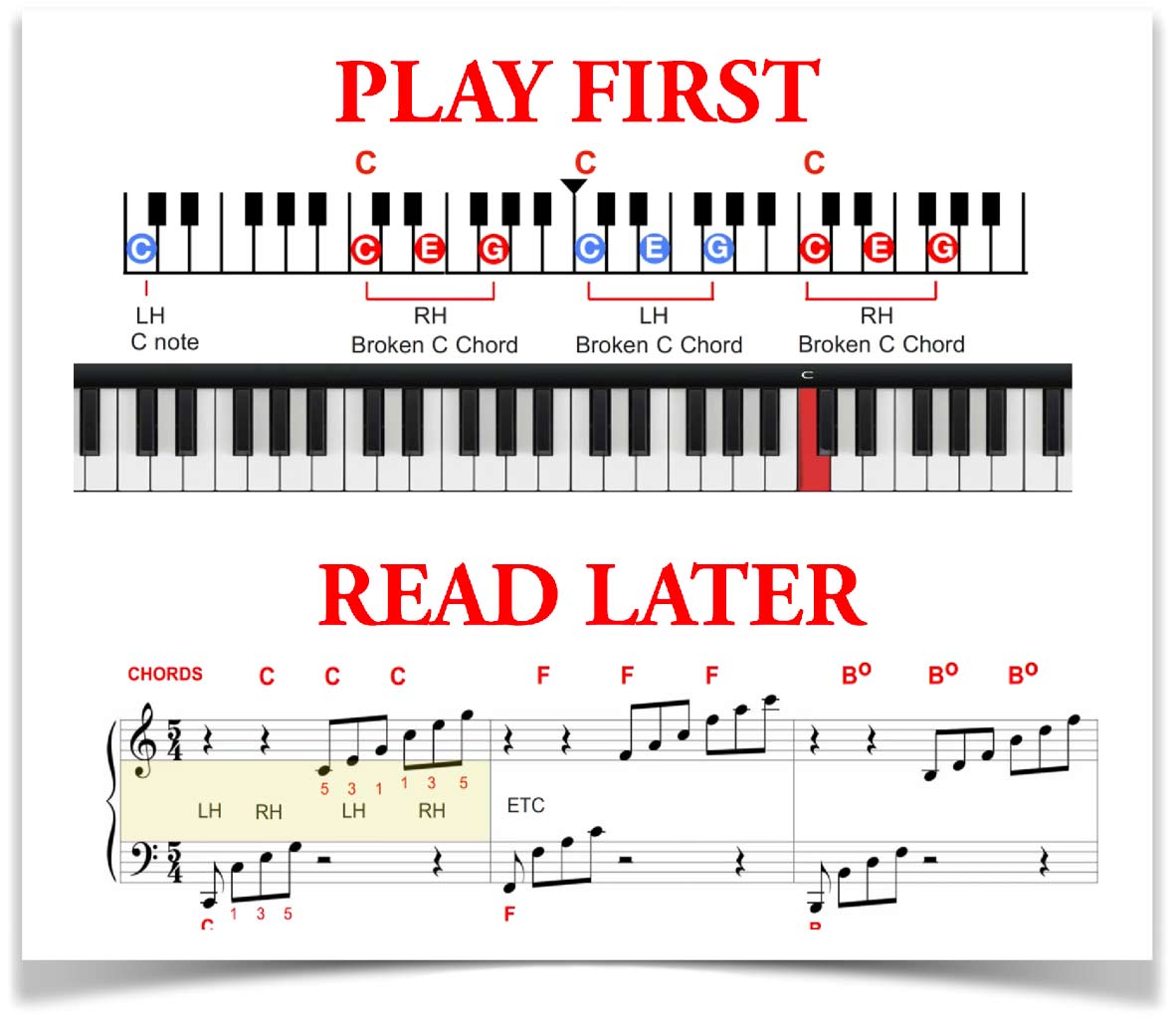
- Learn to read music as you learn to play by ear
- Lifetime access on any device and a 60-day money-back guarantee
Step 1: find the key
Most songs feel as if they come home to one note at the end. That note is usually the key. Hum the last note of the song, then find it on the piano by trying keys until one matches.
Start with songs in C major, which uses only the white keys, so every note you try is likely to belong. Children’s songs, hymns and folk tunes are ideal.
Step 2: pick out the melody
- Sing the first phrase, then find the first note on the keyboard.
- Decide whether the next note goes up or down, and whether it is a small step or a leap.
- Try the nearest key in that direction; if it is wrong, try the next one.
- Play the phrase back, fix the wrong notes, then move to the next phrase.
Step 3: add the chords
In any major key, three chords carry a huge share of simple songs: the chord on the first note of the scale (I), the fourth (IV) and the fifth (V). In C, that is C, F and G. Add A minor (vi) and you have the four chords behind much of popular music.
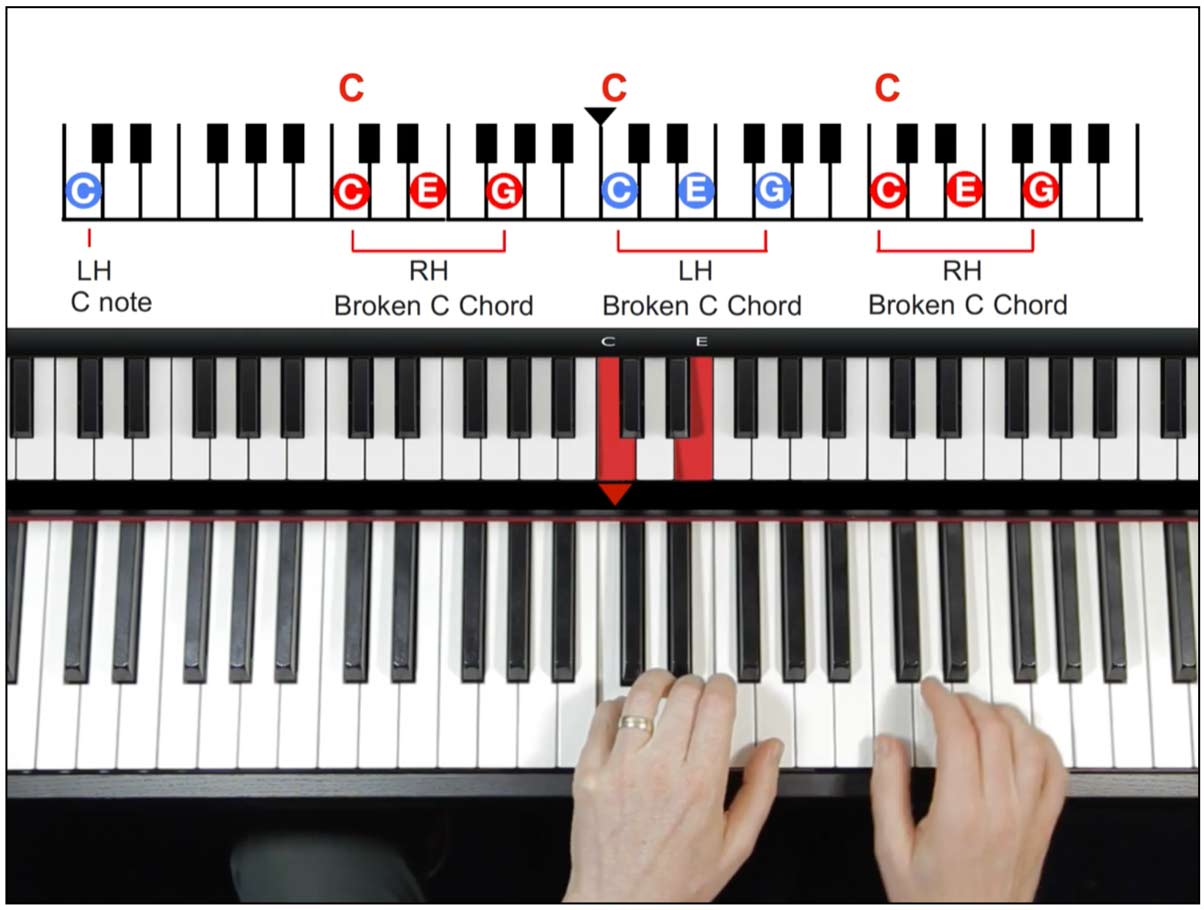
Play the melody with the right hand and try each of those chords in the left. The one that sounds right under a stretch of melody usually contains the melody notes of that stretch. The shapes are in piano chords for beginners.
| Key | I | IV | V | vi |
|---|---|---|---|---|
| C major | C | F | G | A minor |
| G major | G | C | D | E minor |
| F major | F | B-flat | C | D minor |
Train your ear a little every day
- Sing what you play. Play a note, sing it, then sing the next note of a scale before you play it.
- Name the direction. Have someone play two notes; say whether the second is higher or lower, then how far.
- Hear the chord quality. Major sounds bright, minor sounds darker. Play pairs and guess before you look.
- Copy short phrases. Play three notes, then copy them without looking at your hand.
Ear and reading are partners
Playing by ear does not replace reading music; each makes the other easier. Reading tells you exactly what a composer wrote, and your ear tells you whether you played it — the reading side is covered in how to read piano sheet music.
Pianoforall is built around this partnership. It teaches you to see the keyboard in shapes and patterns that make playing by ear and improvising easier, and you learn to read sheet music as you learn to play by ear.
Songs to start with
Pick tunes you can hum without thinking: “Twinkle, Twinkle, Little Star”, “Happy Birthday”, “Ode to Joy”, “When the Saints Go Marching In”. Work each one out in C first, then try it starting on G.
When those come easily, move to a pop song with a simple chord pattern and work out the chords first, the melody second.
A look inside Pianoforall













FAQ
Can anyone learn to play piano by ear?
Most people can. It is a trained skill, like reading, and it improves quickly with simple songs and a few minutes of ear practice a day.
Should I learn to read music or play by ear first?
Learn both side by side. Chords and simple songs by ear keep practice fun; reading opens up the rest of the repertoire.
What is the easiest key to play by ear?
C major, because it uses only the white keys. Then G and F, which add one black key each.
How long does it take to play songs by ear?
Simple melodies can come within weeks. Adding chords comfortably usually takes a few months of regular practice.
Next step
Tonight, pick out “Twinkle, Twinkle, Little Star” in C, starting on middle C, then add C, F and G chords underneath.
Based on standard music theory and ear-training practice for pianists: keys, scale-degree chords and interval recognition. Product details for Pianoforall are from the vendor’s published sales page as of September 29, 2026.