Disclosure: this article contains affiliate links. If you buy through them, we may earn a commission at no extra cost to you. How this works.
Short answer
The best dog tricks to teach first are the ones built from natural movements: shake, spin, take a bow, play dead and roll over. Each takes a few short sessions using a treat to guide the dog into position and a marker word the instant it gets there.
Tricks are not just for show. They exercise the dog’s brain, build the bond with you, and teach the same learning skills your dog uses for everyday manners.
21+ games and trick videos, step by step
- Created by Adrienne Farricelli, a CPDT-KA certified trainer
- 21+ force-free games in graded modules, with video demonstrations
- An archive of solutions for barking, chewing, jumping, digging and more
- Instant access and a 60-day money-back guarantee
How to teach any trick
- Lure: guide the dog into the movement with a treat held at its nose.
- Mark: say “yes” the instant the dog gets there, then give the treat.
- Fade the lure: after a few successes, use the same hand motion without a treat in it, and reward from the other hand.
- Add the cue: once the dog does the movement reliably, say the word just before the hand signal.
- Keep it short: three to five minutes, and stop while the dog still wants more.
Five tricks, step by step
| Trick | How to teach it | Tip |
|---|---|---|
| Shake | Hold a treat in a closed hand low near the paw; mark when the paw lifts to paw at it | Reward the lift first, the full touch later |
| Spin | Lure the nose in a slow circle at the dog’s head height | Teach one direction at a time |
| Take a bow | From standing, lure the nose down between the front paws; mark when the elbows dip | A hand under the belly at first stops lying down |
| Play dead | From a down, lure the nose toward the shoulder so the dog rolls onto its side | Mark the moment it lies flat |
| Roll over | From play dead, keep luring the nose over the shoulder to complete the roll | Use a soft surface and go slowly |
Tricks build real-life skills
A dog that has learned five tricks has learned how to learn: watch the handler, try something, notice what pays. Those skills carry straight over to recall, stays and loose-leash walking.
Trick sessions are also mental exercise. Ten minutes of learning tires many dogs more than a long walk, which is why tricks sit so well beside the games in dog mental stimulation games.
Choosing rewards for trick training
Use small, soft treats the dog can swallow in a second, so the session keeps its rhythm. For tricks the dog finds hard, like roll over, save a higher-value reward for the full movement.
Some dogs work happily for a quick game of tug instead of food. Whatever you use, deliver it fast: the reward should follow the marker within a second or two, or the dog stops connecting it to what it just did.
Common mistakes
- Adding the cue word too early, before the dog knows the movement.
- Repeating the cue when the dog does not respond; go back to the lure instead.
- Sessions that run too long, so the dog gets frustrated and quits.
- Pushing the dog into position instead of letting it move itself.
Tricks and good manners together
A reliable stay makes tricks like play dead far easier to hold, and tricks give stay practice a fun purpose. The stay method is in how to teach a dog to stay.
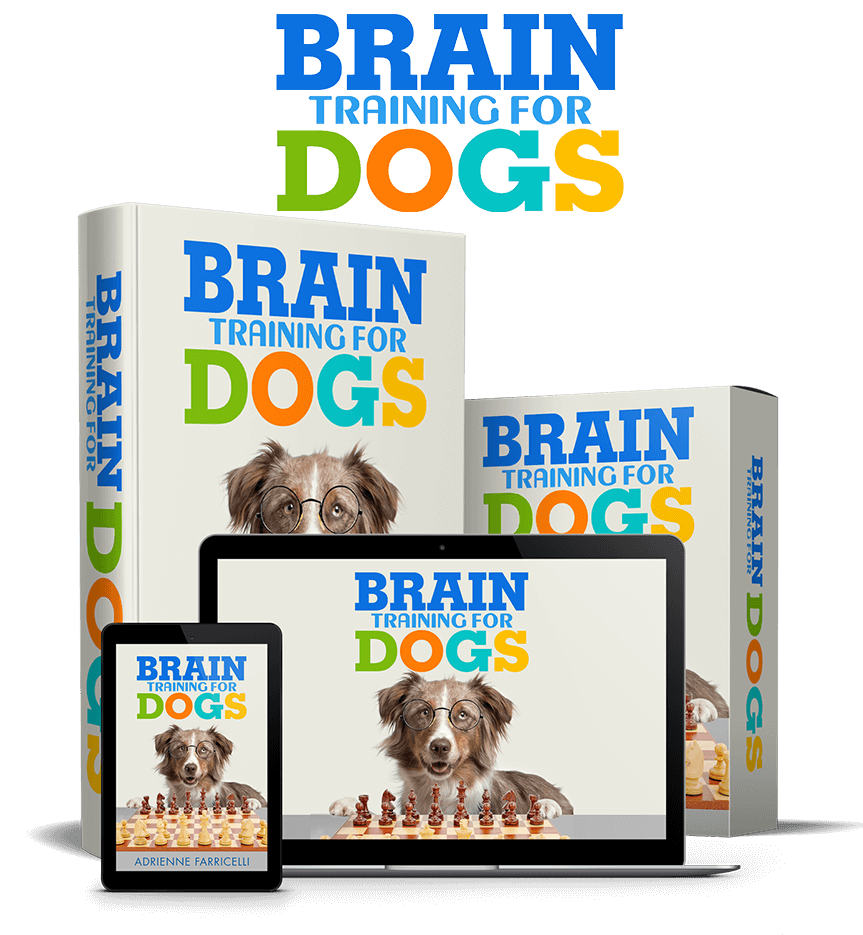
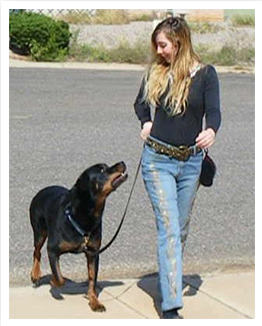
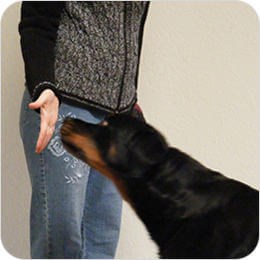
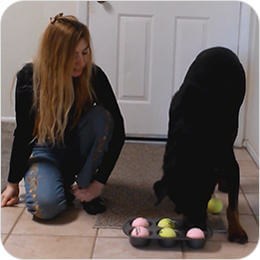
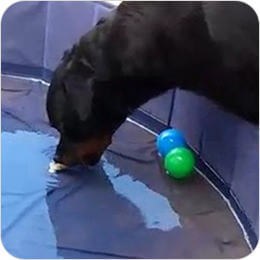
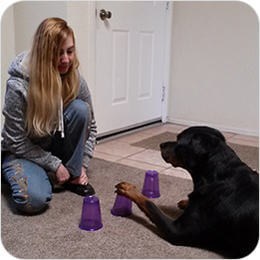
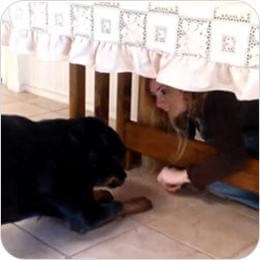
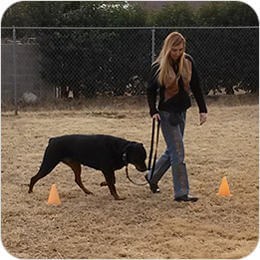
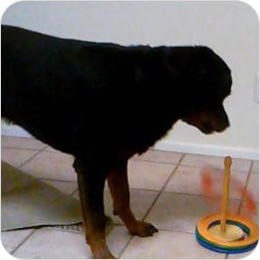
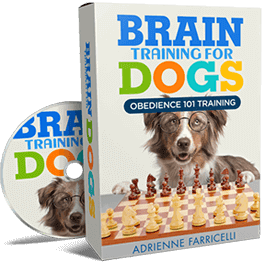
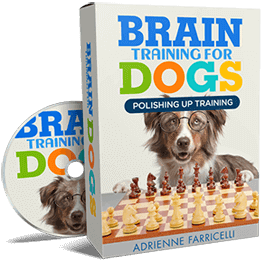
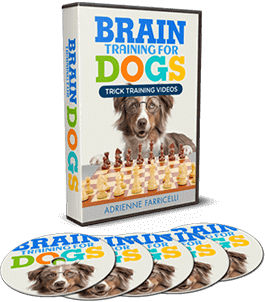
Brain Training for Dogs includes seven trick training videos — among them take a bow, shake hands, dance, howl, play dead and roll over — alongside more than 21 brain games and an Obedience 101 section, created by CPDT-KA certified trainer Adrienne Farricelli.
A look inside Brain Training for Dogs

FAQ
What is the easiest trick to teach a dog?
Shake is usually the easiest, because many dogs already paw at a closed hand holding a treat.
How long does it take to teach a dog a trick?
Simple tricks often take a few short sessions over several days. Chains like roll over take a week or two.
Can older dogs learn tricks?
Yes. Choose tricks that suit the dog’s body — shake and spin are gentle — and keep sessions short.
How many tricks should I teach at once?
One new trick at a time, alongside practice of the ones the dog already knows.
Next step
Tonight, teach shake in two three-minute sessions: a treat in a closed hand low near the paw, and a yes the moment the paw lifts.
Based on standard force-free trick training practice: luring, marking, fading the lure and adding cues. Product details for Brain Training for Dogs are from the vendor’s published page as of September 29, 2026.