Disclosure: this article contains affiliate links. If you buy through them, we may earn a commission at no extra cost to you. How this works.
Short answer
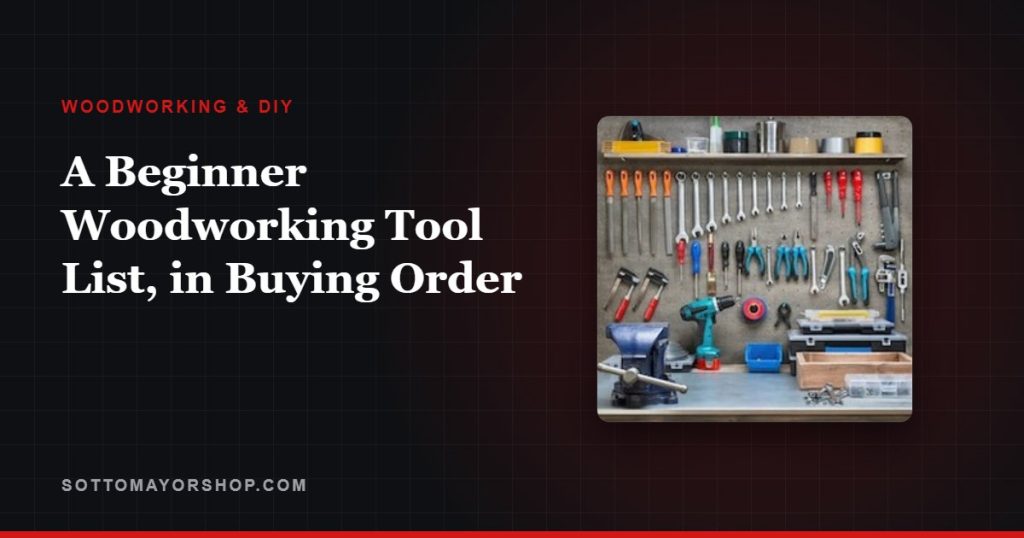
A beginner woodworking tool list should be bought in project order, not in one trip. Buy what the next build needs, use it, and let the third or fourth project tell you what is actually missing.
Three tools deserve the money up front because everything else inherits their error: the square, the tape and the blade.
Tool shopping lists for a $500 or $1,000 budget
- 246-page illustrated guide in six modules
- Tool shopping lists for budgets under $500 and under $1,000
- Layouts for spaces as small as 10 x 6 ft, plus lighting, noise and air quality
- Instant access and a 60-day money-back guarantee
Stage 1 — Enough to finish one real project
That list finishes a bookshelf, a workbench, a planter or a simple cabinet. Plenty of people never leave it.
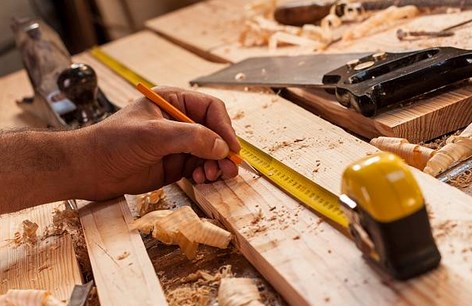
- Tape measure, 16 or 25 ft, and only one. Two tapes in one shop is two answers.
- Combination square, 12 in. This is the tool the whole project trusts.
- Pencil and marking knife. A pencil line is about 0.5 mm wide; a knife line is where the chisel lands.
- Circular saw plus a straightedge or a track. Breaks down sheet goods with no shop space.
- Cordless drill/driver and a set of bits. One battery platform, chosen once.
- Four clamps, and then four more. Nobody has ever regretted clamps.
- Random orbit sander, 5 in, with 80/120/180 grit.
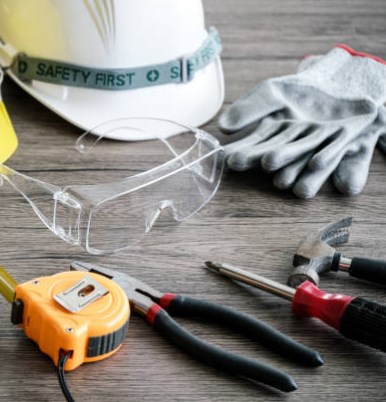
- Safety: glasses, ear protection, an N95 for sanding.
Spend the money on these three
Check a new square against itself: draw a line off a known-straight edge, flip the square, draw again. Two lines that diverge tell you the square is wrong, not your eyes.
Do this the day the square arrives, not the day a mitre refuses to close.
| Tool | Why it carries the error | What to look for |
|---|---|---|
| Combination square | Every joint is laid out from it | Machined head, blade square to the head both ways |
| Tape measure | All your cut list numbers come from it | One tape, used for the whole project |
| Saw blade | Tear-out and square cuts both start here | A good 40T combination blade beats the stock blade |
Stage 2 — After three or four projects
By now you know which step annoys you most, and that is the tool to buy. If ripping boards by hand is the bottleneck, a table saw. If the cuts are square but the boards are not flat, a planer. If everything takes twice as long because of clamp-ups, more clamps and a flat assembly table.
Common stage-two buys: a miter saw for repeat crosscuts, a router with a straight bit and a round-over, a jigsaw for curves, a doweling or pocket-hole jig for fast casework.
Buying in this order means each tool arrives with a job already waiting for it, which is the difference between a shop and a collection.
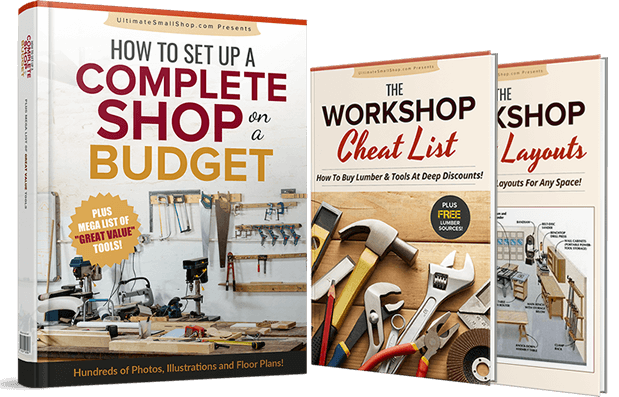
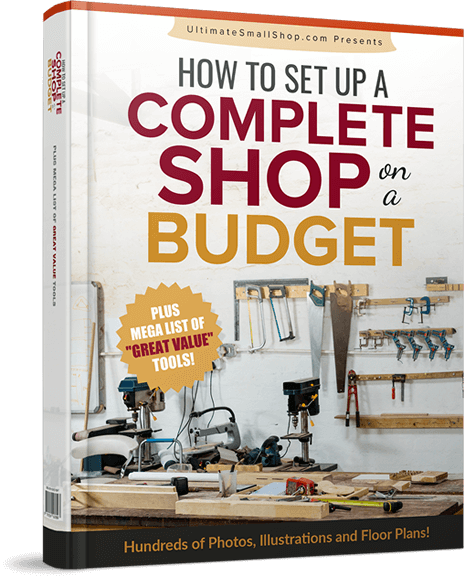
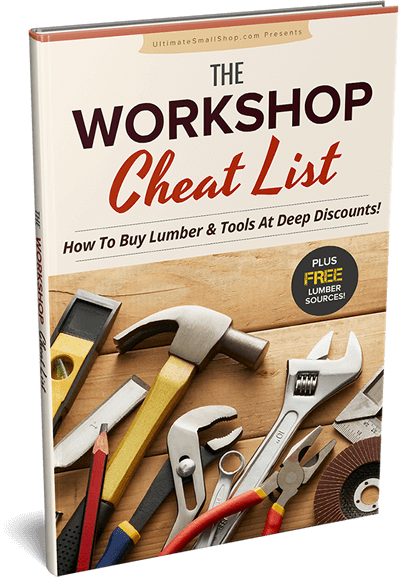
If you would rather start from a ready-made shopping list than build your own, the Ultimate Small Shop guide includes a list of quality tools and where to buy them, inside a 246-page illustrated book that also covers floor plans for small spaces.
Measuring tools people add too late
A digital caliper is the one most beginners skip and later wish they had bought first. Stock that is sold as 3/4 in is routinely 0.70 to 0.72 in, and a dado cut to the nominal number leaves a joint that rattles. Measure the actual board, cut to that.
A small machinist square for setting blade and fence, a straightedge for checking flatness, and a moisture meter if you buy rough lumber — these are cheap next to the wood they save.
A bevel gauge earns its place the first time you copy an angle off something that already exists rather than trying to read it.
What to skip for now
None of these are bad tools. They are just tools bought before the problem they solve exists.
- Multi-tool kits with twelve attachments: each one is worse than the dedicated tool.
- A second drill before your first sander.
- Exotic chisels before you can sharpen the cheap ones.
- A dust collector before you have a machine that makes chips.
- Anything bought because a video made it look satisfying.
Where the tools go
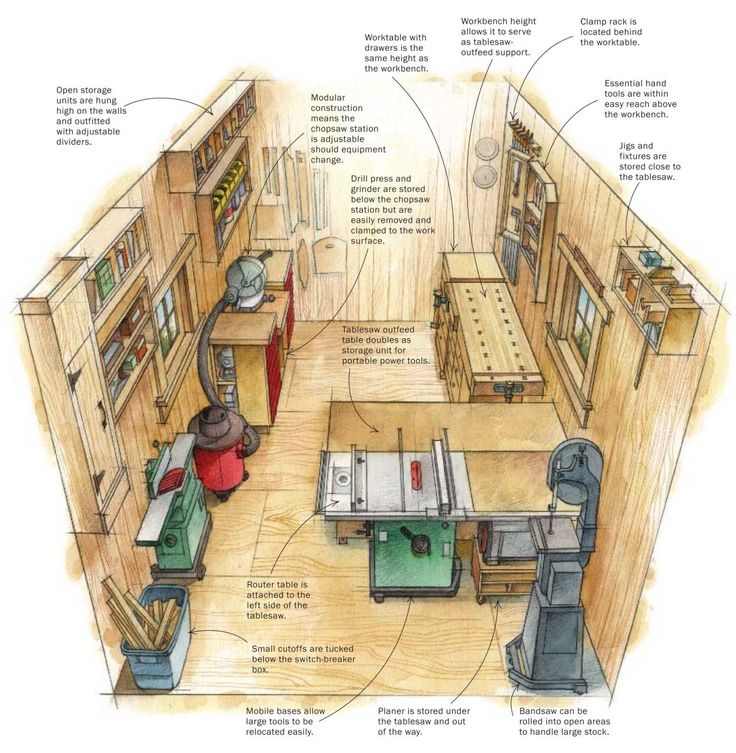
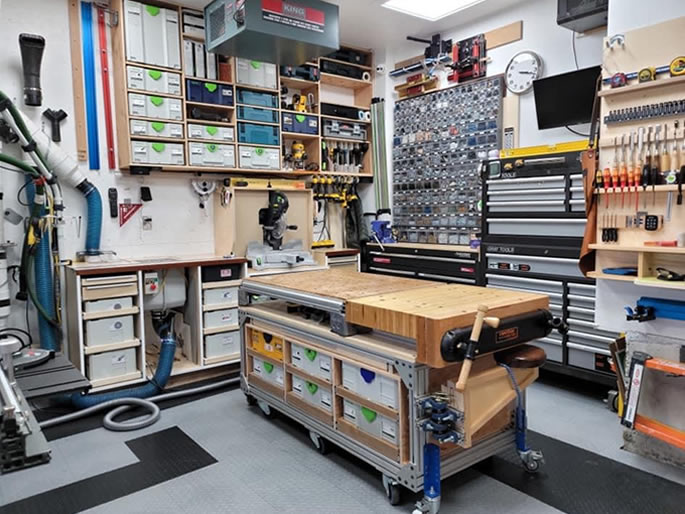
A tool you cannot reach is a tool you do not use. Hand tools within arm’s reach of the bench, power tools where their cord reaches the drop, consumables in labelled bins rather than a drawer of mixed screws.
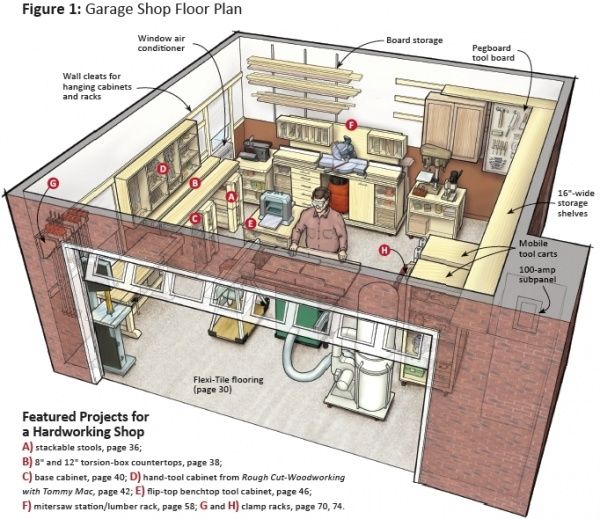
If you are starting from an empty garage, sort the room before the shelves: our small workshop layout sets the five zones first, and storage takes what is left.
Then pick something small and finish it. The weekend project list is built for exactly this list of tools, and reading a cut list properly will save you more lumber than any single purchase.
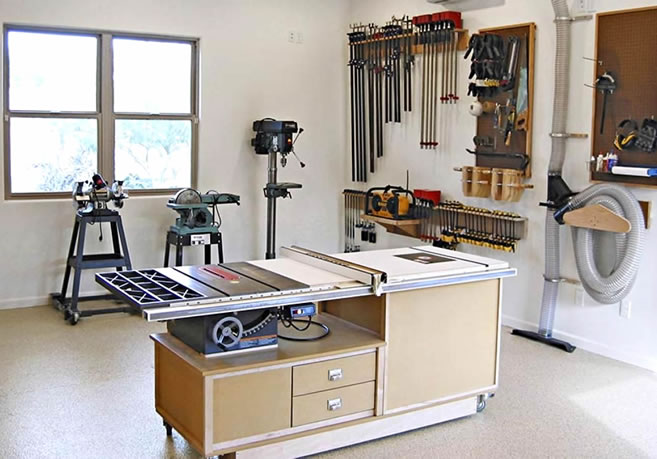
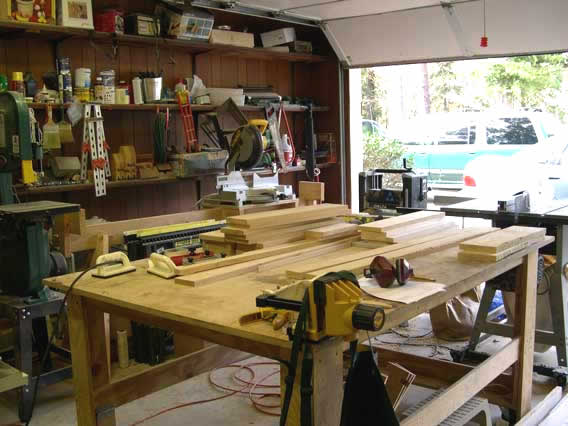
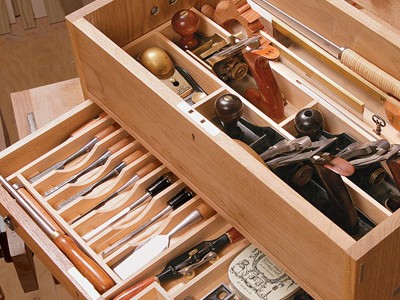
A look inside Ultimate Small Shop

FAQ
Corded or cordless for a beginner?
Cordless for the drill and driver, corded for the sander and the circular saw if you can. Battery runtime is fine now; the reason is weight and price at the same power.
How much should the first set cost?
Stage one lands between roughly $300 and $600 new, depending on the saw and how many clamps you admit to needing.
Are used tools a good idea?
For cast-iron machines, often yes. For anything with a battery or a cord, inspect it powered on first.
Do I need a workbench before anything else?
You need a flat, heavy surface at a comfortable height. A door on two sawhorses works while you build the real one.
Next step
Pick the project you want to finish this month and buy only what it needs. Check the square the day it arrives, before it lays out a single joint.
Based on standard beginner woodworking practice and on manufacturer specifications for common hand and power tools. Product details for the Ultimate Small Shop guide are from the author’s published sales page as of September 28, 2026.