Disclosure: this article contains affiliate links. If you buy through them, we may earn a commission at no extra cost to you. How this works.
Short answer
Wood movement is the reason a tabletop that was flat in July splits in January. Wood swells and shrinks across the grain with humidity, and it does that for as long as the piece exists.
Along the grain it barely moves at all. Every classic joinery rule exists to let the cross-grain direction expand while the long-grain direction stays put.
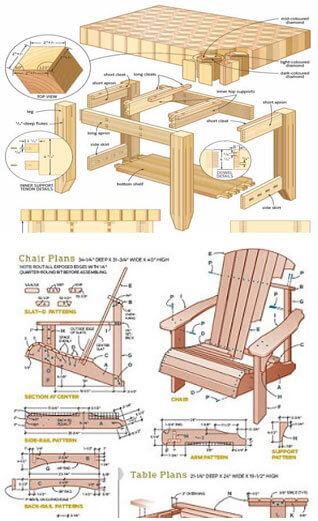
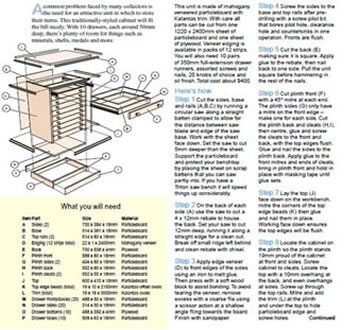
Plans with every joint drawn out
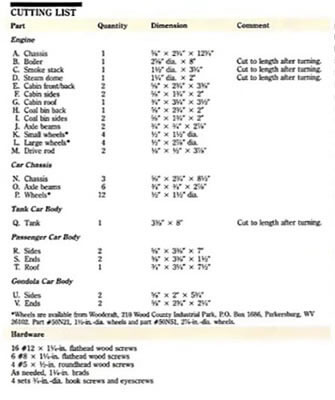
- 16,000 plans with step-by-step instructions, exact cut lists and materials lists
- Multi-angle drawings with exploded views of every joint
- Search by keyword or browse 100+ categories by difficulty
- New plans every month and a 60-day money-back guarantee
The one asymmetry that explains everything
A board changes size in three directions, and they are nothing alike. Along its length it is almost frozen — a few thousandths over several feet. Across the width it moves visibly, and in thickness it moves too, just where you rarely notice.
As a rough planning figure, a flatsawn board moves on the order of a quarter inch per foot of width across the seasons in a home that swings from a dry winter to a humid summer. Quartersawn stock moves roughly half of that.
So a 24-inch-wide flatsawn tabletop can change something like a half inch between seasons. Screw that top down at both ends and one of two things gives: the top splits, or the screws tear out.
How much your wood will move
A board cups away from the heart. Look at the end grain rings: the face that was nearer the outside of the tree becomes the hollow side. That is why alternating the rings across a glued-up panel is traditional — the cups fight each other instead of adding up.
| Cut | Relative movement | How to spot it | Best for |
|---|---|---|---|
| Flatsawn | Most | Cathedral grain on the face | Cheap, wide boards; cups over time |
| Riftsawn | Middle | Grain lines at a steep angle on the end | Legs, stiles that must stay straight |
| Quartersawn | Least | Straight lines on the face, rays on oak | Tabletops, doors, anything wide |
Acclimate before you cut, not after
Bring lumber into the room where the finished piece will live and leave it there. A week is a reasonable minimum for surfaced stock; thick or rough boards take longer. Sticker the pile so air moves on all four faces.
The number that matters is moisture content, and it is worth measuring rather than guessing. Furniture stock for a heated home usually wants to land somewhere around 6 to 8 percent; wood bought straight off an outdoor rack can be well into the teens.
A pin moisture meter costs less than one board of decent hardwood and settles the argument in ten seconds. Measure a fresh face, not the end, and check a few boards in the pile — a stack is rarely uniform.
The four fixes
Breadboard ends deserve their own mention: the center tenon is glued, the outer pegs run in slots, and the end cap slides while the top grows and shrinks behind it. Glue the whole thing and you have built a very handsome split.
- Let it float. Tabletops attach with buttons, figure-eight fasteners or Z-clips that slide in a groove. Never a fixed screw at both edges.
- Give it a slot. Where a screw must pass through cross-grain, elongate the hole in the direction of movement and do not overtighten.
- Float the panel. A cabinet door panel sits loose in its groove, glued nowhere, with space at the edges. Space balls or a dab of silicone keep it centered without trapping it.
- Match the grain. Long grain to long grain glues forever. Long grain crossing short grain is a crack with a date on it.
What finish actually does
Finish slows moisture exchange; it does not stop it. An oil finish barely slows it at all, film finishes slow it more, and nothing seals wood permanently.
The practical rule is to finish all faces equally, including the underside of a tabletop and the inside of a case. A top finished on one side only takes on moisture unevenly and cups toward the unfinished face.
That single habit — finish both sides — prevents more warping than any choice of product.
Designing around it
Narrow parts move less, so a top glued from four 6-inch boards behaves better than one 24-inch slab, even though the total width is the same. Frame-and-panel construction exists for the same reason: the frame holds the dimension, the panel does the moving.
Plan the movement into the cut list from the start rather than fixing it at assembly. When you lay out parts, note which dimension is cross-grain on each one — that is the dimension that will change. Our guide to reading a cut list covers how to keep those numbers straight.
And if you are building in a garage that swings 40 degrees between seasons, let the stock live there a while first. The small workshop layout guide has a spot for a lumber cart, which is the cheapest acclimation system there is.
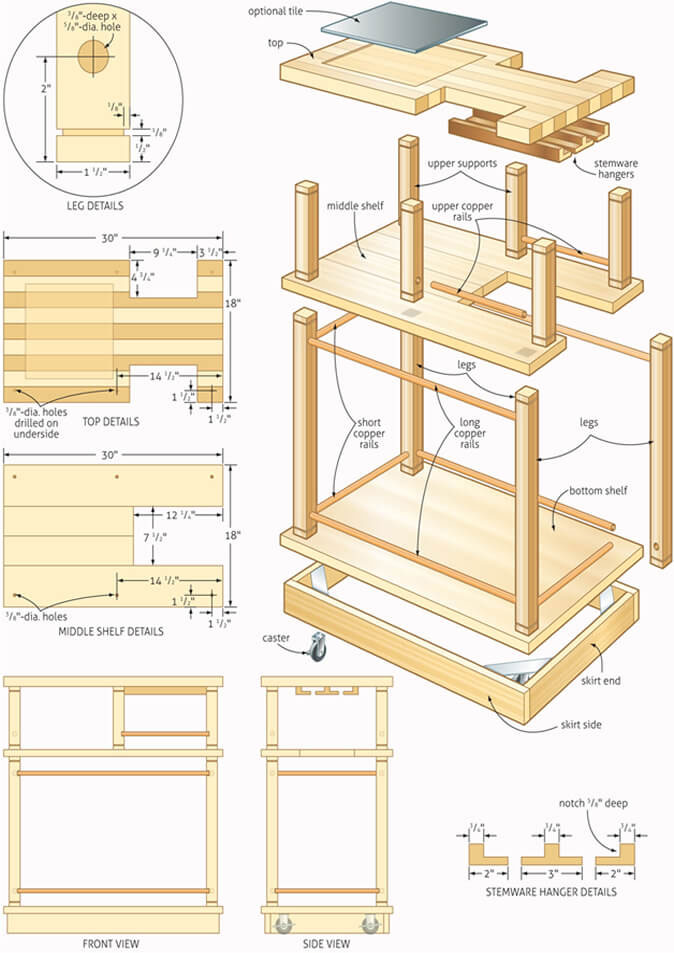
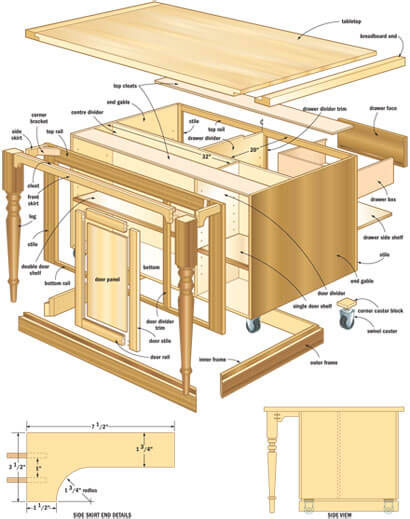
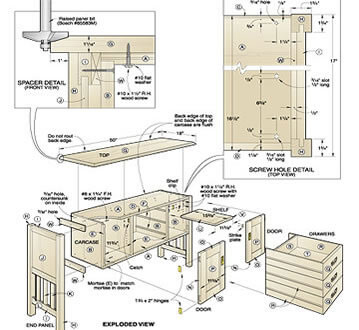
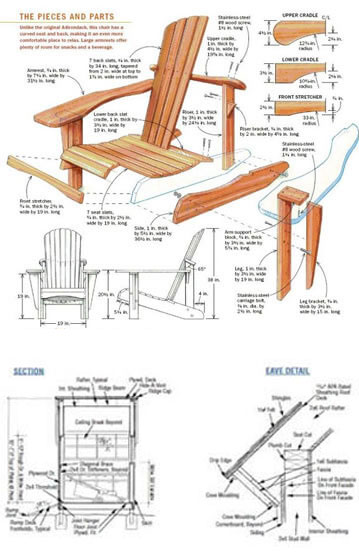
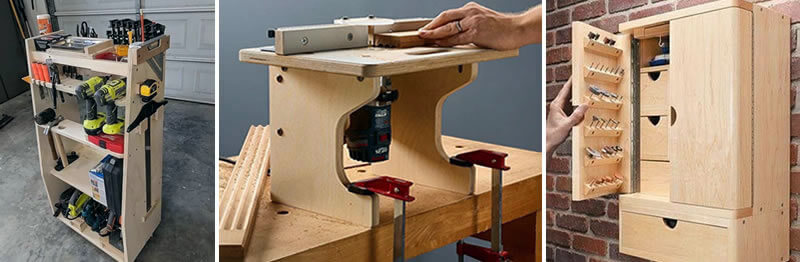
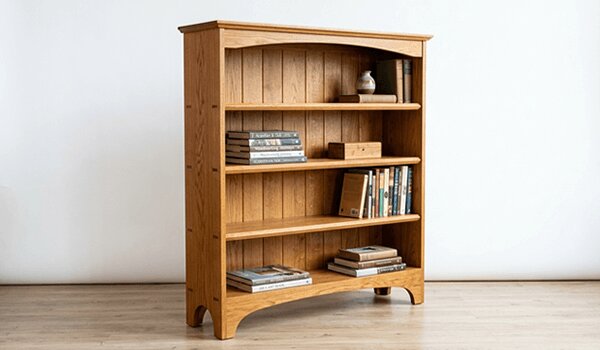
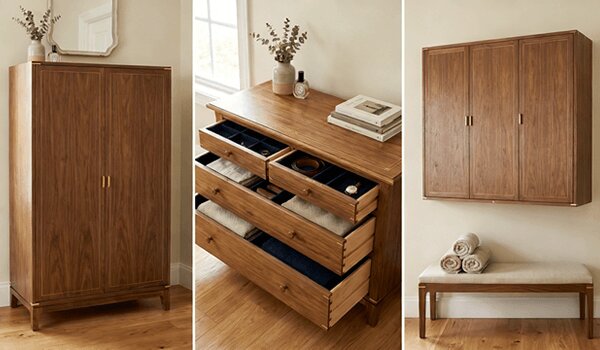
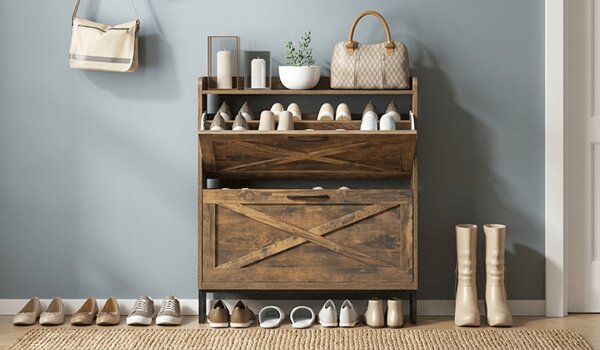
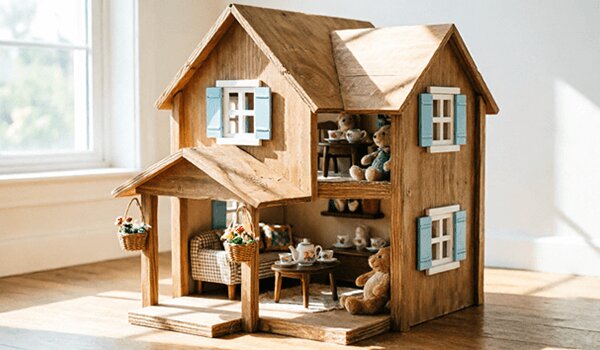
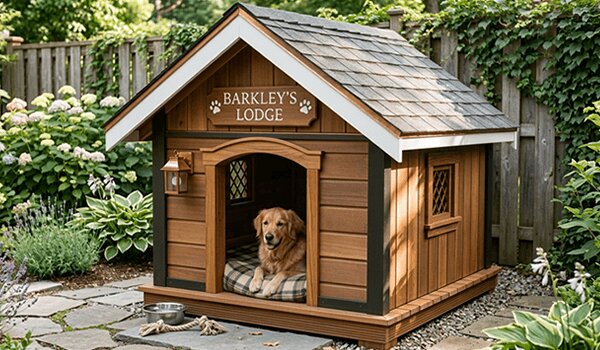
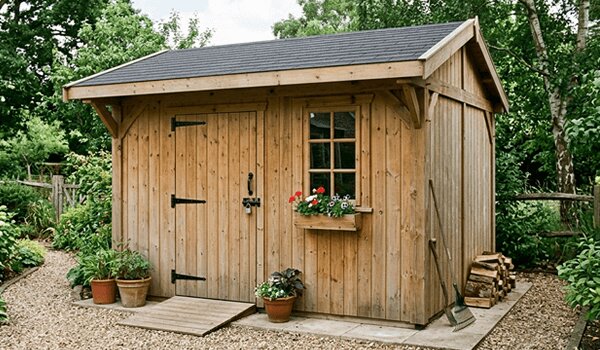
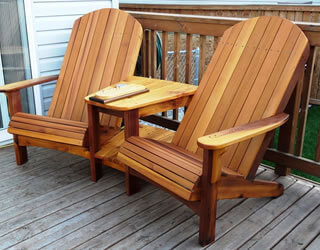
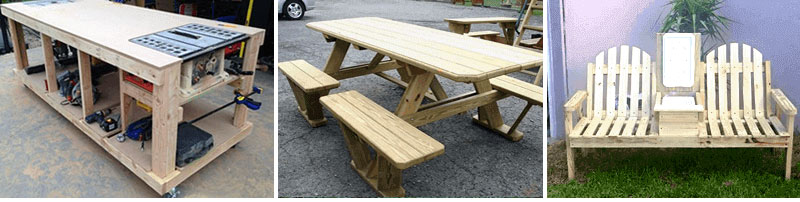
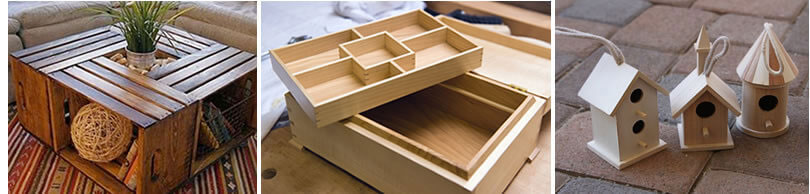
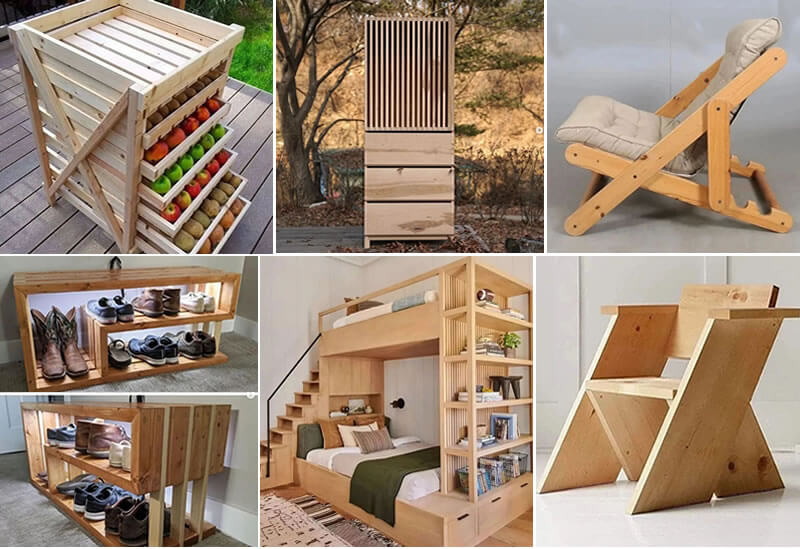
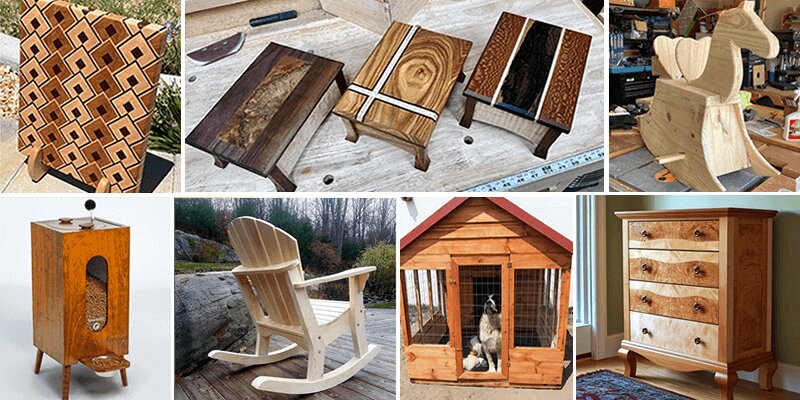
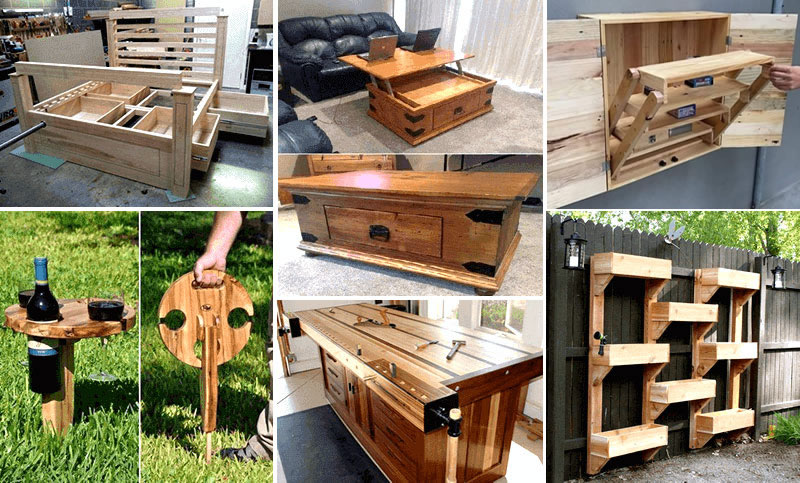
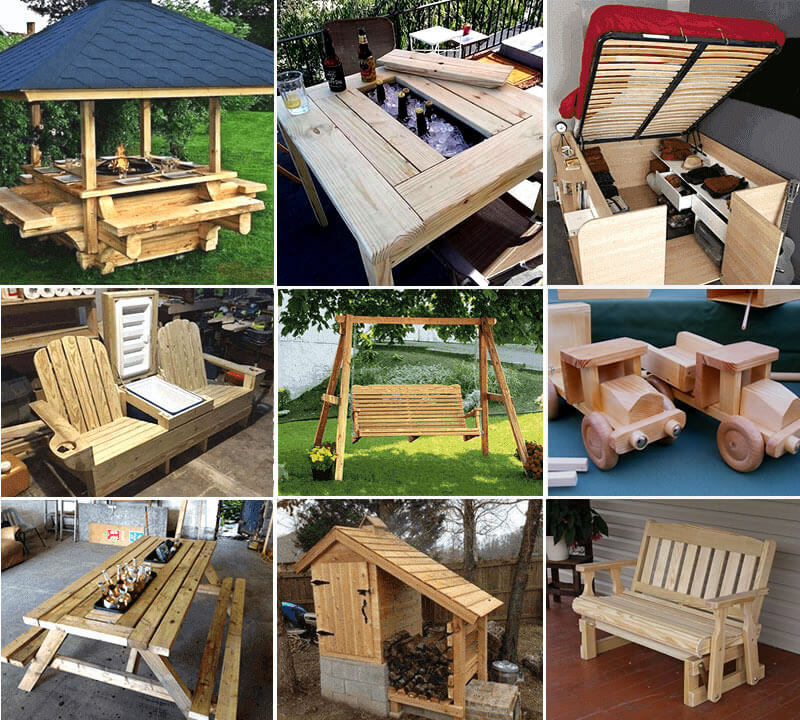
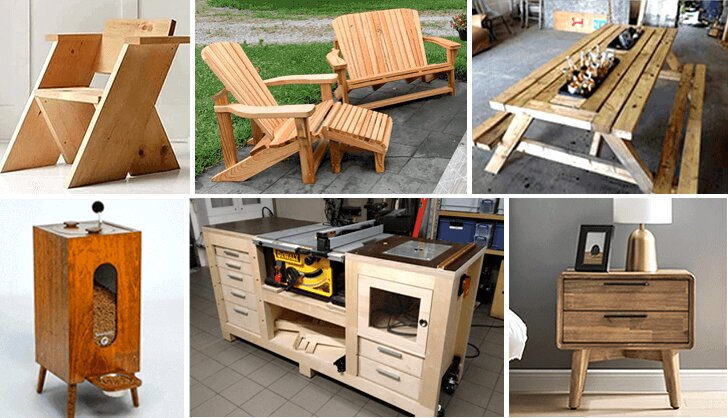
It helps to start from a plan that puts every part on paper first. TedsWoodworking has 16,000 plans, each with step-by-step instructions, an exact cut list, a complete materials list and multi-angle schematics, so you can mark the cross-grain dimension on every part before the first cut.
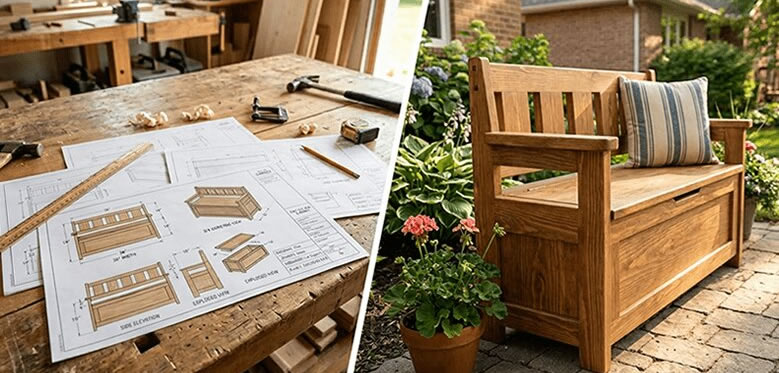
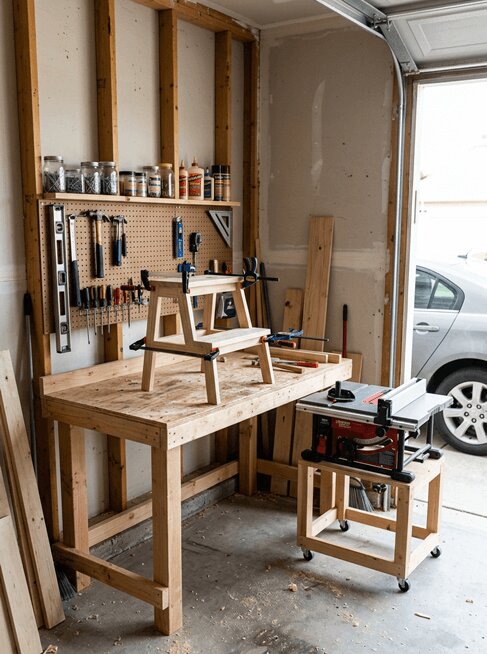
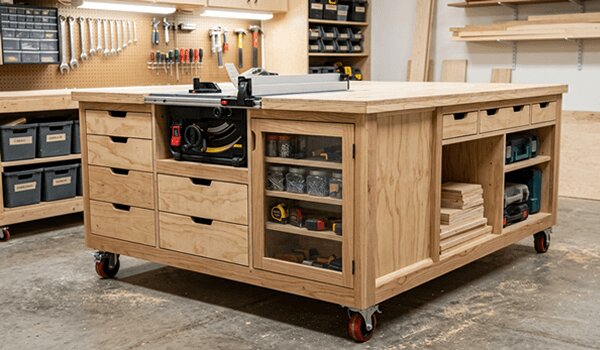
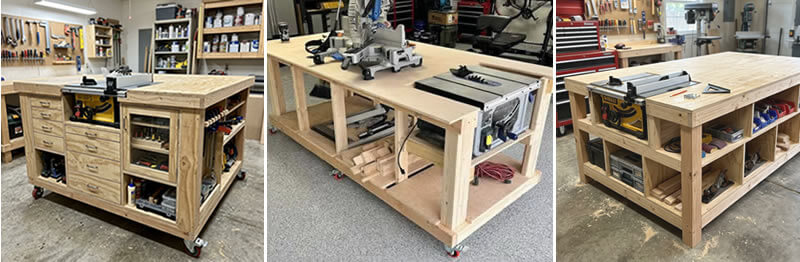
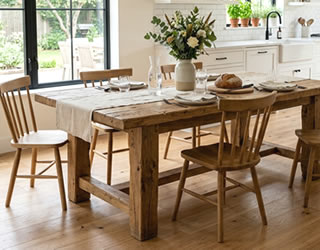
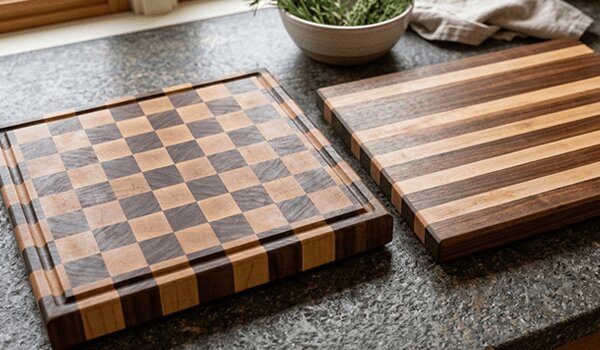
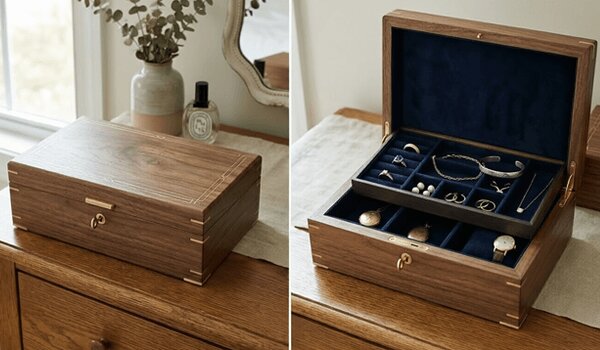
A look inside TedsWoodworking


FAQ
Does plywood move?
Barely, in width and length, because its plies cross. That stability is why cabinet carcases are often plywood and only the doors and tops are solid wood.
Can I stop wood from moving?
No. You can slow it with finish on every face and design around it with floating panels and slotted fasteners, but the movement itself never ends.
Why did my tabletop cup after one winter?
Almost always uneven moisture exchange: finished on top, bare underneath, or stored against a wall with one face blocked. Finish both sides and store it flat with air all around.
How long should lumber acclimate?
A week is a sensible minimum for surfaced stock in the same room it will live in; rough or thick boards want longer. A moisture meter tells you when it has stopped changing.
Next step
Before your next glue-up, look at the end grain of every board and mark which way it will cup. Alternate them, and leave the top free to move at both edges.
Based on standard wood technology and shop practice: dimensional change across the grain, the difference between flatsawn and quartersawn stock, and the equilibrium moisture content typical of heated interiors. Product details for TedsWoodworking are from the vendor’s published offer page as of September 28, 2026.