Disclosure: this article contains affiliate links. If you buy through them, we may earn a commission at no extra cost to you. How this works.
Short answer
To build a bookshelf that lasts, three decisions matter more than the wood you pick: how far each shelf spans, how the shelves attach to the sides, and whether the finished case is anchored to the wall.
Get those three right and a plain plywood bookshelf stays flat and square for decades. Get them wrong and the best walnut in the world still sags within a year.
Bookcase plans with the full cut list
- 16,000 plans with step-by-step instructions, exact cut lists and materials lists
- Multi-angle drawings with exploded views of every joint
- Search by keyword or browse 100+ categories by difficulty
- New plans every month and a 60-day money-back guarantee
Start with the span, not the style
Books are heavy. A running foot of hardcovers weighs roughly 20 pounds, and a full shelf carries that load every day it exists. How much the shelf bends under it depends on three things: the span between supports, the thickness, and the material.
Woodworkers borrow a rule from shelf-sag calculators such as the Sagulator: about 0.02 inch of sag per foot of span is where the eye starts to notice it. Below that, the shelf looks flat. Above it, the shelf looks tired within a year, because wood keeps creeping under a constant load.
| Material (3/4 in thick) | Comfortable span for books | Notes |
|---|---|---|
| Hardwood plywood | About 30 in | Flat and stable; band the front edge |
| Solid oak or maple | About 34 in | Stiffer; let it move with the seasons |
| Solid pine | About 28 in | Similar stiffness to plywood, but knots weaken it |
| MDF or particleboard | About 22 in | Heavy, and it creeps under a constant load |
Make each shelf stiffer without making it thicker
- Glue a hardwood strip to the front edge. A 3/4 x 1-1/2 in strip standing on edge stiffens a plywood shelf far more than its size suggests, and it hides the plies.
- Fasten the back edge. A shelf screwed or glued to a solid back cannot sag along its rear edge, which makes the whole shelf noticeably stiffer.
- Shorten the span. A center divider turns one 60-inch shelf into two 30-inch shelves that stay flat.
- Keep the depth honest. Shelves 10 to 12 inches deep hold most books. Deeper shelves add weight, not capacity.
Joinery: dadoes, shelf pins, or both
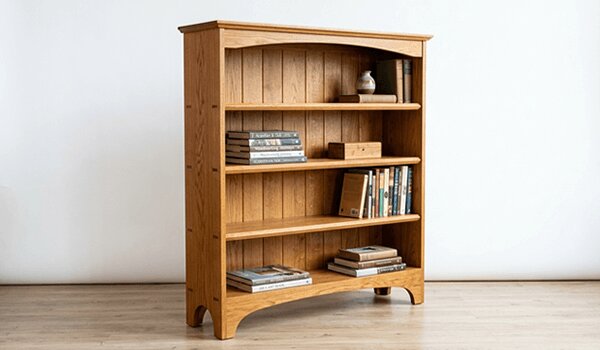
Fixed shelves set in dadoes are the strongest option. A dado about a third of the side’s thickness deep — 1/4 inch in 3/4-inch stock — carries the shelf on a full-width ledge and holds the case square.
Adjustable shelves ride on pins in 1/4-inch or 5 mm holes. Drill them with a jig so every hole lines up; a shelf that rocks on three pins is a shelf you will fight forever. Most good bookcases combine the two: one fixed shelf in the middle for rigidity, adjustable shelves above and below.
The back panel does more work than it looks like. A 1/4-inch plywood back glued and nailed into a rabbet stops the case from racking side to side, and racking is what makes a bookcase lean.
Plan the cut list before you buy plywood
Draw the case, write every part with its finished size, and lay the parts out on a drawing of a 4 x 8 sheet. A basic case 6 feet tall, 30 inches wide and 12 inches deep fits on a single sheet of 3/4-inch plywood, plus a 1/4-inch sheet for the back, when the layout is done on paper first.
The method in reading a cut list without wasting lumber applies directly: finished sizes first, then the saw kerf, then the layout on the sheet.
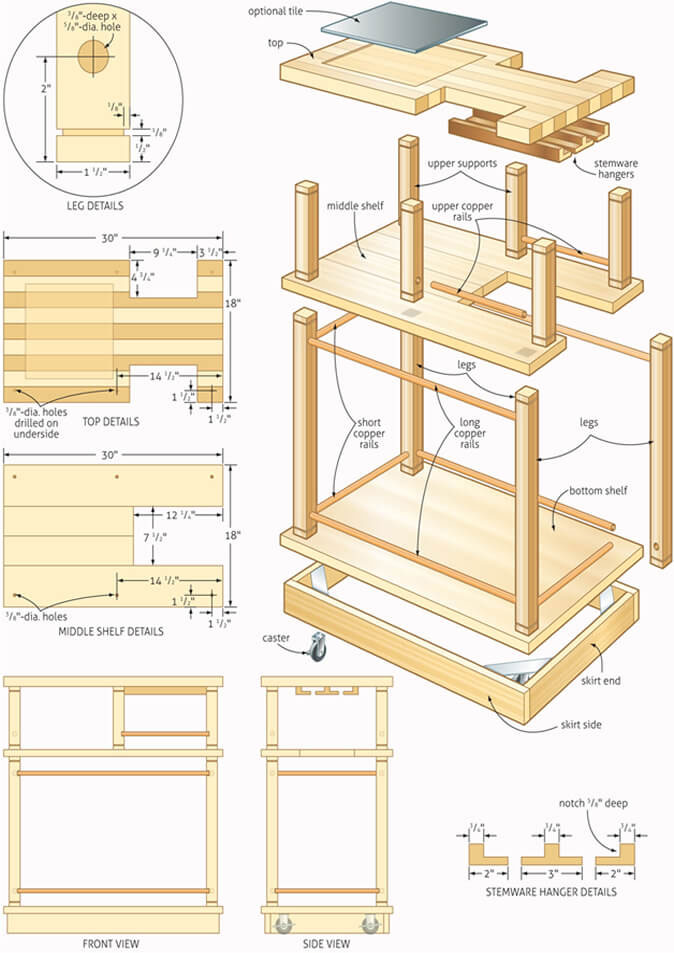
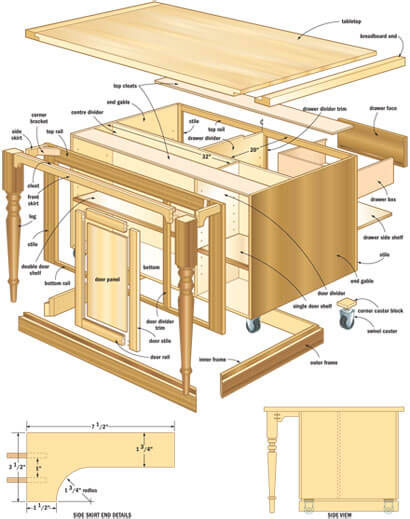
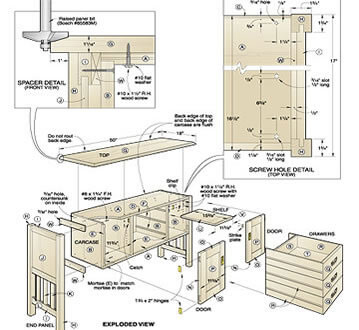
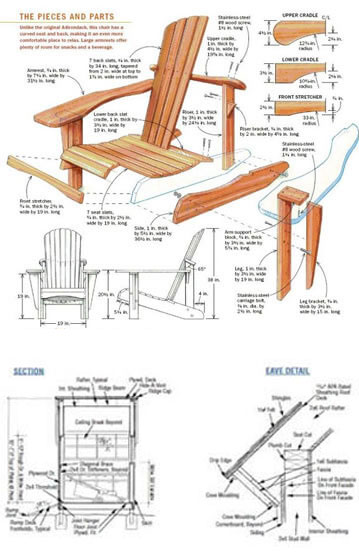
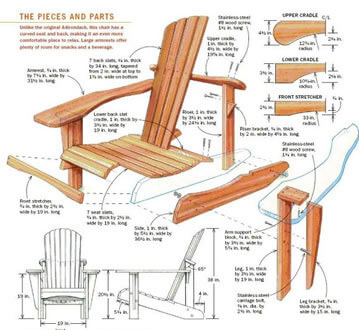
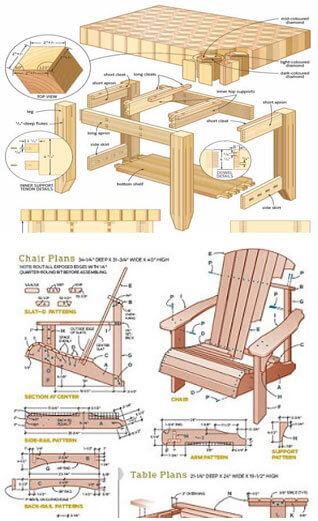
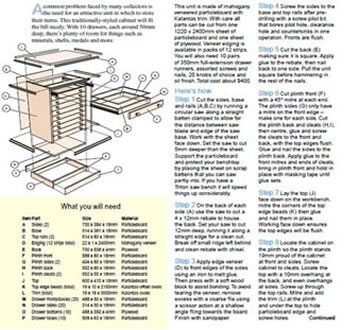
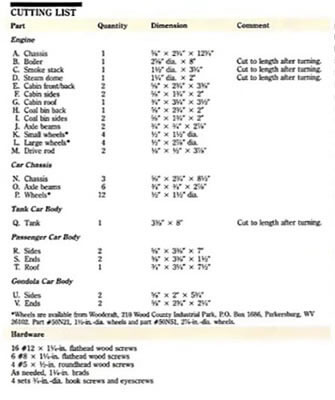
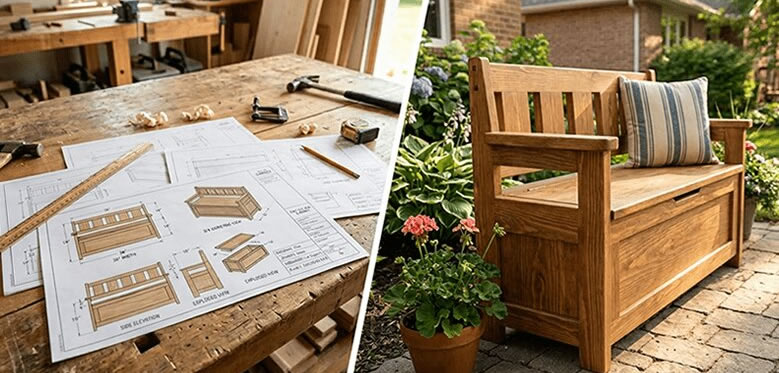
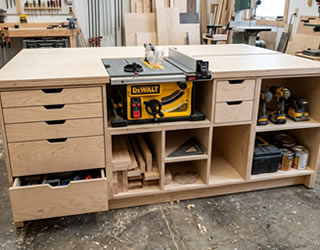
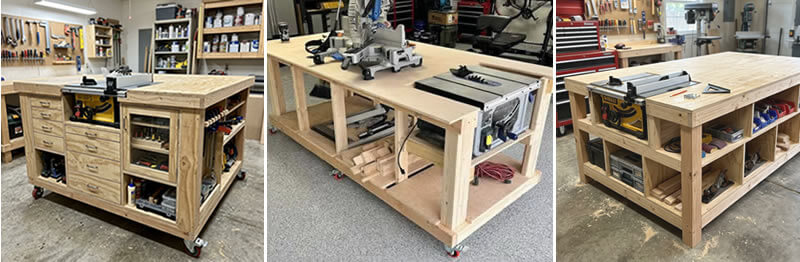
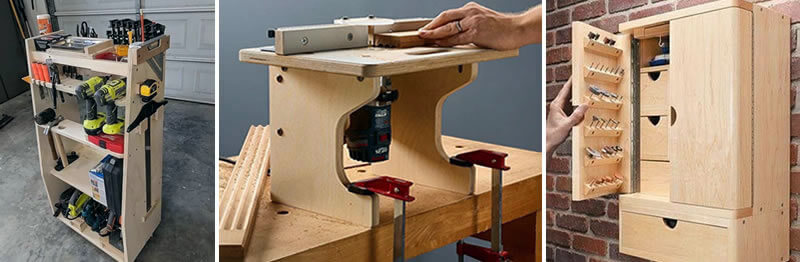
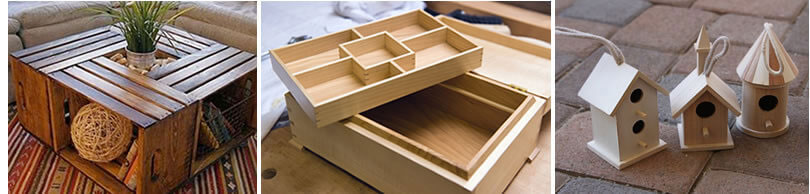
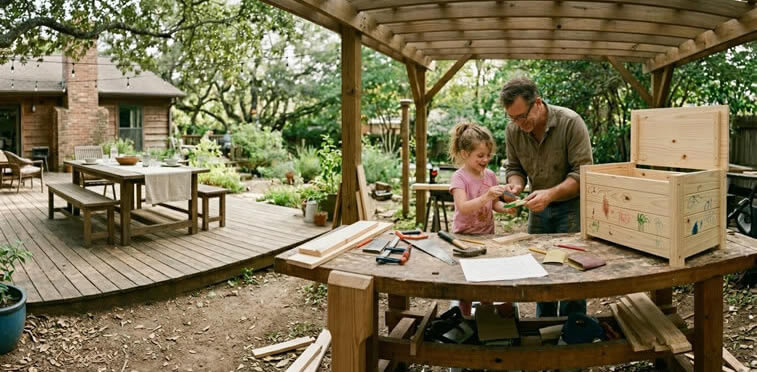
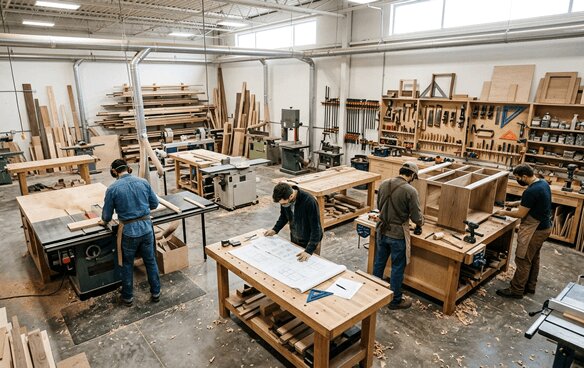
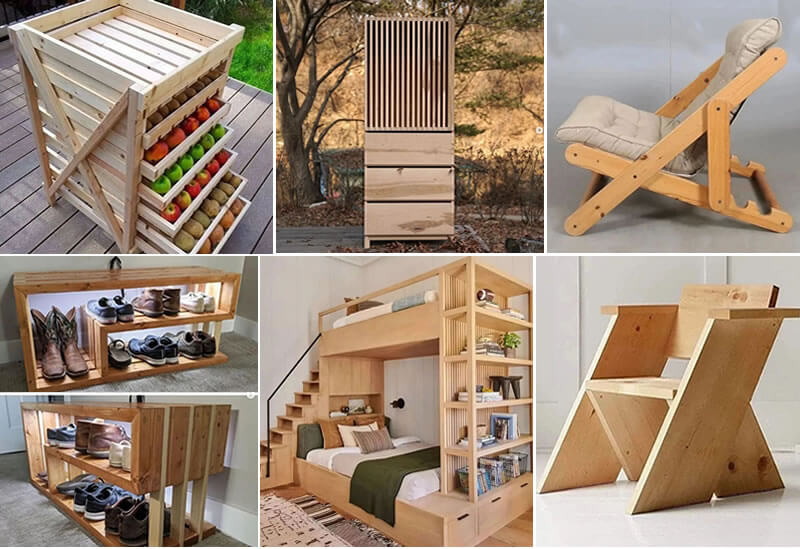
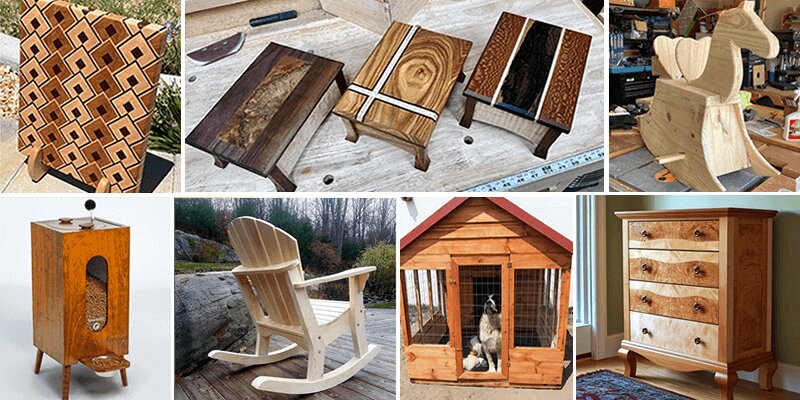
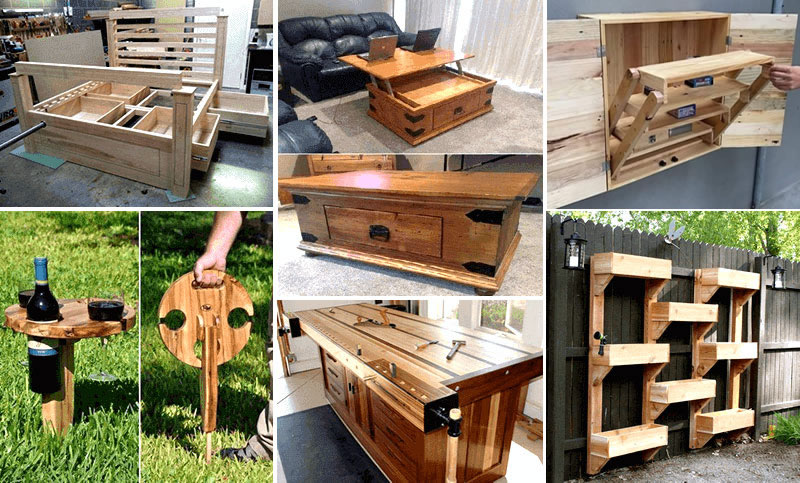
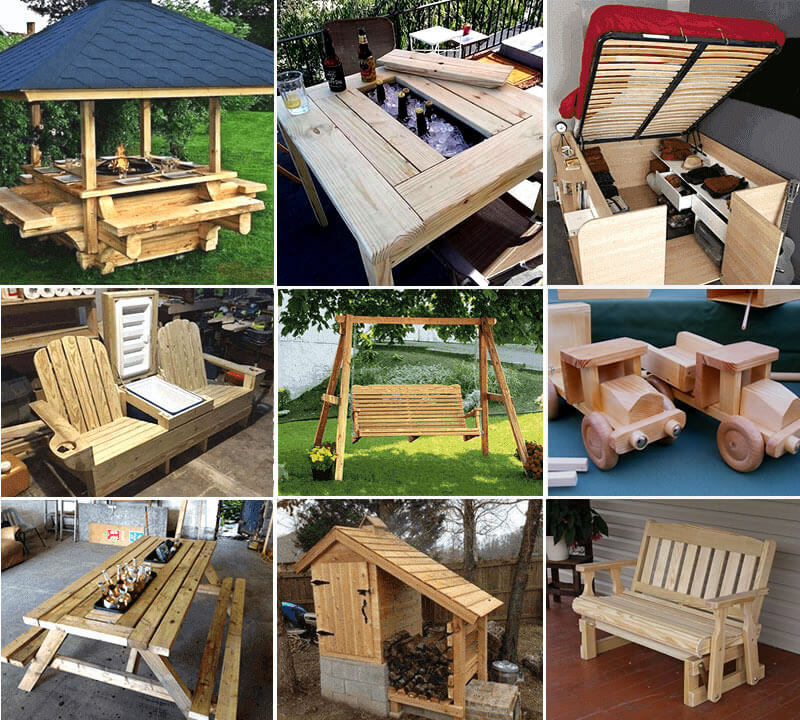
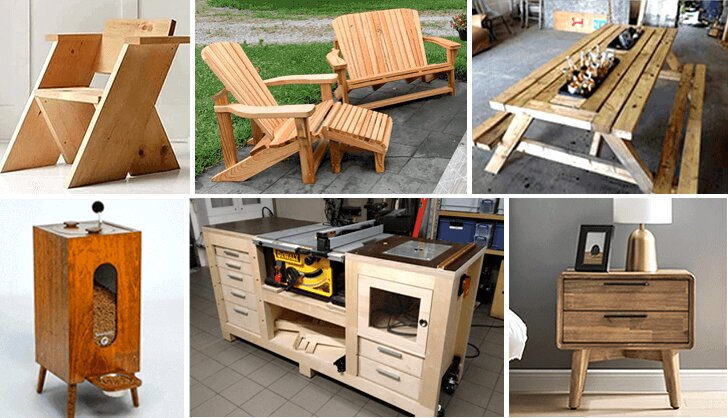
If you would rather start from a design that is already drawn, TedsWoodworking puts 16,000 plans in a library you can search by keyword — type “bookcase” and the matching plans come up. The Furniture category alone lists more than 2,650 plans, each with step-by-step instructions, an exact cut list and a complete materials list.
Assemble in the order that keeps it square
Glue-ups go smoother with the clamps laid out and the open time planned in advance — the routine in wood glue and clamping covers it.
- Sand every inside face before assembly. Once the case is together, the corners are hard to reach.
- Dry-fit the whole case with clamps before any glue comes out.
- Glue the fixed shelves into their dadoes, clamp, and measure both diagonals. Equal diagonals mean a square case.
- Fit the back while the clamps are still on. The back locks in whatever shape the case is in, so make sure that shape is square.
- Add the edge strips and any face frame last, once the box is rigid.
Finish it, then anchor it to the wall
A wipe-on polyurethane is the easiest durable finish for a bookcase, and it needs no spray gear. Give it several days to harden before the books go on; fresh finish can grab book covers and pull away in patches.
Then anchor the case. The U.S. Consumer Product Safety Commission’s Anchor It! campaign recommends securing furniture that can tip, and a loaded bookcase pulled on from a high shelf is exactly that. Two L-brackets or a tip-over strap screwed into a wall stud take ten minutes.
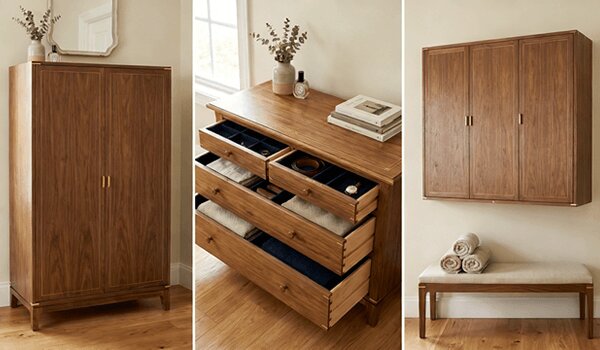
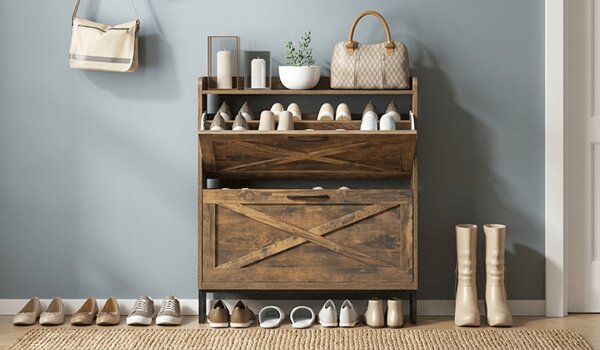
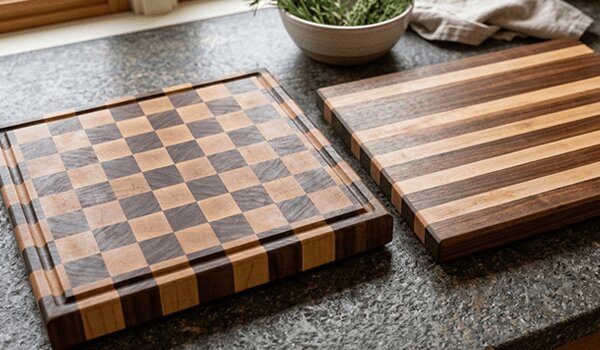
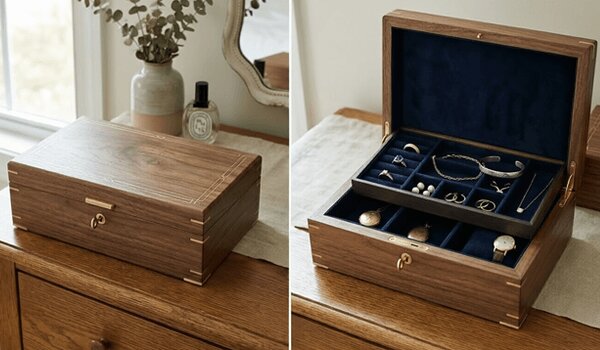
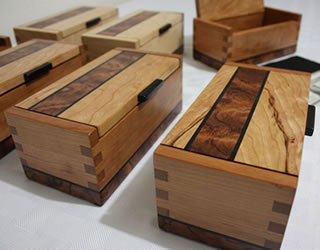
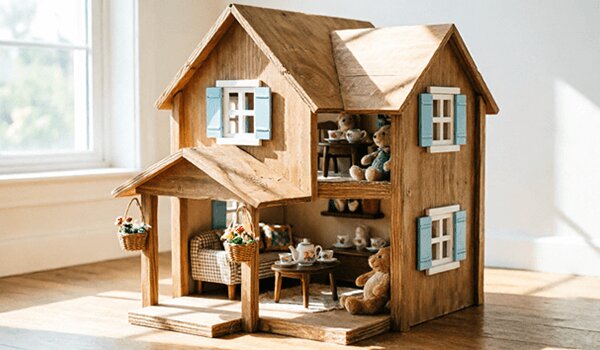
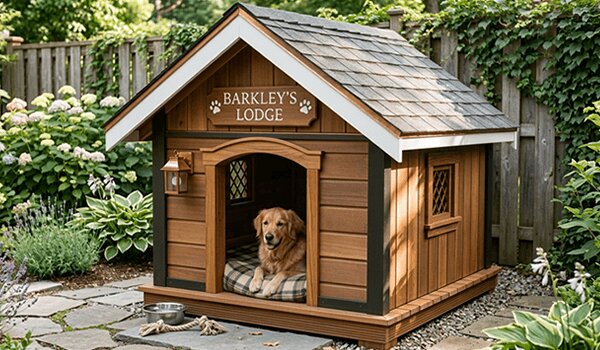
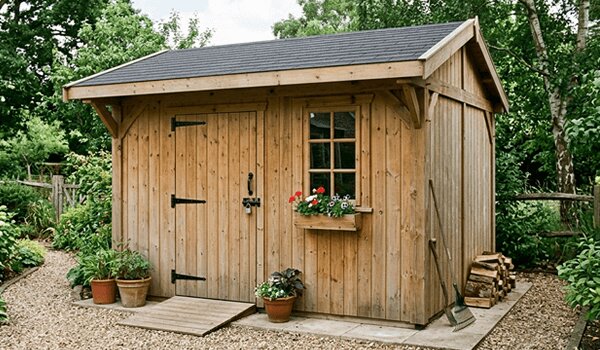
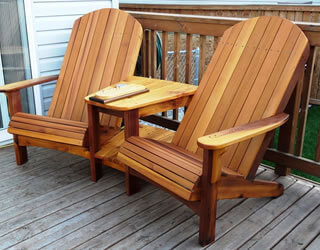
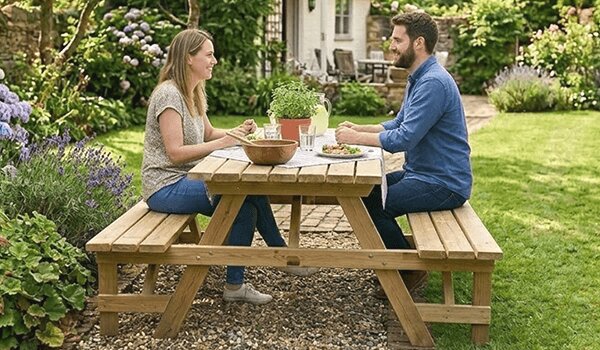
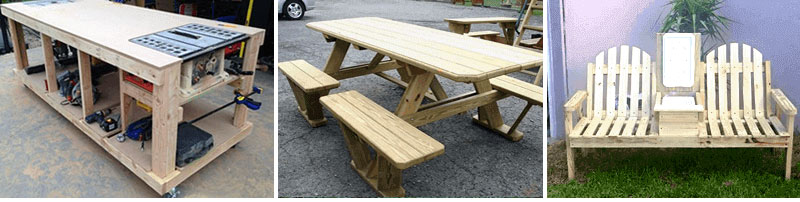
A look inside TedsWoodworking

FAQ
What is the best wood for a bookshelf?
Hardwood plywood in 3/4-inch thickness is the easiest to work with and stays flat. Solid pine works well on shorter spans, and oak or maple lets you span a little further.
How far apart should bookshelf supports be?
About 30 inches for 3/4-inch plywood carrying books. For longer runs, add a center divider or a hardwood edge strip.
How deep should a bookshelf be?
10 to 12 inches suits most books. Go to 14 or 16 inches only for oversized art books and binders.
Does a bookshelf need a back panel?
For anything taller than about 3 feet, yes. A 1/4-inch back set in a rabbet keeps the case from racking and makes it much stiffer.
Next step
Measure the wall, decide the shelf span, and draw the cut list tonight. Then choose the plan and build it this weekend.
Based on standard furniture-making practice for bookcases, on shelf-sag guidance commonly used by woodworkers, and on the U.S. Consumer Product Safety Commission’s furniture-anchoring recommendation. Product details for TedsWoodworking are from the vendor’s published offer page as of September 29, 2026.